
‘Blood everywhere’ – Clancy’s ex-husband testifies in murder trial
 adminUpdated 3 hours Ago3 Mins read
Warning: This story contains distressing details and discussion of attempted suicide
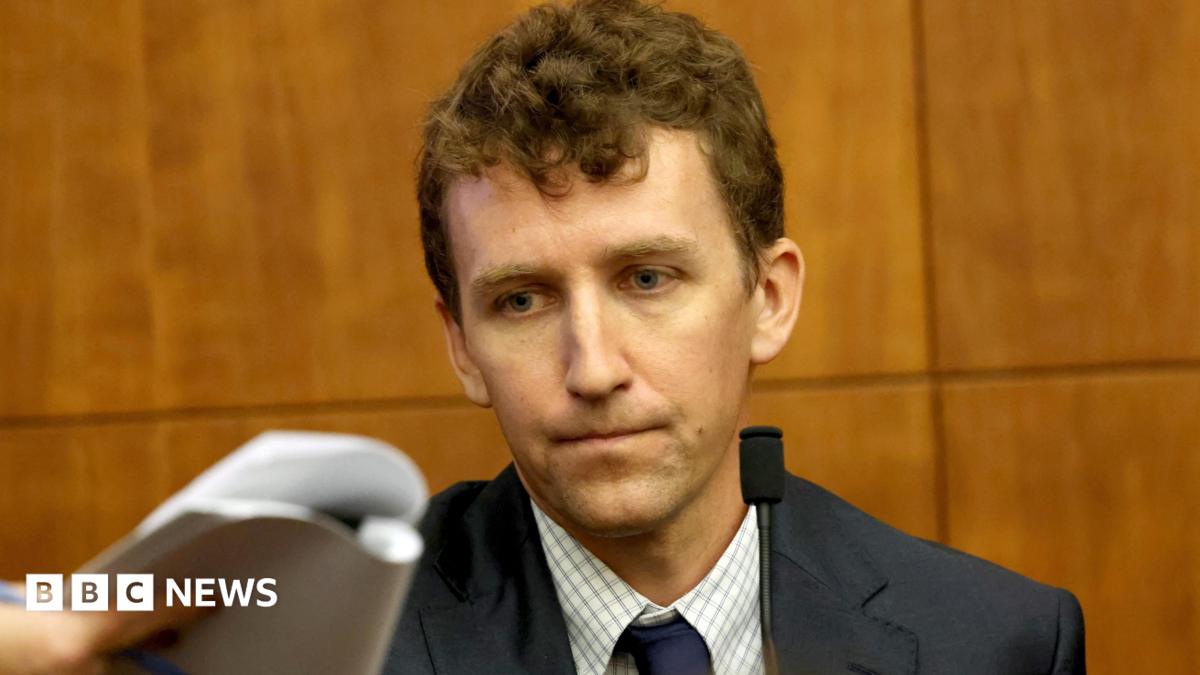
Patrick Clancy, the ex-husband of the Massachusetts woman who is on trial for killing her three children, has recounted the harrowing details of the day he returned home and saw “blood everywhere” inside his bedroom.
Testifying on Wednesday, he recalled the house was unusually quiet that day and said the bedroom was locked, adding: “That’s when I knew something was wrong.”
He found his wife Lindsay Clancy lying in the yard after she jumped out of the second-floor window, with “deep cuts on her wrists… and a red line across her neck”.
Prosecutors said Clancy did that after strangling her children with fitness bands in their home’s basement in January 2023. She has pleaded not guilty.
Lyndsay Clancy has been charged with three counts of first-degree murder over the deaths of Cora, five, Dawson, three, and eight-month-old Callan.
Her legal team has argued she was “suffering from psychosis at the time” and does not dispute she carried out the killings.
Clancy, who has attended both days of her ex-husband’s testimony – seated in a wheelchair after being paralysed from her jump – became visibly emotional as he testified on Wednesday.
The court’s camera showed her holding her lawyer’s hand, head turned away from view, wiping tears from her eyes.
Prosecutors questioned Patrick Clancy in great detail over the incidents that day, as they seek to convince the 12-member jury that his ex-wife made a “calculated” decision to kill their children.
Clancy recalled that on 24 January 2023, he left their home in Duxbury, Massachusetts and returned later with takeout food.
Finding the house “unusually quiet”, he checked multiple rooms, including the basement briefly, before heading upstairs to discover the bedroom door was locked.
Inside the bedroom, Clancy said he saw blood “everywhere”.
Prosecutors presented photos of the bedroom and then questioned Clancy on his description, asking him to affirm that there was no blood pictured on the walls or bedding.
“Correct,” he replied. “On those walls and the bedding.”
Clancy said he then ran downstairs and went outside where he found his wife on the ground with cuts on the wrist and neck. He then called emergency services.
Assistant District Attorney Shanan Buckingham questioned Clancy about the severity of the cuts, asking him to affirm that he told emergency services he did not feel there was a need to apply pressure to his ex-wife’s wounds. He agreed.
Clancy said after emergency services arrived and his wife told him his children were in the basement, he sprinted there next.
Patrick Clancy testified that when he reached the basement, he saw his 5-year-old daughter Cora first.
“She had a band around her neck,” he said, referring to an exercise band. “She was face down.”
“I immediately ran over and tried to take the band off,” he said, adding that she was “unresponsive”.
He then saw 8-month-old Callan next to her with an exercise band around his neck as well.
Clancy said he then looked for 3-year-old Dawson and found him in his office, also with a band around his neck.
“I knew he was gone,” Clancy said. He said he went “back and forth” between the children, attempting CPR until first responders arrived and took over.
Clancy told the court his wife said to him roughly a week after the incident that she “heard a man’s voice” directing her to kill the children. He said he had not heard of psychosis before this.
Prosecutors submitted evidence, including the children’s bloodied pajamas, before playing a recording of the 911-call between Clancy and emergency services – sending Lindsay Clancy into an emotional spiral.
She dropped her head in her hands and began sobbing audibly, before the court broke for recess.
Prosecutors will be calling additional witnesses to testify, and have said they expect the trial to last weeks.
If convicted, Lindsay Clancy faces life in prison without parole.
If you are suffering distress or despair and need support, you could speak to a health professional, or an organisation that offers support. Details of help available in many countries can be found at Befrienders Worldwide. www.befrienders.org.
In the UK a list of organisations that can help is available at bbc.co.uk/actionline.










Leave a comment