
The best ice-cream makers in the UK for gelato, soft serve and sorbets – tested | Ice-cream and sorbet
 adminUpdated 5 hours Ago15 Mins read
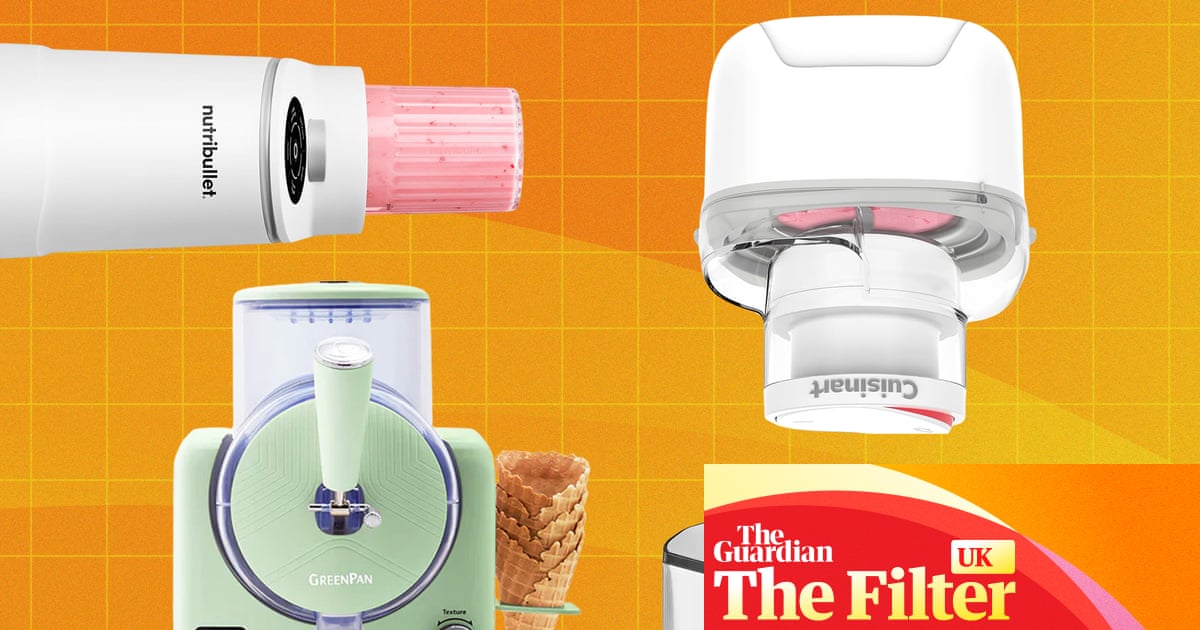
I love a scoop or two of the good stuff, even more so when the mercury hits 30C and ice-cream starts feeling less like an indulgence and more like an essential survival tool. This is why owning an ice-cream maker has always made sense to me. I’ve been using the original Ninja Creami for years now, but before that I was spending a small fortune on gelato, fruity sorbets, frozen yoghurt and other such desserts from the frozen aisle.
Some might argue that the best ice-cream makers are a luxury, but if you’re a true dessert devotee, I believe they can earn their keep in no time. A tub of Häagen-Dazs will set you back almost £6 nowadays, which is an expensive habit if you’re getting through a pot a week during the hottest months of the year.
With your own ice-cream machine, you get an endless supply whenever you fancy it, and you can get creative with flavours, tweaking as you go. It’s also ideal if you have allergies or follow a dairy-free diet, as good allergy-friendly ice-cream can be harder to find. Better still, making your own means you can skip the emulsifiers, artificial flavours, sweeteners and stabilisers found in many shop-bought tubs, so it’s a great option if you’re trying to move away from ultra-processed foods.
But with so many options available, where do you start? I’ve taken one for the team – and no doubt my waistline – to test the best ice-cream makers available right now, from trendy soft-serve ice-cream machines to professional-style compressor models.
At a glance
Why you should trust me
I’ve spent almost a decade researching, testing and reviewing kitchen appliances, which means I’m aware of the very best (and worst) the industry has to offer. I’ve seen appliance trends come and go, and I know what people actually want in their kitchens.
I’m also an avid home cook and dinner party host. When I’m not in my kitchen testing appliances on the clock, I’m still there whipping up feasts for my willing partner and friends.
How I tested
The research for this article meant making – and eating – a lot of ice-cream and sorbet (someone had to do it). I put 13 machines through their paces with three recipes on each: Felicity Cloake’s perfect vanilla ice-cream, her lemon sorbet and, where the machine allowed, a more basic throw-it-all-in recipe for strawberry ice-cream made with milk, cream, sugar and macerated strawberries. All the machines also came with their own recipe booklet or app, so I also tested one of these, usually a standard vanilla recipe with double cream.
Testing a variety of recipes gave me a sense of how capable and versatile each machine really was, helping to decide whether it’s worthy of taking up precious space on your worktop.
As well as making lots of ice-cream, I put on my technical hat to measure churning speeds, record noise levels using a decibel meter, and assess ice crystal formation, as well as the general taste and texture of the results after some time in the freezer.
As a certified chore hater, I found that ease of assembly and cleaning were just as important. Waiting 24 hours to taste the results of your prep is one thing; spending another hour to disassemble and scrub clean the machine afterwards is quite another.
All ice-cream makers sourced for this article will be donated to charity.
The best ice-cream makers for your home
Best ice-cream maker overall:
Caso IceCreamer

Caso
IceCreamer
from £278.97
What we love
Family-friendly and easy to use
What we don’t love
It’s a worktop hog
A real surprise standout, this model from the little-known brand Caso turned out to be not only the best compressor ice-cream maker, but also my favourite overall. It may be big and bulky, but that shouldn’t put you off (as long as you have the space).
Why we love it
Caso’s IceCreamer was the easiest machine I used, with very little that can actually go wrong. It has a generous two-litre capacity, and as it’s a compressor model, there was no need to prefreeze anything. Caso recommends chilling any mixture beforehand to improve churning times, but that can be as little as an hour – I’m impatient, and I still got great results after about 30 minutes.
I was testing on one of the hottest June days on record, and so I wasn’t expecting miracles when it came to churn times. Impressively, though, the machine produced rich, velvety ice-cream in about 60 minutes using Felicity Cloake’s vanilla recipe. I imagine on a slightly cooler day it would have been even quicker. Unfortunately, the heat did mean my ice-cream began to melt almost instantly once out of the machine, but I managed to get it in the freezer before all the hard work was undone.
Despite this, the ice-cream that initially emerged was well frozen yet buttery smooth and had few ice crystals. After a couple of days in the freezer in an airtight container, it still tasted fantastic. It also made light work of the lemon sorbet recipe in about 40 minutes.
The IceCreamer has post-churn settings that keep the ice-cream at a frozen temperature for up to 60 minutes, or it just churns without freezing. It also comes with an ice-cream scoop and measuring cup. The bowl was easy to clean and, unlike some other machines here, there weren’t any fiddly parts to handle.
It’s a shame that … it’s on the large side – and quite pricey, when not on offer.
Machine type: compressor
Capacity: 2l
Average churn time: 1hr
Noise level: 67dB
Dimensions: 43 x 28.5 x 28cm (WDH)
Wattage: 180W
Warranty: two years
Caso
IceCreamer
from £278.97
What we love
Family-friendly and easy to use
What we don’t love
It’s a worktop hog
Best budget ice-cream maker:
Cuisinart Solo Scoops

Cuisinart
Solo Scoops
from £33.99
What we love
It’s compact and easy to use
What we don’t love
Struggles to produce a good consistency
Let me temper your expectations here – if you’re spending this little on an ice-cream maker, you’d be silly to expect the world. However, I’m making a case for this mini motor-based machine because it’s so ridiculously simple to use.
Why we love it
If you’re short on counter space or can’t justify the £200+ spend on a more premium machine, this is a great option. For occasional ice-cream indulgers who prefer to make their desserts from scratch – I’m thinking people with allergies and dairy-free dessert fans – the Solo Scoops is a compact, low-risk buy.
The ice-cream maker comes with a small bowl that makes up to 475ml of ice-cream. It needs to be popped in the freezer for at least 24 hours before use, but takes up very little space. You’ll know it’s ready when you can no longer hear the liquid in the walls of the bowl moving around.
Its small size is both a strength and a limitation. Because it relies on the frozen bowl staying cold for as long as possible (which proved a challenge in my furnace-like kitchen), I struggled to achieve the same firm, scoopable texture as the other models here despite using the same vanilla recipe throughout. With a little patience, though, you can get a soft-serve-style ice-cream in about 30 minutes. I got the best results by freezing the bowl for a minimum of 36 hours, chilling the ingredients first, and opting for sorbets over richer, higher-fat ice-creams.
If you’re at all worried about longevity given the price (I was), the good news is that parts are easy to replace or repair. The Solo Scoops’ simple design means there’s less to go wrong, and replacement parts are available through Cuisinart’s website.
It’s a shame that … while it’s not overly loud, the noise it makes is a bit grating.
Machine type: freeze-first
Capacity: 475ml
Average churn time: 30mins
Noise level: 66dB
Dimensions: machine, 25 x 21 x 21cm (WDH); bowl, 15 x 15 x 10cm (WDH)
Wattage: 12W
Warranty: three years
Cuisinart
Solo Scoops
from £33.99
What we love
It’s compact and easy to use
What we don’t love
Struggles to produce a good consistency
Best freeze-first ice-cream maker:
Ninja Creami NC300

Ninja
Creami NC300
from £199.99
What we love
Makes ice-cream easy; good for healthier options
What we don’t love
It’s noisy and freakishly tall
Ninja’s first iteration of the Creami might be getting on a bit now, with newer models featuring improved designs and new settings, but I’ve owned it for years, and it still produces good results.
Why we love it
Ninja’s ice-cream makers are popular for a reason. While some find the brand’s products a little gimmicky (and some are, in my opinion), the Creami stands out because it makes homemade ice-cream genuinely achievable – even for the most reluctant cooks.
Over the years, I’ve used my Creami to create all kinds of frozen desserts, from the brand’s signature strawberry ice-cream, which you’ll find in the accompanying booklet, to gelato-style mixes and even frozen smoothie bowls. Unlike other brands on this list, I really rate Ninja’s recipes, too.
All recipes I tested, including Felicity’s sorbet and frozen vanilla ice-cream, were fully churned in about three minutes – a couple of minutes faster than the Nutribullet Chill below. I also like the Creami’s flat blade, as it allows it to get right to the end of the tub with ease. The compact tubs are also a plus, fitting easily into the freezer without taking up too much space.
I found the Creami easy to clean, and some parts are dishwasher-safe. That’s not to say there aren’t any nooks where mixture can hide, but I haven’t had any problems as long as I’ve cleaned the machine straight away.
The machine comes with two 493ml tubs as standard from SharkNinja, although some retailers offer three, and you can buy more either directly from the manufacturer or at other online retailers. Spare parts are available through the brand’s website, so if anything does go wrong, it’s usually easy to fix at home.
It’s a shame that … it’s quite loud, and it’s unusually tall, so might not fit under some kitchen cabinets.
Machine type: freeze-first
Capacity: 2 x 493ml
Average churn time: 3mins
Noise level: 81dB
Dimensions: machine, 40.5 x 16.5 x 27cm (WDH); cup only, 11 x 11 x 10.31cm (WDH)
Wattage: 800W
Warranty: two years (needs to be registered if bought from a third-party retailer)
Ninja
Creami NC300
from £199.99
What we love
Makes ice-cream easy; good for healthier options
What we don’t love
It’s noisy and freakishly tall
Best ice-cream maker for small freezers:
Nutribullet Chill

Nutribullet
Chill
from £169.99
What we love
Easy to use and comes with two tubs
What we don’t love
It’s ear-shatteringly loud
Nutribullet’s Ninja Creami-esque machine makes ice-cream, sorbet and frozen yoghurt with minimum fuss after 24 hours of freezing the mixture in the tub. I was won over by its simple design, and much like the Caso, it was an underdog that surprised me in testing.
Why we love it
The Nutribullet Chill isn’t your classic churning ice-cream maker, but it’s easy to use and produced great results with my vanilla ice-cream and lemon sorbet test mixtures. You make and prefreeze your mixture in a compact 470ml tub, then the machine uses a powerful blade to churn it all up from frozen.
The texture isn’t quite the same as a classic compressor machine – it’s less velvety – but for its compact size and ease of use, the trade-off is one I’d be happy to make.
In performance, it’s similar to the Ninja Creami. The vanilla ice-cream and sorbet recipes came out as expected – less smooth than a compressor but still delicious – although I did find that the recipes in Nutribullet’s accompanying booklet and app do need a little tweaking. Using too much fat in your recipe will give you grainy, greasy-tasting results, as the fat from the cream isn’t stable and solidifies. I had better luck swapping out the double cream in Nutribullet’s recipes with a 40:60 split of double and single cream. It also did a great job making vegan ice-cream.
The Nutribullet Chill comes with two 470ml tubs, with extras available to buy. In addition, the blade comes away for easy cleaning, plus replacement parts are available for repairing at home.
It’s a shame that … it’s ear-shatteringly loud: I found myself having to leave the room while noise levels were being measured. Something to bear in mind if you’re noise-sensitive like I am.
Machine type: freeze-first
Capacity: 2 x 470ml
Average churn time: 5mins
Noise level: 96dB
Dimensions: machine, 19.6 x 20.5 x 43.1cm (WDH); cup only, 10.5 x 10.5 x 15cm (WDH)
Wattage: 500W
Warranty: two years if you keep your receipt
Nutribullet
Chill
from £169.99
What we love
Easy to use and comes with two tubs
What we don’t love
It’s ear-shatteringly loud
Best soft-serve ice-cream maker:
GreenPan Frost ice-cream maker and slushie machine

GreenPan
Frost ice-cream maker and slushie machine
from £328.99
What we love
Makes soft serve, slushies, milkshakes and more
What we don’t love
Expensive and tiresome to clean
Looking for an all-in-one appliance that will keep both kids and adults happy? Then GreenPan – best known for, well, its pans – turns out to make a surprisingly capable ice-cream maker, too.
Why we love it:
The GreenPan Frost really impressed in tests. I used it to make a custardy vanilla soft serve using Felicity Cloake’s recipe and a soft-serve “sorbet” – essentially, a lemon slushie. My chilled mixture achieved soft-serve consistency in about 25 minutes, but I did have to tweak the recipe a few times to get it right.
Some research revealed that soft serve works best with an additional stabiliser, such as xanthan gum. I tested this with other batches and found it did indeed help the ice-cream hold its shape better. That said, it’s not essential if you’d rather skip it – you’ll simply get a more traditional soft-serve texture. The GreenPan Frost also has settings for making milkshakes, slushies (of the booze and booze-free variety) and similar treats.
Unfortunately, one of the downsides of this style of machine is cleaning: it was definitely trickier to clean than others on this list. The Frost has a self-cleaning cycle, while its numerous parts can be disassembled for cleaning in the dishwasher – a bonus for convenience and repairability. My advice is to run the clean cycle with two to three rinses of warm water and a bit of washing-up liquid before taking apart the machine.
It’s a shame that … it’s the priciest model on this list.
Machine type: compressor/soft serve
Capacity: 1.9l
Average churn time: 30-40 mins
Noise level: 58dB
Dimensions: 22.2 x 44.1 x 43.8cm (WDH)
Wattage: 150W
Warranty: two years
GreenPan
Frost ice-cream maker and slushie machine
from £328.99
What we love
Makes soft serve, slushies, milkshakes and more
What we don’t love
Expensive and tiresome to clean
The best of the rest
Lakeland Compressor ice-cream maker

Lakeland
Compressor ice-cream maker
£199.99
What we love
Makes amazing ice-cream
What we don’t love
Controls aren’t very intuitive
Best for: gelato-style recipes
This is another great classic compressor machine – simple, with gentle churning that’s ideal for gelato. It performed well in tests, with results in about an hour. It’s also easy to clean.
Unlike the Caso IceCreamer, the Lakeland Compressor machine doesn’t allow you to adjust the timing mid-cycle. When I set it to 40 minutes and realised halfway through that my mixture needed longer, I couldn’t simply press the “+” button to add more time – I had to stop and restart the machine instead.
Thankfully, this didn’t affect the quality of the ice-cream – it was still excellent and held its texture well in the freezer. It was just frustrating that I had to use a workaround for something that should have been a simple adjustment.
It didn’t make the final cut because … I found the controls counterintuitive and a pain to use. The Caso IceCreamer offered a slightly better user experience.
Machine type: compressor; capacity: 1.8l; average churn time: 30-40mins; noise level: 58dB; dimensions: 49.8 x 38.6 x 30.4cm (WDH); wattage: 150W; warranty: three years
Lakeland
Compressor ice-cream maker
£199.99
What we love
Makes amazing ice-cream
What we don’t love
Controls aren’t very intuitive
Cuisinart Frost Fusion soft-serve ice-cream maker and drinks machine

Cuisinart
Frost Fusion
from £199.99
What we love
More affordable than some; easy to use
What we don’t love
The soft-serve recipe provided doesn’t work
Best for: families
I had high hopes for this machine: it’s cheaper and easier to clean than the GreenPan, but I found it more difficult to achieve the right ice-cream consistency. It was always just a bit too soft, even after many tweaks to the recipe.
I started with Cuisinart’s own soft-serve recipe from the accompanying booklet, which uses 100% double cream, sugar and vanilla. Unfortunately, the result was less soft serve, more homemade butter. I initially assumed it was my fault, particularly as I’d halved the quantity – but when it happened a second time, I realised something was up.
Swapping to a 60:40 mix of single and double cream fixed this – as it did with other machines – but the whole experience was rather unpleasant. I wouldn’t recommend using your soft-serve maker to churn butter, by the way – it’s not particularly easy to clean.
However, the slushies were amazing, and the standard vanilla recipe I used throughout testing was decent, although it lacked the structure I would have liked for soft serve. While there’s nothing catastrophically wrong with the machine itself, be prepared for a lot of trial and error.
It didn’t make the final cut because … performance wasn’t up there with the GreenPan, although it is slightly more affordable.
Machine type: compressor/soft serve; capacity: 1.6l; average churn time: 30-40mins; noise level: 58dB; dimensions: 16.4 x 41.4 x 41.8cm (WDH); wattage: 150W; warranty: three years at Lakeland
Cuisinart
Frost Fusion
from £199.99
What we love
More affordable than some; easy to use
What we don’t love
The soft-serve recipe provided doesn’t work
What you need to know
Freeze first vs compressor ice-cream makers – what’s the difference?
There was a time when you could only get two types of ice-cream maker. The first was a classic freeze-first model, where you needed to prefreeze the coolant-filled bowl for at least 24 hours before starting. The other was a compressor model, using a built-in refrigeration unit that freezes the chilled mixture as it churns, taking up to 60 minutes.
While these two options are still popular today, others have joined the ice-cream-making party. These include soft-serve and slushie machines, which also use a compressor but churn faster to produce softer, Mr Whippy-style ice-cream. Another type is often described as a “frozen dessert maker” (such as the Ninja Creami, Nutribullet Chill, and so on). These machines require you to combine ingredients and prefreeze in a tub, after which the mix is processed from frozen with a sharp blade.
These newer models are more flexible in terms of what you can make, but they require more experimentation to get the best results and are often trickier to clean.
How to make ice-cream in an ice-cream maker
I quickly learned during testing that many of the recipes in the ice-cream makers’ accompanying booklets aren’t very good. Most suggest using double cream exclusively, which doesn’t freeze that well and often creates a greasy, grainy texture when it does.
My advice is to stick to tried-and-tested recipes that use stable, lower-fat ingredients. While you need some fat to achieve that delicious, creamy feel, if it’s too much, it goes the other way.
Compressor machines
You’ll get great results with most recipes – I found sorbet and custard-based ice-creams worked best. Simply chill the mixture, then throw it in. In general, mix-ins aren’t advised while freezing and should instead be added at the end using the “churn-only” setting, which simply spins the paddle.
Freeze-first machines
These require you to freeze the included bowl for at least 24 hours before making ice-cream (I found 36 hours works best as a minimum), as well as chill your mixture in the fridge separately. With this done, you can churn as usual – but, like compressor models, leave mix-ins until the end.
Soft-serve and slushie machines
These can be a bit trickier to master, especially if the recipes included with your machine aren’t quite right. For best results, stick to stable, medium-fat recipes (eg not just double cream); otherwise you risk making butter. You can use a chilled mixture straight from the fridge, though – it chills even quicker than a traditional compressor model, so no 24-hour waits.
Blade machines
These work a bit like freeze-first machines, but instead of freezing the bowl overnight, you freeze the mixture in the tub provided. Again, if it’s too high in fat, your mixture will become grainy, so stick to a custard or single-cream base. You can also freeze certain mix-ins directly within the ice-cream base with these models, as the blade will chop right through them.
How repairable are ice-cream makers?
Repairability varies. If you want a machine that lasts for years, look for one with easily replaceable parts and a simple design. Models with fewer hidden electronics or that can be disassembled into several pieces for cleaning are generally easier to repair at home or by a local professional. In that light, the Nutribullet Chill and Cuisinart Solo Scoops are two of the most easily repairable machines on this list in terms of the spare parts that are available.
However, spare parts won’t always cover you for issues with electrical components. It’s always worth checking whether the manufacturer of your model offers a repair service. Some have dedicated support pages on their websites where you can buy replacement parts, and of course, don’t overlook warranties when you’re making a buying decision, for valuable peace of mind if anything should go wrong.
For more, read the best (and worst) chef’s knives and the best blenders for smoothies, soups and frozen desserts
Danielle Amato is a consumer reviews journalist with almost a decade of experience covering kitchen and home appliances. She’s an avid ice-cream and pasta enthusiast (not at the same time, though she wouldn’t judge) and loves nothing more than getting stuck into a new recipe or appliance in her unofficial test kitchen








Leave a comment