
I knew Rod Liddle and hated what he became. He would have wanted me to say so | Zoe Williams
 adminUpdated 3 hours Ago4 Mins read
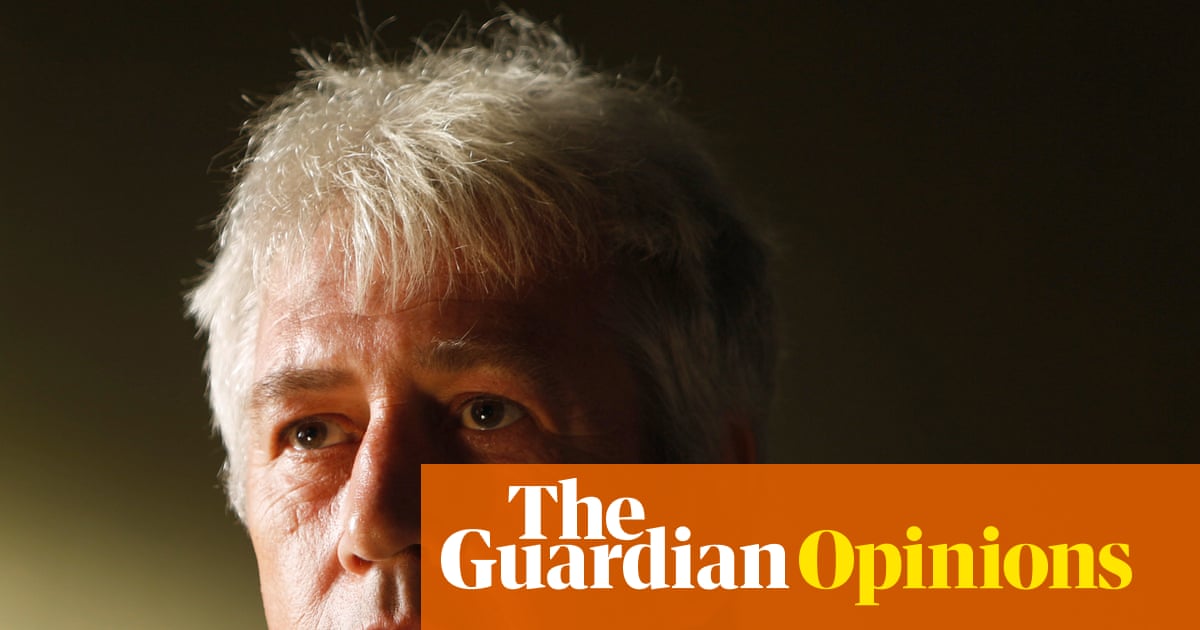
As tributes poured in for Rod Liddle, the Sunday Times and Sun columnist who has died at the age of 66, they were markedly coy and sanitised. Paradoxically, those were the exact deficiencies obituaries praised Liddle for avoiding – they said he shot from the hip and ruffled feathers, remorselessly attacked the liberal establishment and was ebullient. Michael Gove called him “special and brave”. But brave in the face of what? Attacked the liberal establishment how?
This delicacy was particularly noticeable in a segment on Radio 4’s Today programme, of which Liddle was editor in the 90s, between Justin Webb and Amol Rajan. “If there was a golden thread that connected the person you saw back then with the person of a few weeks ago,” Webb said, “it was a distrust of authority.” But Liddle’s targets as a columnist were not the authorities. Often they were Muslims and immigrants, transgender people and chronic illness sufferers, African-Caribbean men from Harlesden. He did not attack the establishment, he attacked the marginalised, constantly.
There is sometimes a dilemma in how we process death. Decently, we seek not to speak ill of the dead, and certainly one hopes to never increase the grief of those who loved them. But does that mean we are also duty-bound not to discuss more uncomfortable issues? Here I feel the dilemma.
I was friends with Rod Liddle in the 90s. He was a different Rod then. The principal target of his satire was himself. He would lampoon guys having affairs, guys who were a shambles, guys who had run out of road. If there was any ethno-caricaturing, it read as a footnote to a worldview in which nobody was more ridiculous than he, Rod Liddle. This carried on into his collection of short stories, Too Beautiful for You (2003), in which the most memorable escapade was a man getting into a train crash, after seeing his mistress, rushing across a field carrying his severed arm so that he could get to a hospital without blowing his alibi, and realising as he bleeds out that he must actually really love his wife.
In 1983, he was a member of the Socialist Workers party and by 1990, a researcher for the Labour party, but what made him seem left-left, rather than centre left, didn’t have a membership card. It was the self-parody coupled with an overall dishevelment that conveyed a deep-seated humanity and pluralism: “I’m a mess, you’re a mess, let’s get out of this mess together.” I know that is maddeningly unspecific, but I also know that anyone on the left will get what I mean.
So his transformation into an attack dog for the race-baiting right was painful to watch, if not exactly unprecedented. On Tuesday, sociologist Will Davies characterised this post-68 type, “drawn to norm-breaching, moving via adolescent rebellion, punk, revolutionary socialism and eventually ending up at racism, because by the 21st century that was the most efficient transgression still on offer”. The rightwing media will pay absolutely top dollar for a big-name left-to-right defector.
Peter York, in his book A Dead Cat on Your Table, examines the nexus of rightwing thinktanks, the mainstream right and “alt-right” media to argue that what we call “culture wars” aren’t ideological, they’re about hegemonic capture in the service of capital. Depressingly, it does work: GB News, which hedge-funder Paul Marshall hosed money at, to widespread ridicule, now secures higher average audiences than Sky News or BBC News. Arguably, the greater victory is that all we ever talk about is what GB News wants to talk about.
One thing the obituaries did mention was Liddle’s feud with Yasmin Alibhai-Brown – “they loathed each other,” Justin Webb said, then, later he asked: “Deep down, did he really? There was no loathing in Rod that I could ever divine.” But “feud” is doing some heavy lifting there: Liddle attacked Alibhai-Brown constantly in his columns, for opinions which many of us hold but seemed unaccountably more obnoxious to him coming from her. This culminated in a clash on Channel 4 in 2014, after which the then Conservative MP Michael Fabricant, tweeted that he might have ended up punching Alibhai-Brown in the throat.
Liddle the Today editor, listening to much of the discussion, would have said, “what the fuck are you playing at, trying to describe this outrageous character without naming any of his outrages?” Not least as they are so easy to Google – the time he said he couldn’t have been a teacher because he would have ended up shagging the children, “right in there, on day one”; the endless attacks on Muslims, arguing that it was the faith itself, not unhinged individuals, that drove terrorism, that the 2019 election should be held on a day when “Muslims are forbidden to do anything on pain of hell” to suppress their vote. The editor Liddle of the 90s would have also said: “You can’t have two blokes on the radio, explaining why whipping up racist misogyny is fine so long as, underneath, you have a heart of gold.” Not because of diversity and whatnot, but because it’s just not cricket.
after newsletter promotion
One of the last times I saw Liddle was a couple of months ago when we were both on Sky News. He looked really different, because he had COPD (chronic obstructive pulmonary disease). I asked him how he was and he said “depressed”, and I asked why, but I was just being tactful, because it was obvious why. My mum died with COPD last year, and by the time your face goes grey, life is pretty horrible, like drowning in air. “I’m no longer priapic,” he replied.
I felt ineffably sad; that privately, his persona was still the same, standing there with his arm hanging off, insisting that the first thing he would do, once he got it sewed back on, was get a hard-on; sad at the pantomime of it, cartoon prejudices with real-life consequences, trotted out on command, funded by people with mountains of money who wish society ill; sad about the empathy and solidarity that had once built a collective firewall against hate-for-fun, which had been slowly extinguished.
In fact, I wanted to start crying but I’d just had my makeup done, so we went on air and argued about Andy Burnham in Makerfield, and he said he would only win it if he “sorted out” immigration. I won’t miss Rod Liddle, but I miss the person he was when the world was different, and I miss that different world.
-
Zoe Williams is a Guardian columnist
-
Do you have an opinion on the issues raised in this article? If you would like to submit a response of up to 300 words by email to be considered for publication in our letters section, please click here.






Leave a comment