

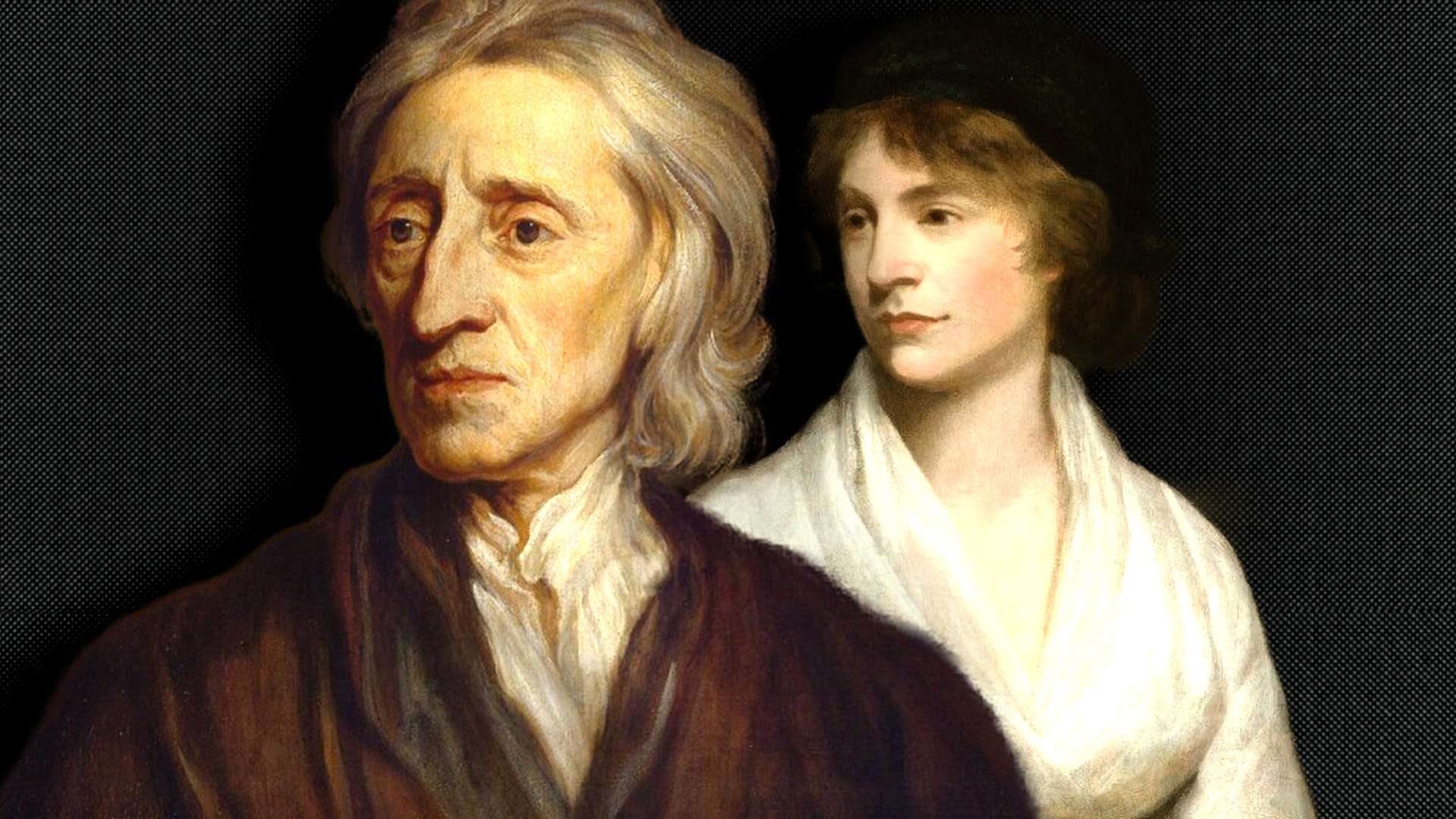
Mary Wollstonecraft (1759–1797) was the author of acclaimed works about subjects including the education of children, political philosophy, and human liberty. She is perhaps best remembered for her great pioneering book, A Vindication of the Rights of Woman (1792), a key text in the rise and development of both feminism and liberal theory.
What is perhaps less remembered today is the fact that her landmark case for women’s rights owed an important intellectual debt to the work of the political philosopher John Locke (1632–1704), who argued that the proper role of government was to protect humanity’s preexisting natural rights.
Locke is sometimes mislabeled as a conservative by certain modern academics and pundits. But his ideas were deemed to be quite radical in their own day. And for the teenaged Mary Wollstonecraft, that Lockean radicalism was as welcome as the first taste of food after a grueling starvation.
You’re reading Injustice System from Damon Root and Reason. Get more of Damon’s commentary on constitutional law and American history.
The year was 1775 and Wollstonecraft was 15 years old. She was a brilliant and independent-minded young woman, increasingly outraged by the vile behavior of her drunk, domineering father. He abused Wollstonecraft’s mother and maintained a strict, sexist hierarchy at home, favoring her brother while she was made to suffer.
It was at this low point in her life when Wollstonecraft first read Locke. Certain passages from his greatest work, The Second Treatise of Government (1689), caught hold of her mind and never really let go. A properly constituted social order “gives the husband no more power over [his wife’s] life than she has over his,” Locke wrote. “The power of the husband being so far from that of an absolute monarch that the wife has, in many cases, a liberty to separate from him, where natural right or their contract allows it, whether that contract be made by themselves in the state of nature, or by the customs or laws of the country they live in.”
In her superb book, Romantic Outlaws: The Extraordinary Lives of Mary Wollstonecraft and Her Daughter Mary Shelley (2015), the historian Charlotte Gordon memorably described the far-reaching effect that Locke’s ideas had on the teenaged Wollstonecraft:
She had always felt that her father had no right to tyrannize her family and that the preferential treatment he and her mother bestowed on [brother] Ned was unjust. Now, after reading Locke, she had an ethical foundation for her feelings. Not only was it her right to shape her own future; it was everyone’s right. In fact, Locke’s social contract made protest seem the only rational response to injustice; it was humanity’s obligation to overthrow tyranny.
One of the reasons why Locke is sometimes mislabeled as a conservative today is because of his writings in favor of property rights, an issue that we now associate with conservative and libertarian thinkers. But it is worth remembering that Locke’s whole case for property rights began with the idea that “every man has a property in his own person. This nobody has any right to but himself.”
Is it any wonder that Locke’s radical case for self-ownership would appeal to a young woman like Wollstonecraft, who longed to break free from the sexist laws and cultural strictures that held her back? Nobody was going to convince her that she did not have a right to her own body.
We might say something similar about the great abolitionist Frederick Douglass (1818–1895), who also drank deep from the principles of Lockean liberalism. “You are a man and so am I,” Douglass wrote in his famous open letter to his former enslaver. “In leaving you, I took nothing but what belonged to me, and in no way lessened your means for obtaining an honest living. Your faculties remained yours, and mine became useful to their rightful owner.” That is about as clear and effective a restatement of Lockean self-ownership principles as you are going to find.
Locke’s influence on the American Revolution, particularly on Thomas Jefferson and the Declaration of Independence, is well-known. That Locke also had a key influence on both the women’s rights and abolitionist movements is perhaps worthy of further remark.







Leave a comment