
How Trump’s Undermining of the Constitution Helped Cause a “Blue Tsunami”
 adminUpdated 8 hours Ago4 Mins read
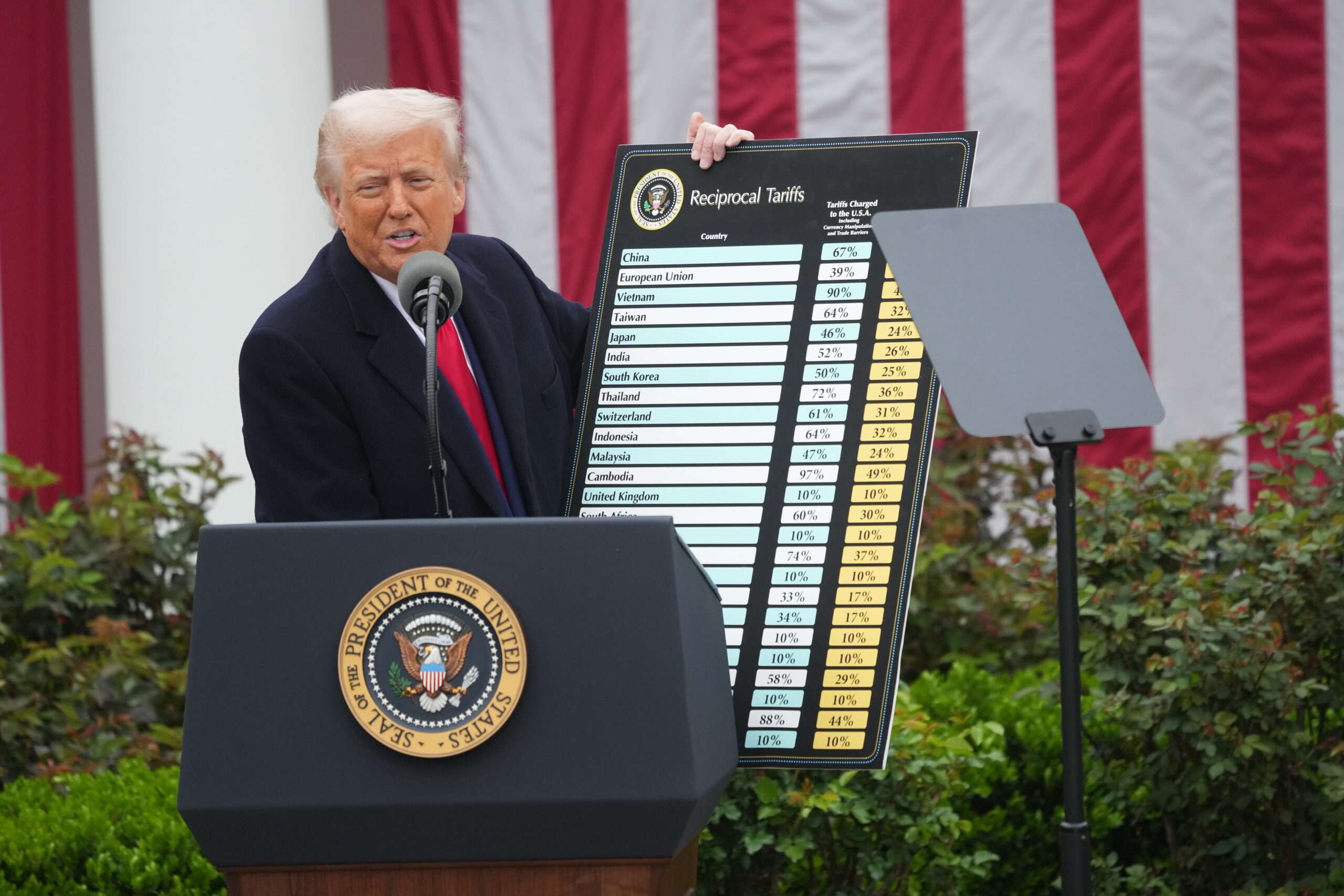
On Tuesday, Trump and the Republican suffered a massive electoral defeat, losing control of both houses of Congress. Many have called it a “Blue Tsunami”. The defeat was caused by multiple factors. But Trump’s unconstitutional actions on tariffs, the War in Iran, and immigration played a major role. Violations of the Constitution don’t always result in political setbacks for the perpetrators. But in this case they did “bigly.” As Texas GOP Senator Ted Cruz put it, “Tariffs have made everything too expensive, and the Iran war has dragged on too long.”
This connection is perhaps most obvious in the case of tariffs. Since returning to power in January 2025, Trump has engaged in a series of massive tariff power grabs, repeatedly attempting to usurp congressional authority in this field, and use it to impose the highest tariff schedule since the Great Depression. He started with the IEEPA tariffs. When the Supreme Court invalidated them, he tried again with Section 122 and Section 301 of the Trade Act of 1974, and the Section 338 tariffs against Canada. In each case, he illegally tried to transform relatively narrow delegations to the executive into a blank check to impose tariffs at will. The net effect of these actions has been to raise prices for consumers, reduce economic growth, and impose some $700 billion in new taxes on Americans over a 10-year period (unless courts end up striking down the new tariffs, too). The tariffs also failed to produce the promised increase manufacturing employment.
Most relevant for present purposes, affordability and price increases were clearly a huge issue in the election. And most voters have come to realize that tariffs increase prices, and damage the economy. Exit polls reveal that 66% of voters believe Trump’s tariffs have hurt the national economy (compared to only 21% who believe they helped), and a similar percentage (64%) believe they hurt the economy in their area (only 14% believe they helped it). Numerous other polls show widespread opposition to the tariffs, as well (e.g. here and here). They became a major issue in the elections, linked to the broader issues of price increases and “affordability.”
Polls, pundits, and even Donald Trump and Vice President J.D. Vance all agree the Iran War was a major factor in GOP losses. The military stalemate combined with resulting energy price increases have enraged voters. Exit polls showed that 74% of voters said the war was a “crucial” or “important” factor in their decisions, and the vast majority of them disapproved of Trump’s conduct of it.
And, as I have argued from the beginning, that war is unconstitutional because it was never authorized by Congress. As I warned at the start of the conflict, the failure to build up the public supported needed to secure congressional authorization greatly reduced the odds of success:
This [constitutional] limitation on presidential power is more than just a technical legal point. The requirement of congressional authorization for the initiation of war is there to ensure that no one person can take the country to war on his own, and that any major military actions have broad public support, which can be essential to ensuring that we have the will and commitment needed to achieve victory against difficult opponents. Trump’s failure to seek and secure that kind of broad public support has ensured that only about 27 percent of Americans approve of this military action, compared to 43 percent who disapprove, according to a Reuters poll. Other surveys show similar results. This is a historically low level of public support at the start of a major military action and bodes ill for U.S. staying power if we suffer reverses or a prolonged conflict results.
I think that prediction has (so far at least) been vindicated by events.
The immigration situation is somewhat more complicated than that with tariffs and war. But, here too, various unconstitutional actions have damaged the GOP’s political standing and hurt the party in the election. Trump’s cruel mass deportation policies have made ICE by far the most the most unpopular federal agency (surpassing even the IRS) and alienated Hispanic voters in Texas and elsewhere; this was a key factor in the Republicans’ defeat in that state. GOP immigration policies led many Hispanics who backed Trump and the GOP in 2024 to turn against them in 2026.
In part because of indefensible double standards in relevant Supreme Court precedent, courts permit a wide range of harsh and cruel conduct in immigration policy, that would be invalidated in any other context. But many of Trump’s policies went beyond even these overly permissive bounds. As a result, the administration has lost many thousands of immigration detention and deportation cases, including many on constitutional grounds, and many before GOP-appointed judges. Trump’s immigration crackdown has violated the Constitution in various other ways, as well, as in the case of his use of an absurdly broad definition of “invasion” in order to justify detaining and deporting even legal migrants without due process.
In all three of these cases, voter backlash arose primarily because of the awful – and highly visible – practical consequences, rather than because of the constitutional issues themselves. Most voters care far more about military failure, rising prices, and visible cruelty of these policies than about their legality. Nonetheless, it is still true that unconstitutional conduct played a major role in causing the tsunami that swept away many GOP officeholders.
We should not be overly optimistic about this chain of events. It would be a mistake to assume that unconstitutional policies always lead to electoral punishment, or even usually do so. In many cases, voters are unaware of illegality or don’t give it much weight if they do find out. Previous presidents have often avoided significant political backlash for violating the Constitution. Barack Obama, for example, also waged two unconstitutional wars (those against Libya and ISIS). But because the wars were (at least initially) militarily successful, led to few casualties, and had little visible negative economic impact, he largely avoided political damage. Later, Obama concluded that the Libya war was his worst mistake. But Democrats didn’t pay much, if any, political price for it.
Trump’s unconstitutional actions on these three issues turned out be politically costly because the negative effects were large and highly visible. Even many generally ignorant and inattentive voters noticed them.
Here, as always, I do not claim that public support for my position somehow proves I was right. As the author of Democracy and Political Ignorance: Why Smaller Government is Smarter, I recognize that majority public opinion is heavily influenced by ignorance and bias, and thus often a poor guide to goo policy. Moreover, while majority opinion agrees with me in condemning Trump’s policies here, it would not go as far as I would in sweeping away nearly all tariffs and immigration restrictions.
Despite these caveats, I am glad that the public punished the GOP for these terrible unconstitutional policies. I hope this outcome might deter future presidents from imitating them. At the very least, they might hesitate to pursue them on the same massive scale as Trump did.








Leave a comment