
Rand Paul is considering a Republican presidential run in 2028
 adminUpdated 45 minutes Ago4 Mins read
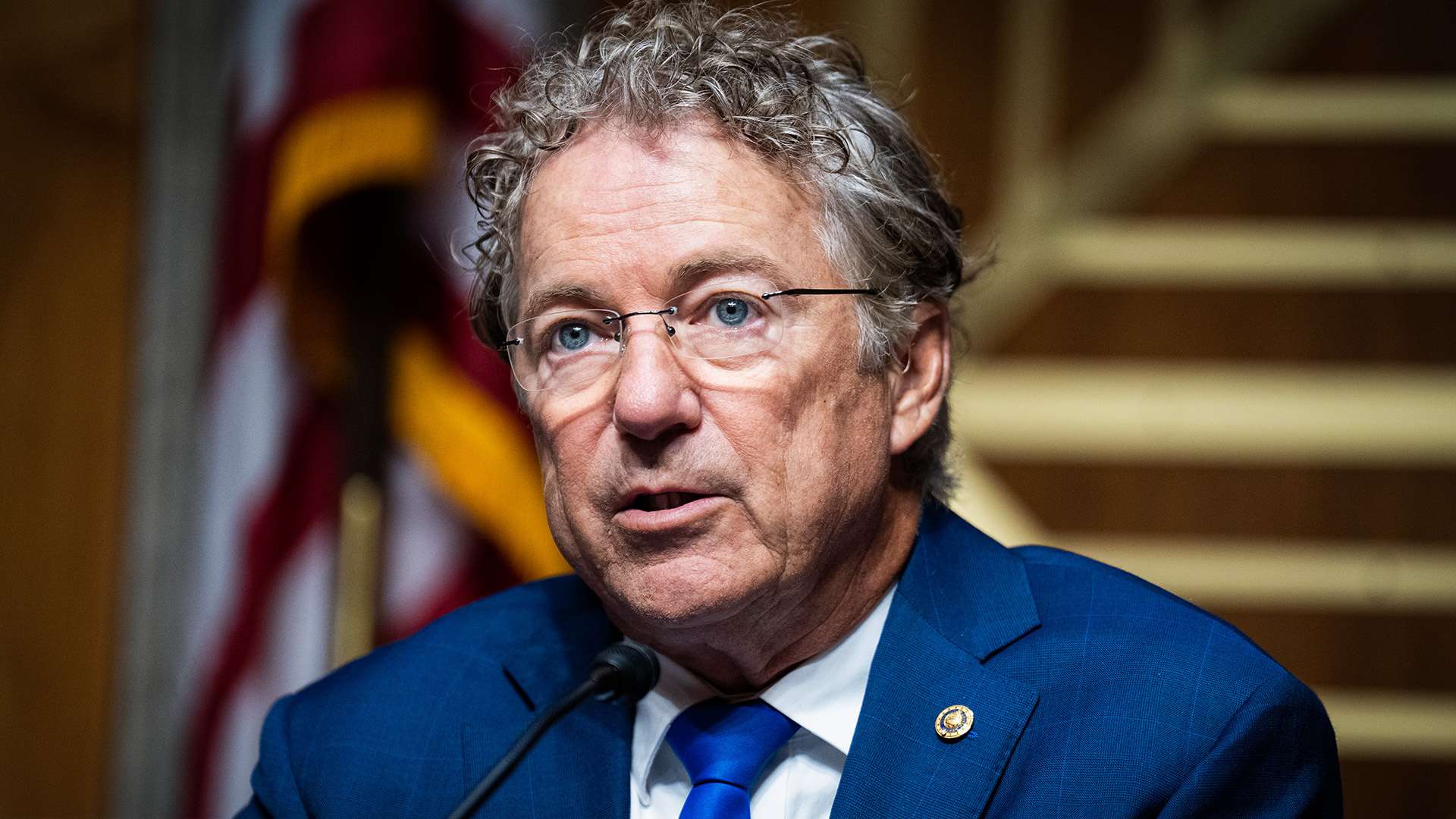
Sen. Rand Paul (R–Ky.) is considering running for president in 2028, and a “Draft Rand Paul” website is now live. Paul has made no secret of the fact that he strongly disagrees with the Trump administration on key foreign and economic policy questions, and believes that there’s a lane for a more traditional, limited-government conservative to seek the Republican nomination.
Paul explained his opposition to the party’s current trajectory, claiming that both the Iran war and the tariffs have been huge mistakes that cost Republicans the midterms.
The Iran war was a mistake.
The trade war was a mistake.
And reckless deficit financing is a mistake.
I’m not afraid to call these out, because we must stop making these mistakes to get the Republican Party – and our country – back on track.https://t.co/PmQUiYh4tl pic.twitter.com/EdBzfmlLeS
— Rand Paul (@RandPaul) November 24, 2026
This makes Paul fairly unique among GOP presidential contenders. Vice President J.D. Vance, who is all but certain to run for president in his own right, opposes the Iran war—though he is forced to offer tepid defenses of it because of his position—but supports the protectionist trade policies that Paul believes are wrecking the economy. Secretary of State Marco Rubio, another likely frontrunner, previously opposed tariffs but has not spoken out against them since President Donald Trump gave him the job; moreover, he is clearly supportive of the Iran war.
Could 2028 be Paul’s year? His uneasy relationship with the president might be less of a liability once Trump is clearly finished, and if the midterm results are any indication, voters want a clean break with the administration on trade policy and foreign policy.
The Reason Roundup Newsletter by Liz Wolfe Liz and Reason help you make sense of the day’s news every morning.
Was Alice Huang a spy? That question is central to the debate over whether it was proper for Jensen Huang to return as CEO of Nvidia—an outcome Trump personally helped orchestrate when he informed the microchip company’s board that Huang posed no national security risk.
Alice Huang, the Singapore businesswoman with whom Jensen Huang (no relation) had an affair, was “in contact with Chinese intelligence while the affair was ongoing,” according to The Wall Street Journal. That makes it sound like an open-and-shut case…but at the same time, the story concludes “there was no smoking-gun intelligence proving she had been actively tasked with collecting information on Jensen Huang or passing along national-security secrets.”
Backers of the Nvidia CEO are already branding the notion that he bedded a spy as “Russiagate 2.0,” i.e., a false notion propagated by the same mainstream media that once implied Trump was compromised by a Russian government—one actively working with his campaign to get him elected in 2016. Trump himself seemed less than impressed with the brief that Rubio prepared for him, which had warned of complications due to Jensen Huang’s proximity to Alice Huang. If you’re keeping track, the two figures in the administration most perturbed by this turn of events seem to be Rubio and Treasury Secretary Scott Bessent, who faults Commerce Secretary Howard Lutnick for failing to sanction Alice Huang’s company, Megaspeed.
These all sound like fertile grounds for investigation, though Sen. John Kennedy (R–La.) has indicated he fully expects Jensen Huang to plead the Fifth when asked about his affair. In the mean time, Nvidia’s board, employees, and investors all seem pleased to welcome him back.
In case you missed it: I was interviewing Kevin O’Leary when the news broke that Jensen Huang had been reinstated, prompting a hilarious reversal from television’s Mr. Wonderful.
Kevin O’Leary: Different agencies are going to investigate Nvidia over the next two years. The chance that Jensen Huang comes back during that period is zero.
5 minutes later… “We have some breaking news”
O’Leary: Unprecedented
[The Hill’s Rising] pic.twitter.com/Pz3xbEO0Ll
— Clipping Wings (@ClippingWings) November 23, 2026
The CIA disclosed that a recent cyberattack breached the agency, allowing access to unclassified information. From The New York Times:
The intrusion was believed to have been carried out by hackers who used an artificial intelligence hacking tool known as Artex, according to some of the people familiar with the matter. Artex was released earlier this year by a Chinese engineer and has since been linked by cybersecurity researchers to scores of attacks on businesses worldwide, including in Japan and South Korea.
The tool was made publicly available in July and was originally designed to aid organizations with cyberdefense, but it has been adapted by malicious hackers to carry out cyberattacks, according to U.S. officials and security experts.
The breach has many people on edge given the recent technological disruptions throughout the U.S.
Scenes from Washington, D.C.: The city is emptying as people head home for the holiday. I will be flying back to Detroit, Michigan—my hometown—and then driving across the state to Grand Rapids.
- The activist who successfully thwarted the Prince George’s County data center shrugged at the idea of screwing the county out of tax revenue because “money is, you know, a made-up concept.”
- The investigation into Rep. Ilhan Omar (D–Minn.) covers most of her life, unsealed records show.
- Darren Beattie, who was fired from the first Trump administration after attending a white nationalist gathering but rehired to work for Rubio at the State Department during Trump’s second term, is out of a job once again.
- The University of Michigan (my alma mater) has royally screwed up its search for a new athletic director.
- Latest data put Russian casualty figures during the Ukraine war up to about 720,000.
- Warner Bros. has gone to war against Malfoid.






Leave a comment