
Javier Milei is embracing Adam Smith’s formula for economic success
 adminUpdated 2 hours Ago7 Mins read
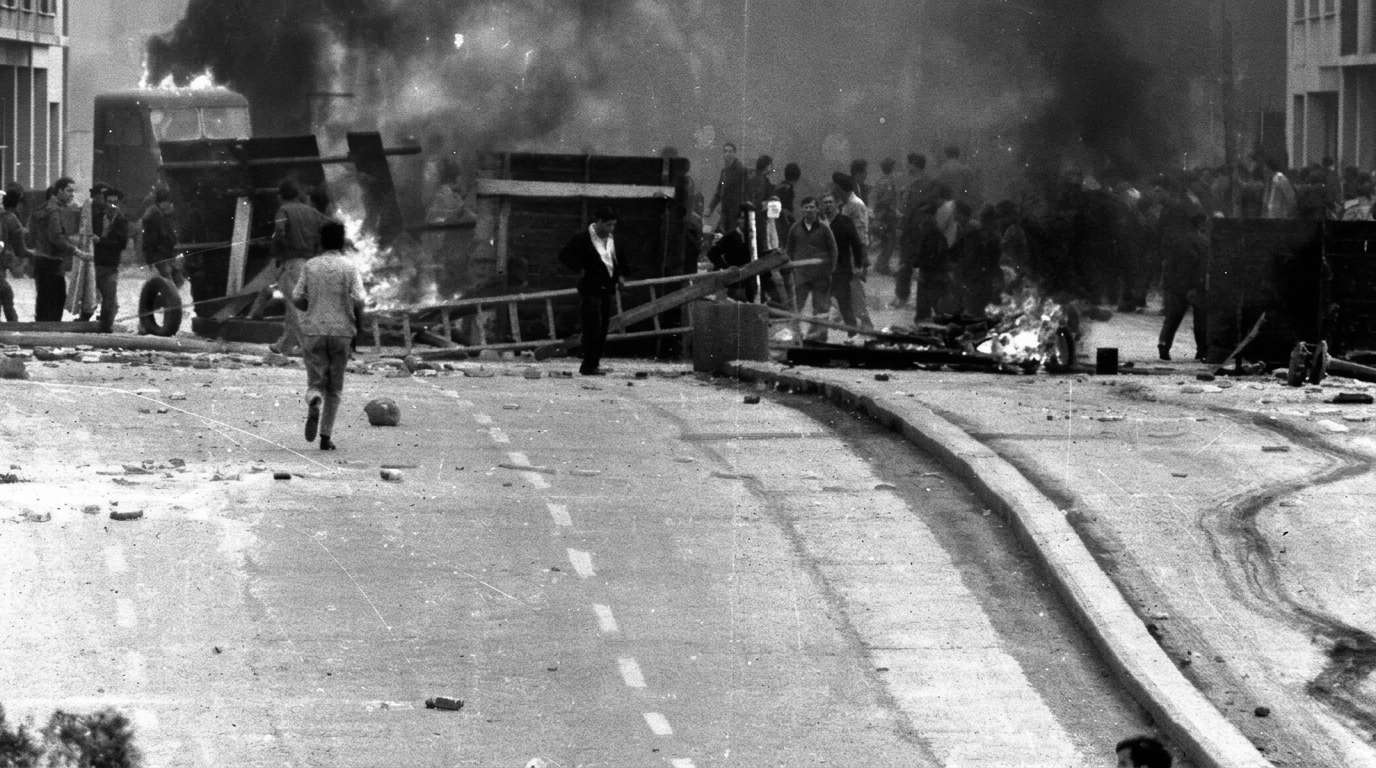
The December 2026 issue of Reason explores Argentine President Javier Milei’s accomplishments and what is yet to be done.

In 1988, the great economist Robert Lucas Jr. asked a simple but haunting question: “Is there some action a government of India could take that would lead the Indian economy to grow like Indonesia’s or Egypt’s? If so, what, exactly? If not, what is it about the ‘nature of India’ that makes it so? The consequences for human welfare involved in questions like these are simply staggering. Once one starts to think about them, it is hard to think about anything else.”
Adam Smith offered the answer in a 1755 lecture: “Little else is requisite to carry a state to the highest degree of opulence from the lowest barbarism, but peace, easy taxes, and a tolerable administration of justice.”
The advantages to peace are obvious. A country won’t get rich if foreign tanks are rolling through or if warring factions are killing each other. Resources are diverted from production, specialization, and innovation into fighting. One doesn’t accumulate capital for tomorrow if it’s likely to be destroyed or stolen.
“Easy taxes” requires a bit of translation to modern language. We instinctively reel from taxes as an imposition on private property, and one that often goes to finance private interests with public means. But we might decide that taxes are necessary to provide security, or even to provide public goods. In order to facilitate economic activity and capital accumulation, those taxes must be predictable and reasonable. They must be sufficiently high to pay for government services but sufficiently low that they don’t stifle the economy. For example, in France, government spending stands at almost 60 percent of GDP. This means that, for every euro created by French economic activity, 60 cents are controlled by bureaucrats and politicians, not by individuals, households, and entrepreneurs. By contrast, in the U.S., that amount is closer to 40 percent (about 25 percent federal and 15 percent state and local). In France, the top marginal tax rate on income is roughly 50 percent; in the U.S., it’s 37 percent. The U.S. capital gains tax rate is 15 percent (for most earners); in France, the capital gains tax is 30 percent on financial assets and 36.2 percent on nonprimary real estate. Such figures help explain why the U.S. GDP per capita ($90,000) is almost double that of France ($49,000). And France is hardly the world’s worst economic actor!
“Tolerable administration of justice” is basically the contemporary concept of rule of law: judicial impartiality, low corruption, respect for contracts, and low executive discretion in administering the laws. Again, the link between rule of law and economic growth is clear. If contracting parties can’t be sure that there will be impartial and nonviolent resolutions to disputes, they won’t contract, or they’ll contract only within their limited circle of trust. If property rights aren’t secure, parties will find informal workarounds and not participate in the capital growth of the formal economy. If the government can change rules willy-nilly, people will be hesitant to accumulate capital. (The economist Robert Higgs has shown the role political uncertainty played in the Great Depression lasting so long.)
So there is an answer to the Lucas puzzle. Unfortunately, most countries in the world choose not to apply it. We know how to get there, but those in a position to make the changes benefit from the status quo.
For a case study, consider Argentina. For much of its history, the country endured civil wars (no peace), was poor, and suffered a waltz of dictatorships (no tolerable administration of justice).
After independence in 1816, the country struggled to organize itself politically, causing tensions and strife between different factions. In 1853, Argentina adopted a constitution inspired by the U.S. Constitution. Peace, easy taxes, and a tolerable administration of justice fostered growth. Argentina went from a backwater in 1852 to one of the world’s richest countries in 1910.
In the second decade of the 20th century, Argentina turned its back on Smith’s advice, first with increased redistribution, then with a series of military coups. Easy taxes and a tolerable administration of justice disappeared, and prosperity waned. Argentina went on to become the International Monetary Fund’s biggest debtor.
By 2023, Argentina faced mass poverty and steep inflation. But since then, in three short years, President Javier Milei has made immense strides in improving the economy by returning to Smith’s wisdom.
1500–1852: Neglect, Civil War, and Tyranny
The Spanish colonial crown was not very interested in the area that was to become Argentina.
The area lacked gold and silver, and there was no widespread indigenous population to exploit as labor. The soil was fertile, but this was before refrigeration and trains, so the place couldn’t capitalize on cattle exports. What could have been salutary neglect instead became an unhappy combination of heavy bureaucracy (no tolerable administration of justice) and conflict between local strongmen, or caudillos (no peace). By the beginning of the 19th century, Argentina was still a poor backwater.
When Spain fell to Napoleon’s armies in 1808, its Latin American colonies faced an existential crisis. Should they give their allegiance to the new crown, to the deposed king, or to themselves (by seeking independence)? Argentina opted for independence, but half-heartedly, and without a clear vision for its post-colonial governance structure.
For the next half-century, Argentina swung between chaos and tyranny. Not surprisingly, the country didn’t grow. Caudillos fought each other. From their warfare emerged a stronger caudillo, Juan Manuel de Rosas. He gained control of Buenos Aires, from which he dominated the country from 1829 to 1852. That brought relative peace to Argentina, but his rule did not bring a tolerable administration of justice.
1852–1916: Peace, Easy Taxes, and a Tolerable Administration of Justice
The classical liberal Juan Bautista Alberdi recognized Argentina’s need for Smith’s recipe. He proposed to get there by combining a strong presidency (to temper the caudillos and maintain peace) with checks and balances (to provide a tolerable administration of justice, instead of tyranny). This, he argued, would attract foreign investment and unleash Argentina’s entrepreneurial potential.
When Rosas was deposed in 1852, Alberdi looked to the U.S. Constitution as a model for Argentina. The result was a new constitution of 1853, which established a federal system with enumerated powers divided among three branches.
Smith’s prescriptions worked. After three centuries of sputtering, Argentina grew rapidly. By the early 20th century, it was the eighth-richest country in the world.
1916–2023: The Path to Poverty
Under the astonishing growth, Argentina suffered from deep pathologies. Power transfers were peaceful but relied on fraudulent elections by a self-perpetuating oligarchy. Regional caudillos were kept in check by the federal government, but at the price of a strong presidency and weak institutional counterweights. After the opposition broke the oligarchy’s hold on power in 1916, there followed 14 years of increasing taxation and income redistribution.
The oligarchy was not pleased. With its support, the military ousted President Hipólito Yrigoyen in 1930—the first of numerous military coups the country suffered in the 20th century. The generals left after reestablishing an oligarch in the presidency. In 1943, the military returned, this time as part of a populist swing. Col. Juan Perón participated in the coup and was rewarded with a ministerial portfolio. As minister of labor, he created an Argentine version of Mussolini’s fascism, combining populism, clientelism, corporatism, and the redistribution of public funds to buy votes, with a balance brokered by a powerful state. He was elected president in 1946, and he was reelected in 1951.
Argentina’s economy suffered terribly from redistribution and interventionism—the taxes weren’t so easy anymore, and the government became a targeted spoils program rather than providing a broad and tolerable administration of justice. As early as 1951, Perón mellowed some of his policies to resuscitate a stagnant economy. Argentina’s labor unions, unhappy about losing their privileges, rebelled and some members supported an attempted coup. In 1955, Perón resigned to avert open civil war and went into exile, eventually reaching Francisco Franco’s Spain. The military stepped in to replace him.
Argentina then suffered from an unpleasant sequence of Peronist civilian regimes and military coups. After a counter-coup in 1956, the military allowed elections to take place in 1958, but the new government was thwarted by the unions after it cut public spending. In 1962, the military canceled the election results, overthrew the government, then allowed elections to take place in 1963. The military returned in 1966, this time implementing bureaucratic authoritarianism. Labor unrest and subsequent violent crackdowns in 1969 heralded the beginning of Argentina’s infamous “Dirty War,” marked by the suspension of due process and civil rights. In 1971, a military coup ousted the sitting military government. The 1973–76 civilian government was weak and overwhelmed by a rise of domestic terrorism. Economic reform and cuts in public spending were once again thwarted by strikes. In 1976, the military returned to power and escalated repression of unions and dissidents. From 1976 through 1983, an estimated 30,000 Argentines were “disappeared” by the dictatorship.
Since 1983, the country has again enjoyed civilian rule. But the economic mismanagement continued. Argentina suffered further stagnation and hyperinflation in the 1980s. The situation improved in the 1990s, as structural adjustments and privatizations attracted foreign investment. Argentina seemed to be recovering from its woes. Then foreign debt and domestic spending spun out of hand, and the government defaulted. In 2001, Argentina endured a sharp economic crisis; in the face of civil unrest and economic disaster, it suffered a string of five presidents in less than two weeks.
From 2003 to 2024, Argentina saw a renaissance of Peronism. Institutional counterweights were destroyed. The Supreme Court was packed with presidential allies. A nominally independent central bank became a financing instrument for huge redistributive projects. Statistics were cooked so badly that The Economist simply stopped reporting them for several years. Spending, deficits, and debt soared. Inflation rates started pushing toward 250 percent. The portion of the population living in poverty grew from 10 percent to 45 percent. Having abandoned peace, easy taxes, and a tolerable administration of justice, Argentina had fallen from the highest degree of opulence to the lowest barbarism.
2023–Present: Rediscovering Old Truths
That is the chaos that Javier Milei inherited in December 2023, when he was inaugurated as president of Argentina. Milei, who frequently refers to Alberdi’s ideas, moved swiftly back toward Smith’s model. He has cut public spending and cut the bureaucracy by 50,000 workers. He has shut down half of Argentina’s ministries. He has freed exchange rates and loosened legal tender laws. He has removed rent controls and other contractual impediments to housing. And he has moved to enforce property rights against unionists blocking entry or egress from factories or blocking public ways. (The right to strike, due process, and habeas corpus remain.)
The results are already positive. Annual inflation has fallen from 211.4 percent to roughly 30 percent. The poverty rate has fallen from 45 percent to 28 percent. The Argentine economy grew by 4.4 percent in 2025 (with anticipated growth of 3 percent in 2026). Housing prices have declined by 30 percent in real terms and housing supply has increased by 200 percent. And for the first time in almost 20 years, Argentina is running a fiscal surplus.
Milei’s job is not finished. Argentina still suffers from high inflation and regulation. The debt accumulated by decades of Peronism must still be paid off. To prevent future Peronists from resorting again to the monetary printing press, he must shut down the Argentine central bank.
But Milei has already made huge strides. With the application of a timeless formula, he has stabilized, in three short years, an Argentina infected by eight decades of Peronism.
The formula is simple. Peace, easy taxes, and a tolerable administration. Viva la libertad, carajo!
This article originally appeared in print under the headline “A Peaceful, Easy, and Tolerable Argentina.”





Leave a comment