
2026 U.N. climate change conference dubbed ‘worst COP ever’
 adminUpdated 46 minutes Ago2 Mins read
“I can tell you without any doubt that this has been the worst COP ever,” says longtime climate activist Mohamed Adow from Power Shift Africa in DW News. Considering the sorry, ineffectual history of the United Nations’ annual pre-Christmas climate carnivals, Adow is probably right about the 31st Conference of the Parties (COP31) to the United Nations Framework Convention on Climate Change (UNFCCC) currently limping toward the customary ineffectual close in Antalya, Turkey.
COP31 will most likely conclude this weekend with the usual conference decision filled with vague admonitions to governments urging them to enhance climate change action and increase climate finance. The former means drastically cutting back on their greenhouse gas emissions, largely carbon dioxide emitted from burning oil, gas, and coal. How drastic? Aggressive cuts by 18 percent by 2030, 45 percent by 2035, and 69 percent by 2040. The latter consists of demands that rich countries funnel through 2035 at least $305 billion annually to poor countries, ostensibly to help them adapt to climate change.
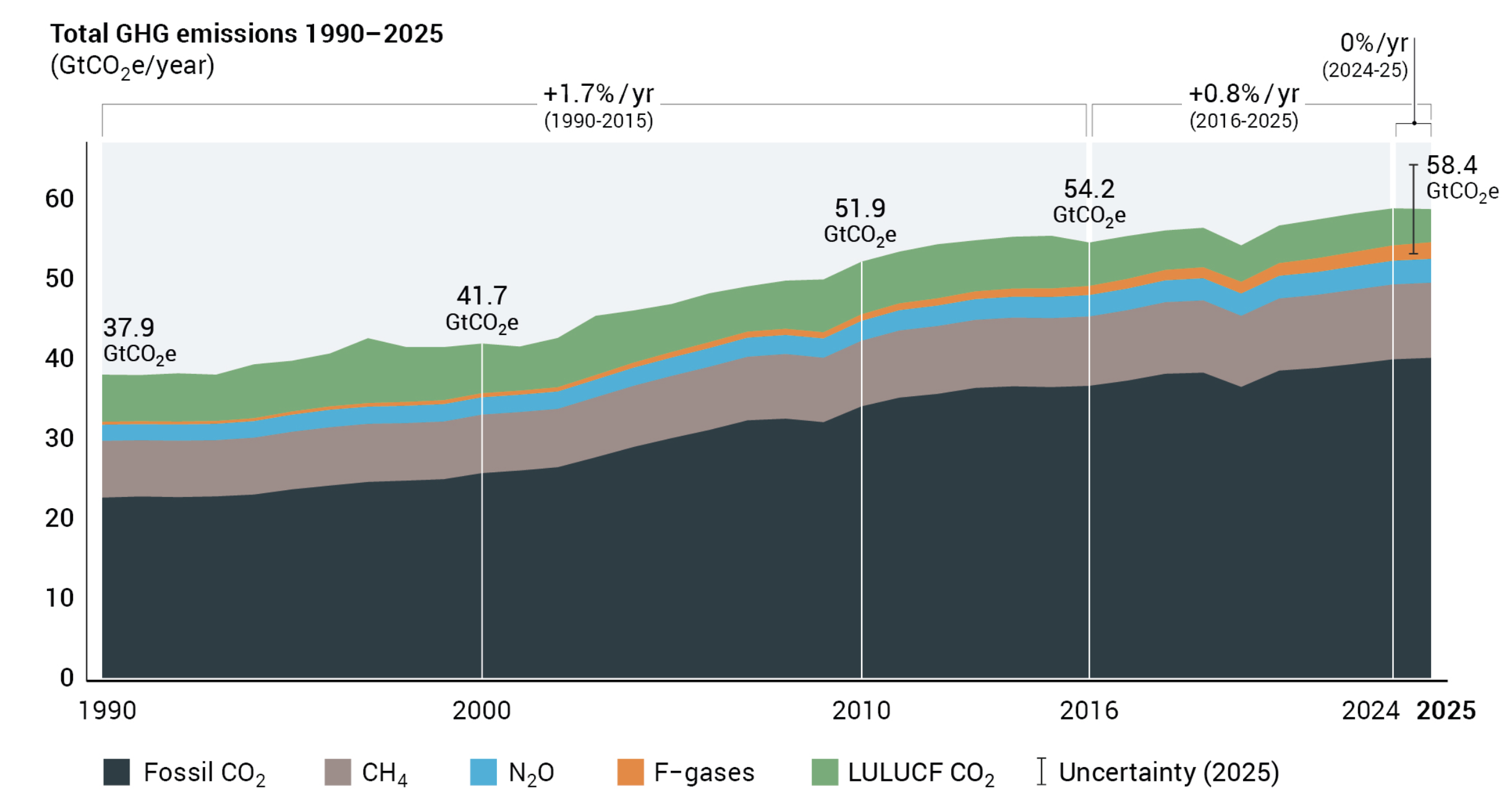
Despite 31 U.N. climate change conferences, greenhouse gas emissions and atmospheric concentrations continue to rise, as do global average temperatures.
The UNFCCC was adopted in 1992 with the aim of reining in globe-warming greenhouse gas emissions; they have instead continued their steady increase.
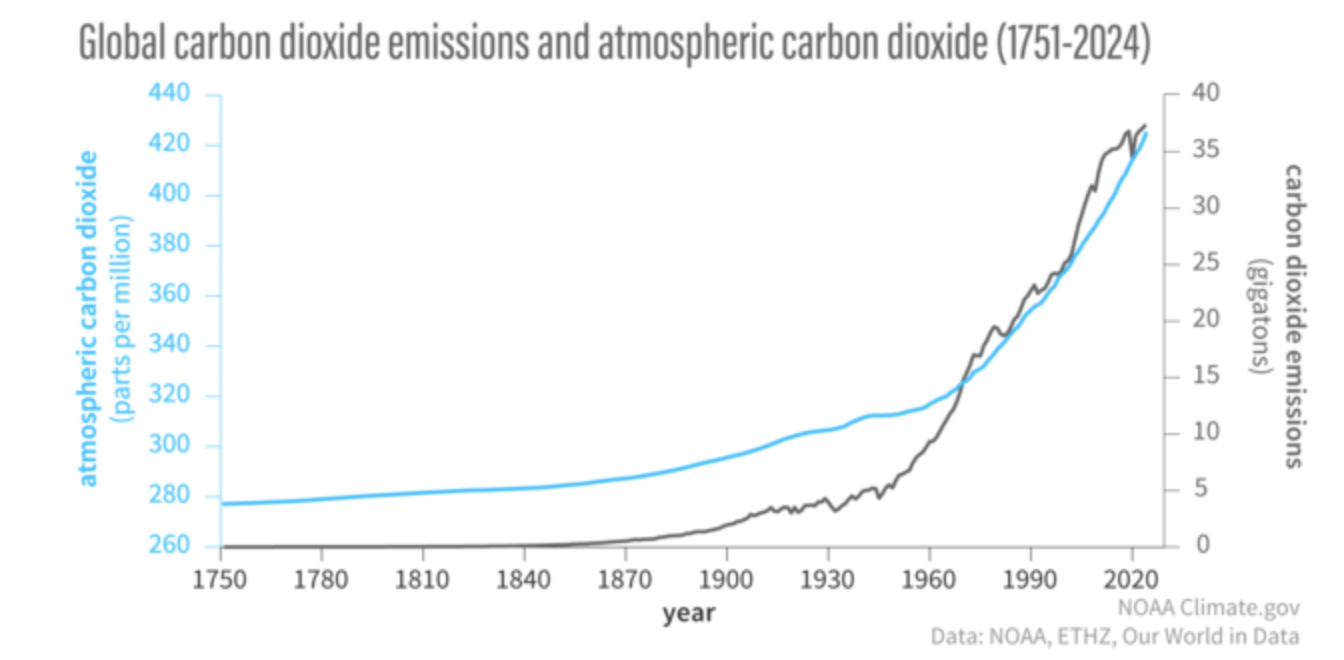
Rising emissions have consequently increased the concentration of globe-warming carbon dioxide in the atmosphere.
The 2015 Paris Agreement on Climate Change‘s aim was to hold “the increase in the global average temperature to well below 2°C above pre-industrial levels” and pursue efforts “to limit the temperature increase to 1.5°C above pre-industrial levels.” To achieve this goal, greenhouse gas emissions were supposed to peak before 2025 and decline by 43 percent by 2030. That obviously didn’t happen.
Concomitant with rising atmospheric greenhouse gas concentrations, the average global temperature has been increasing.
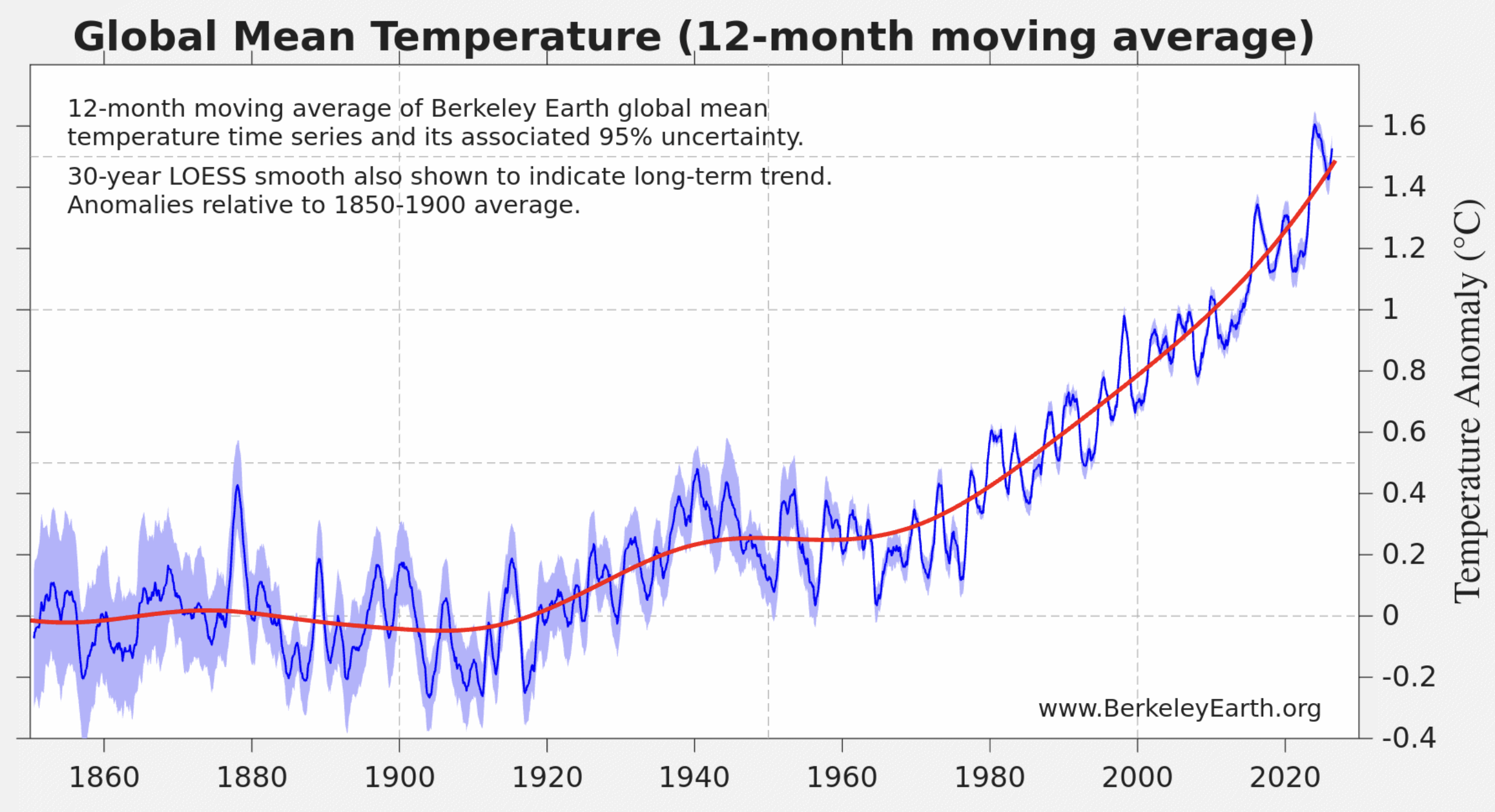
In fact, the Paris Agreement’s 1.5 degrees Celsius benchmark was breached when 2024 became the hottest year in the instrumental record. In its latest update, the independent open-source climate data group Berkeley Earth reports that “October 2026 was the warmest October on record, with a global average of 1.80 ± 0.12 °C (3.25 ± 0.22 °F) above the 1850–1900 average, about 0.12 °C above the previous record set in October 2023.” Berkeley Earth also finds that it is “now virtually certain that the 2026 annual average will exceed 1.5 °C (2.7 °F) above the 1850–1900 average, with a likely annual range of roughly 1.55–1.64 °C.” This level would exceed the previous record in 2024, making 2026 the warmest year in Berkeley Earth’s record.
The European Copernicus Climate Change Service also projects that global average temperature in 2026 will exceed 1.5 C above the preindustrial level.
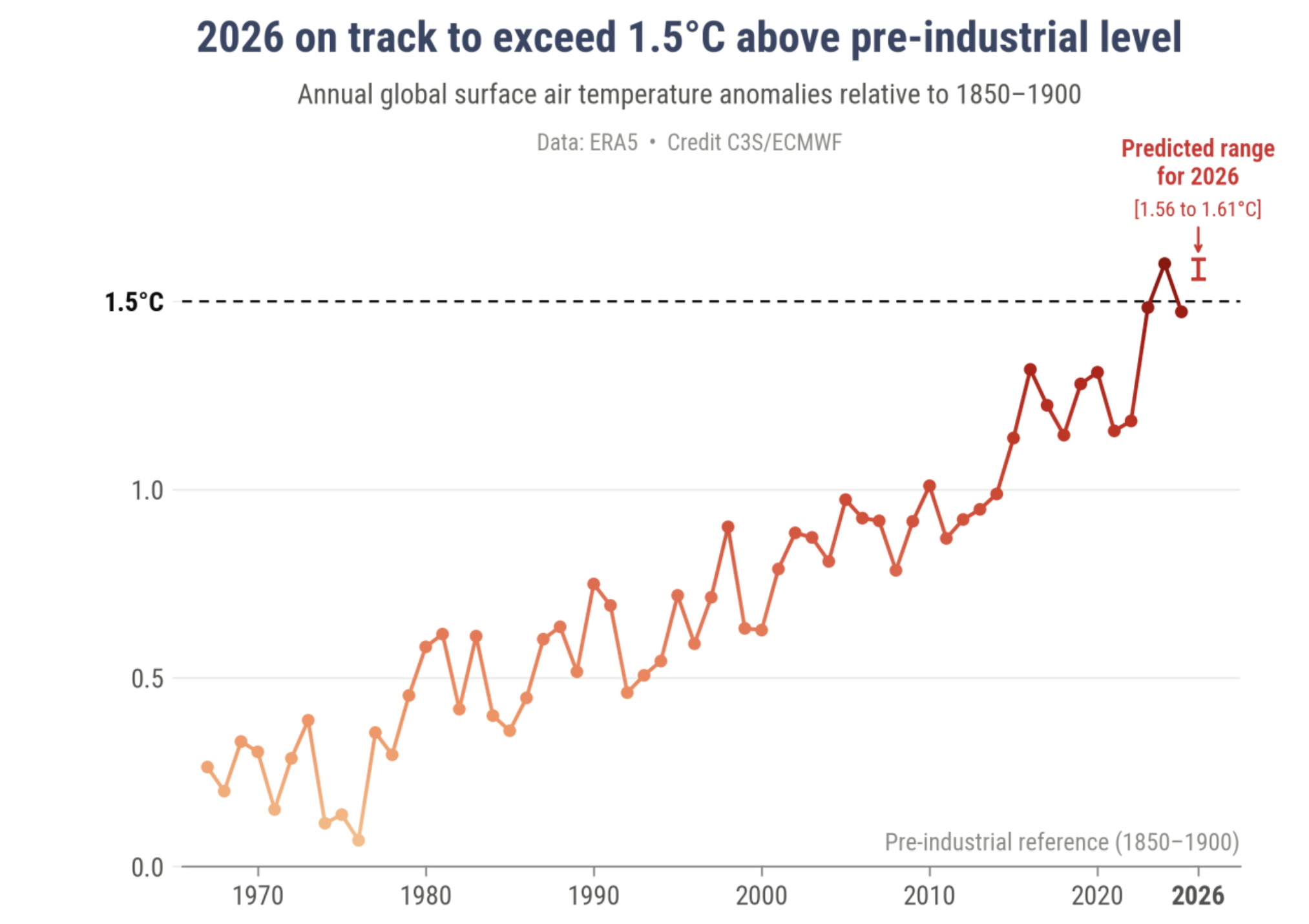
Global temperatures have been boosted this year by the super El Niño phenomenon in which very warm water sloshing periodically over into the eastern Pacific Ocean off the coast of South America releases massive amounts of heat into the atmosphere.
The United Nations now acknowledges that the “chance of holding global warming to 1.5°C above pre-industrial levels…is now gone.” BusinessGreen reports that COP31 President of Negotiations Chris Bowen said that “it falls to COP31 to be the first COP to acknowledge the world will not meet the covenant laid out in Paris 11 years ago to hold the world to 1.5C of warming”.
Given the futility of U.N. climate change negotiations, what is the likely trend in global average temperatures? The U.N. suggests that warming could rise by as much as 2.6 C to 2.8 C above the preindustrial level by the end of this century. As I reported last year, climate researcher Roger Pielke Jr. and his colleagues, using more plausible emissions scenarios, projected in 2022 that global average temperatures would rise above the preindustrial baseline (1850–1900) to “between 2 °C and 3 °C of warming by 2100, with a median of 2.2 °C.”
“Even though projections of future climate change have moderated considerably in recent years,” correctly observed Pielke, “the human influence on climate remains real and poses risks to our collective future.” After 31 years of COPs, U.N. climate change negotiations have still not done much to ameliorate those risks.









Leave a comment