
Nuclear Regulatory Commission ignores Trump’s order to revise radiation exposure limits
 adminUpdated 3 months Ago2 Mins read
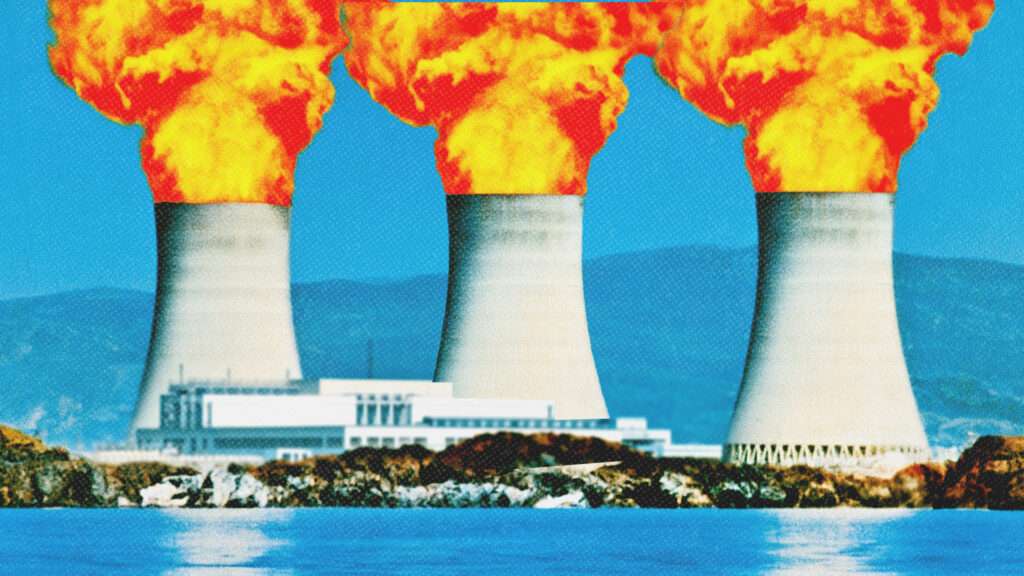
President Donald Trump issued Executive Order 14300 on May 23, 2025, aiming to reform the red tape–wrapped Nuclear Regulatory Commission (NRC), which has long stood in the way of the development and deployment of nuclear power. That order noted:
The NRC utilizes safety models that posit there is no safe threshold of radiation exposure and that harm is directly proportional to the amount of exposure. Those models lack sound scientific basis and produce irrational results, such as requiring that nuclear plants protect against radiation below naturally occurring levels. A myopic policy of minimizing even trivial risks ignores the reality that substitute forms of energy production also carry risk, such as pollution with potentially deleterious health effects.
In place of this “myopic policy,” the agency was ordered to “adopt science-based radiation limits.” In particular, the order noted, “the NRC shall reconsider reliance on the linear no-threshold (LNT) model for radiation exposure and the ‘as low as reasonably achievable’ standard, which is predicated on LNT.” The agency was told that it “shall specifically consider adopting determinate radiation limits.”
LNT assumes that there is no level of exposure to nuclear radiation that does not increase the risk of cancer. Regulators use “ALARA” as shorthand for “as low as reasonably achievable.” In practice, instead of reasonably achievable, ALARA has amounted to requiring power plants to reduce radiation exposures to workers and the public to as low as possible.
On July 1, the NRC basically ignored the requirements of the executive order when it finally got around to proposing its new radiation exposure safety rules. While purporting to get rid of ALARA, the NRC’s proposed regulations do nothing of the sort. The NRC’s new proposals recognize that “there are limitations to the accuracy of the LNT model at very low doses, however, the NRC has also not identified a suitable alternative model.” So the agency merely proposes to excise the pesky term ALARA from its regulations while still endorsing the continued use of LNT to justify its radiation dose limits.
Recall that the executive order required the NRC to consider determinate radiation limits instead of LNT. The NRC’s analysis outright rejected this instruction. The agency asserted that “establishing a determinate regulatory dose limit” is “not currently supported by scientific evidence.”
Is that so? Just a year earlier, a team of nuclear radiation researchers at the Idaho National Laboratory issued a comprehensive report that came to the opposite conclusion. Overall, they concluded that “studies have generally not demonstrated statistically significant adverse health effects at doses below 10,000 millirems delivered at low dose rates, despite decades of research.” The Health Physics Society agrees that “below levels of about 100 mSv [10,000 millirems] above background from all sources combined, the observed radiation effects in people are not statistically different from zero.” For comparison, a chest X-ray is about 2 millirems, and an abdomen and pelvis C.T. scan is about 770 millirems.
The Idaho researchers recommend scrapping the current approach in favor of annual determinate exposure limits of 5,000 millirems for occupational workers and 500 millirems for the public. Easing overly strict limits, they argue, “could dramatically improve the cost-competitiveness of nuclear energy, expand access to nuclear-medicine procedures, enhance industrial applications of nuclear technologies, benefit environmental remediation of former nuclear sites, and improve management and disposal of commercial nuclear wastes.”
In contrast, the NRC calculates that its timid revisions would save the nuclear power industry a piddling $9.53 million annually.










Leave a comment