
‘A web of canals and cobbled streets’: a city break in Haarlem in the Netherlands | Netherlands holidays
 adminUpdated 8 minutes Ago5 Mins read
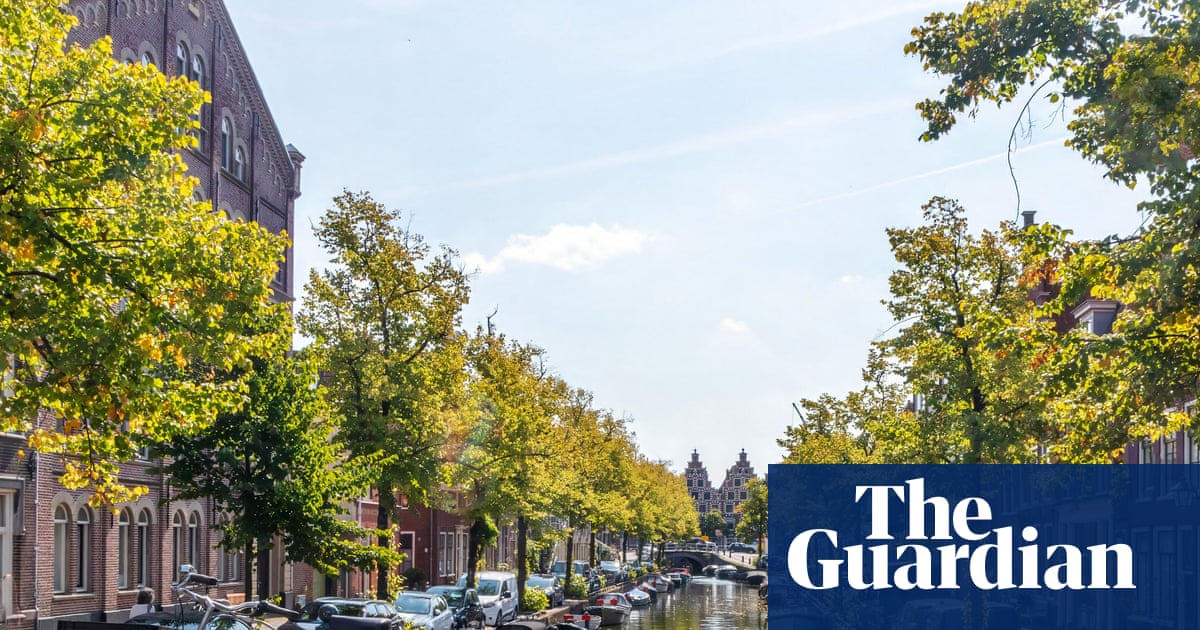
It’s only 15 minutes away from the Dutch capital by train, but Haarlem feels a million miles from Amsterdam, and perhaps provides a more typical glimpse of the Netherlands than trailing around the well-worn tourist trail of Van Gogh, coffee shops and red lights. An attractive city of cobbled streets, gabled houses and canals, Haarlem is, as the Dutch would say, a gezellig sort of place – cosy, convivial, and full of intriguing nooks and corners. I’ve been coming here for years, and it seems odd that Haarlem is not better known, at least to UK visitors.
This winter there’s the added draw of an exhibition devoted to the works of a local boy, the 17th-century painter Frans Hals, and his better-known contemporary Rembrandt in the city’s Frans Hals Museum (until 28 February 2027). No one really knows whether these two titans of the Dutch Golden Age of the 16th and 17th centuries ever met, but seeing their work hung together like this is powerful and compelling. The museum used to be the Oudemannenhuis (Old Men’s House), a retirement and care home where Hals lived out his final penniless years.
The Hals-Rembrandt exhibition is perfectly in tune with Haarlem itself, in both its (relatively small) size and the historical insights it provides into the Golden Age. There are commissioned portraits of 17th-century merchant bigwigs, all beards, black gowns and ruffs, so-called tronies (portraits of ordinary people, including Hals’ informal paintings of fisherfolk, and Rembrandt’s sensitive, affecting study of his young son Titus) and both artists’ remarkable group portraits. A final room shows Rembrandt’s dynamic De Staalmeesters (The Wardens of the Amsterdam Clothmakers’ Guild) from the Rijksmuseum, alongside Hals’ depiction of the trustees of the Oudemannenhuis itself.
Like many of the works in the rest of the museum, the faces in these paintings stare powerfully out at us from the 17th-century gloom. Above all, don’t miss Hals’ stirring and evocative Haarlem civil guard portraits of local militias, and a couple of 17th-century depictions of the city showing streets virtually indistinguishable from those you can explore today.
Start exploring with a stroll to Peuzelaarsteeg, a nondescript street in itself, but where Hals is said to have had a studio, though there’s nothing here now apart from a graffitied image of one of his paintings. Afterwards, take a peek into the former home of the Cloveniers, the citizen militia or schutterij that Hals painted, on nearby Gasthuisstraat. Look for the two crossed muskets above the gate (part of it is now a municipal library). Walk from there through the pretty, ivy-draped streets of the Vijfhoek neighbourhood to the Proveniershuis, where an otherwise ordinary door opens on to perhaps the grandest of Haarlem’s many hidden courtyards – once the base of another schutterij. A crossbow over one of the doors gives it away.
Hals was buried in the city’s magnificent Grote Kerk (Big Church). It’s like stepping into a 17th-century Dutch painting of a church interior: a vast, unadorned gothic space focused on a magnificent baroque organ at the western end: one of the largest in the world, and said to have been played by Handel and Mozart.
The Grote Kerk is on the attractive Grote Markt (Big Square), flanked by cafes and restaurants, and the perfect point from which to launch yourself into Haarlem’s web of streets. Two minutes away is the Corrie Ten Boomhuis, where a family of Dutch Christians hid Jews and resistance fighters during the Nazi occupation – an alternative to Amsterdam’s Anne Frank House without the queues. Among several other museums worth seeing is Teylers Museum down by the river, a treasure chest of fossils, crystals, scientific instruments and late 19th-century Dutch paintings. It claims to be the country’s oldest museum, and its galleried, wood-panelled interior is alone worth the admission price.
Perhaps the best thing to do is just amble and get lost: many of Haarlem’s historic streets look similar, with secret doors into sheltered courtyards or hofjes, and the streets are refreshingly free of global chains. There’s an excellent market on Grote Markt on Saturdays, and any number of stylish indie stores to browse in nearby, whether you’re looking for vintage clothes (Yenvi) or new ones (Stitch), chocolates at Pierre or Dutch liquorice at Dropje van Haarlem.
Cyclists vastly outnumber cars in this city. Rent a bike (try Green Bikes by the train station) and head out to the Zuid Kennemerland national park, west of the city centre, a protected area of dunes, forests and lakes that gives way to the glorious sandy beaches of the North Sea coast.
after newsletter promotion
There’s no shortage of choice for great places to eat and drink. For breakfast or lunch, La Maru on Koningstraat is a great bakery, or try the sandwiches, salads and flammkuchen (sort of Dutch pizzas), at Meneer Frans in the historic centre. Alternatively, enjoy a pickled herring at the fish stall on Grote Markt.
Another Haarlem pleasure is to stop off for a pils at one of its many cosy bars. Lively In den Uiver on Riviervismarkt – a typically Dutch “brown cafe”, housed in a former fish shop – offers a choice of 35 gins and 35 speciality beers. Or the Jopenkerk brewery tap, in a former church, is a five-minute walk from the Grote Markt. For dinner, there can be no more bizarre place than DeDakkas, in a greenhouse-like structure on the top of a multistorey car park near the river. It serves a sustainable, locally sourced menu, with superb views.
There are plenty of places on Grote Markt to watch the world go by. Among the best is historic Grand Café Brinkmann. Or walk five minutes down Koningstraat to Botermarkt, on the edge of the Vijfhoek quarter, where Café De Roemer is one of a number of bar-restaurants with a covered terrace.
Finally, there can be no better place to wake up in Haarlem than in one of the corner dual-aspect room at the 17-room ML hotel (doubles from about €119 room-only), right by the Grote Kerk, which has two good restaurants and a sleek bar. Across the road, the Amrâth Grand Hotel Frans Hals is a large, slightly cheaper alternative, while the Staats Hotel, on a quiet street two minutes from the station, offers cool, spacious and contemporary boutique rooms from €165 room-only, and also has its own bar and restaurant.
The trip was provided by Netherlands Board of Tourism. Martin Dunford is one of the founders of the Rough Guides travel guide series and wrote the first editions of the Rough Guide to the Netherlands




Leave a comment