
Americans want cheaper minitrucks. State regulators are getting in the way.
 adminUpdated 12 minutes Ago3 Mins read
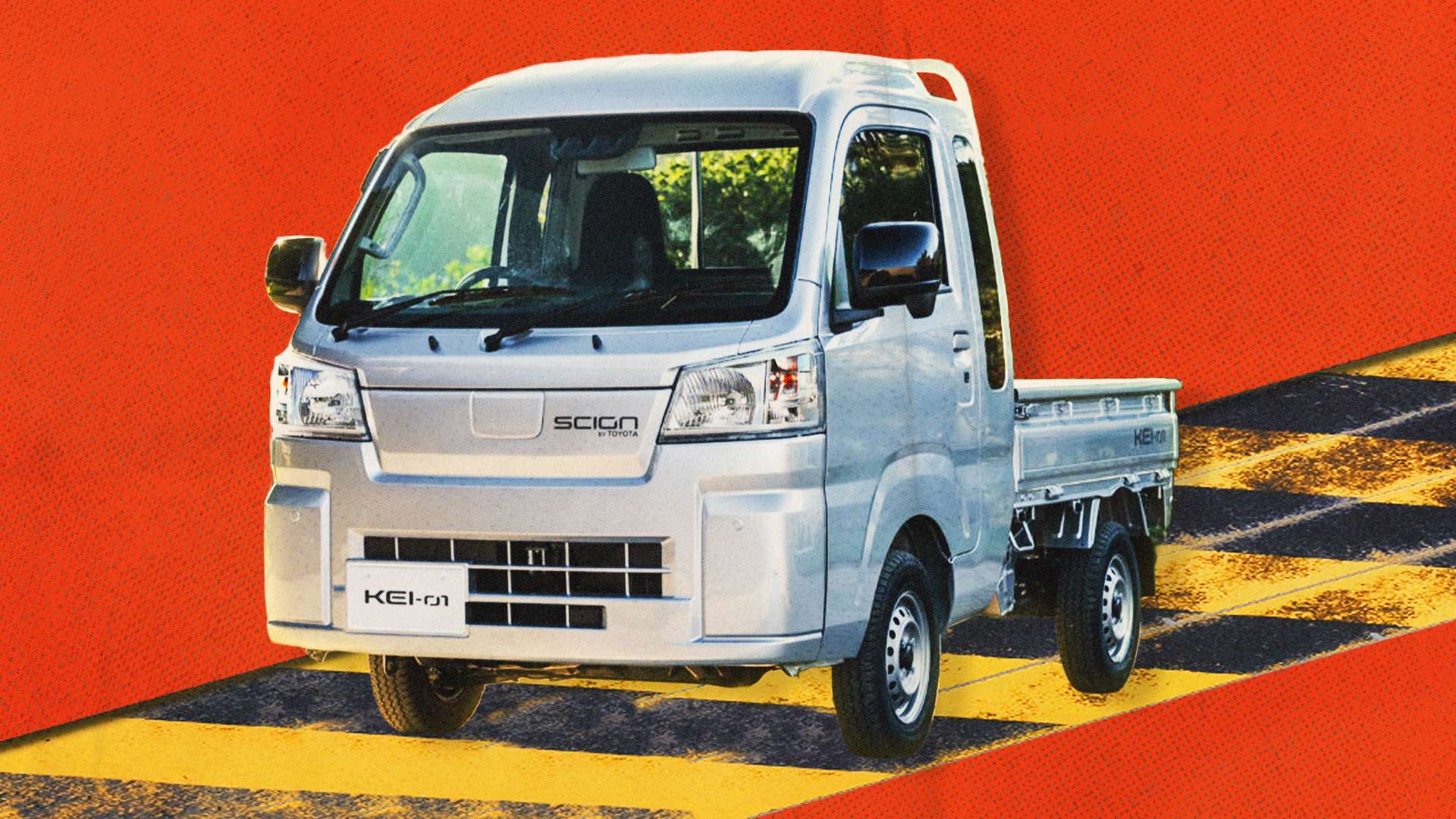
Earlier this month, Toyota announced Scion, “a new brand built around curiosity, possibility and the freedom to explore mobility in new ways.” The company also unveiled its first product: the KEI-01, a small two-seat utility truck with a cargo bed capable of carrying up to 600 pounds.
Based on Japanese domestic models, the KEI-01 will top out at 25 mph, and, for now, only businesses will be able to purchase them. Like other kei-class vehicles, it is built for everyday life on Japan’s smaller roads. Although they are not hybrids, kei trucks average between 30 and 40 mpg, comparable to hybrid trucks like the Ford Maverick. Their small size and fuel efficiency make them practical alternatives for light-duty work and everyday transportation.
Scion is back… and will sell kei trucks in America.
The brand has released the KEI-01, a 660-cc mini truck that will be built and sold in the US.
Yes, you read all of that correctly. pic.twitter.com/qdJvhb8eBz
— Motor1 (@Motor1com) November 10, 2026
Although Toyota has not officially announced the KEI-01’s price, Don Federico, Toyota USA’s vice president of engineering, suggested that $22,000 would be “reasonable.” That would be substantially cheaper than the average price of a full-size pickup—which Kelley Blue Book listed at $67,912 last year—and the average compact SUV ($37,895). It’s even competitive with compact cars, which average out around $28,030. Toyota plans to assemble the KEI-01 at its existing Indiana plant starting in 2027, supported by a $34 million investment expected to create approximately 50 jobs.
The company’s announcement is exciting news for consumers. But it raises a larger question: If manufacturers can offer smaller, more practical utility vehicles—and if Americans want to buy and drive them—why don’t they? As is often the case, the answer is the regulatory system.
While federal law allows vehicles 25 years old or older to be imported without meeting current federal vehicle safety standards, a patchwork of regulations means keis are not legal to drive in every state.
In 2023, the Georgia Department of Revenue banned the titling and registration of kei vehicles. The state argued that the cars lack adequate crash protection and do not comply with federal safety standards. Even those legally imported under the federal 25-year exemption cannot be registered for use on public roads. Oregon regulations are similar to Georgia’s; kei vehicles cannot be titled or registered for ordinary road use, although certain minitrucks may qualify for off-road titles. Pennsylvania limits minitrucks to off-road, agricultural classifications, but they are not allowed for unrestricted daily transportation on public roads. In total, 18 states prohibit or heavily restrict kei vehicle use on public roads, according to West Coast Shipping, a car import company.
Massachusetts, which once took a restrictive approach, reversed its policy in September 2024 by allowing kei vehicles to be registered for passenger or commercial use. Massachusetts is still evaluating safety implications, showing that regulators can reconsider and evaluate restrictions while acknowledging safety concerns.
Texas has gone further. After reversing a registration ban, the Legislature passed Senate Bill 1816 in 2025, which recognized qualifying miniature vehicles as motor vehicles for titles and registration, allowing them to operate legally on public roads.
The safety concerns of older kei trucks, particularly those manufactured more than 25 years ago without modern crash protection and then imported to the United States, may be legitimate. However, they do not justify blanket restrictions on minitrucks in some states, especially with the advancements of newer models.
Toyota’s new KEI-01 is designed to comply with federal safety standards for low-speed vehicles, which have different requirements than conventional passenger cars. Modern kei vehicles manufactured for the Japanese market, such as the Honda N-Box, have many of the modern safety features American consumers are getting used to. While this doesn’t necessarily make them compliant with American crash standards, they demonstrate how smaller vehicles can incorporate modern safety technology.
The safety risks don’t mean there is a need for uniform restrictions on all kei vehicles. Regulations tailored to their size and intended use would make more sense than treating them exactly like conventional passenger vehicles. Better yet, regulators could draw a clear distinction between the older models and ensure that newer models continue to have modern safety features.
With vehicle and transportation costs rising, consumers need access to affordable alternatives. Toyota’s announcement suggests there is demand for affordable utility vehicles. Now regulators have to get out of the way and allow the private sector to provide a solution.








Leave a comment