
An education in the arts should be available to all | Education
 adminUpdated 1 hour Ago3 Mins read
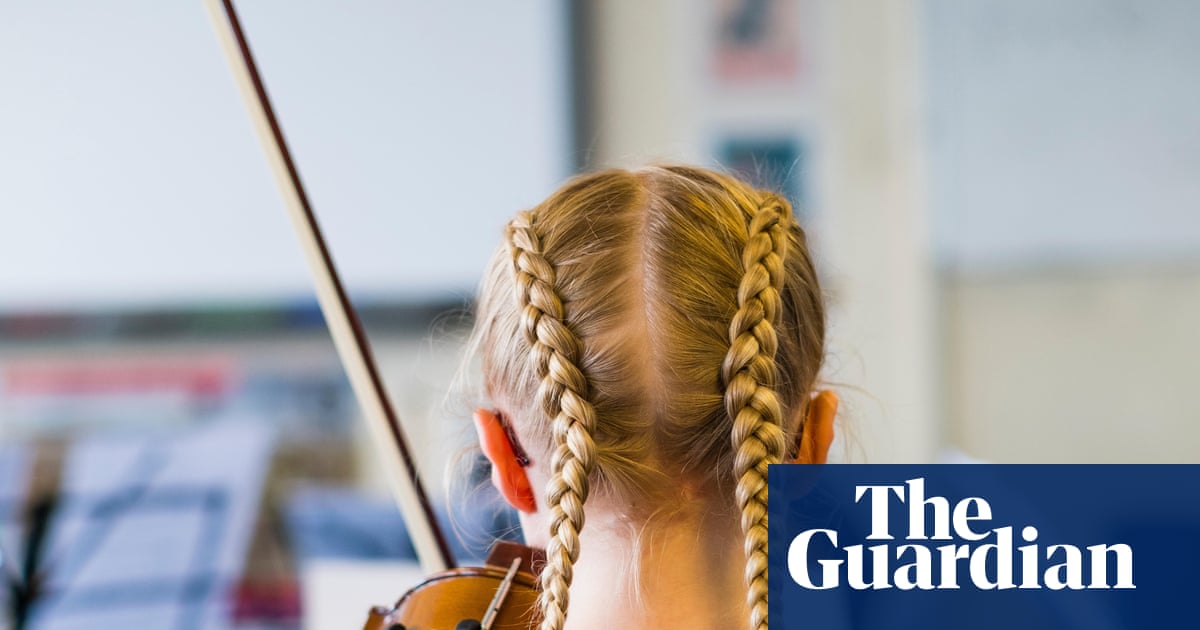
Your editorial on the decline of music and drama in state schools (4 September) is right to highlight what has been lost. Education should enable young people to enjoy learning as well as achieve.
Michael Gove’s reforms, rooted in a dewy-eyed vision of a mythical golden age of education that never existed, diminished arts subjects in which many students found success. The EBacc prioritised academic subjects and measurable outcomes; the arts were squeezed from timetables.
Schools knew the cost. At the special school where I was the headteacher, we kept drama as a core subject because it developed social skills, an awareness of body language, confidence and empathy – essential skills for life. In mainstream schools, I often saw the pride and confidence gained through performance carry over into a student’s wider learning.
I remember a father in tears of joy because he had never imagined his child with special needs performing in a school choir. I remember a mother telling me that a mainstream school production transformed her disaffected daughter’s confidence. No league table measures moments like these.
With rising numbers outside education, employment or training, we should ask whether losing such opportunities contributes to disengagement.
Music and drama are not luxuries. For many young people they provide something fundamental: a reason to believe they belong in education at all.
Pete Crockett
Royal Wootton Bassett, Wiltshire
The Guardian is right to highlight the perilous position music education has been placed in by successive governments, and the importance of every child having access to high-quality music education in school.
The National Centre for Arts and Music Education is apparently opening this month. The centre, while a welcome addition to the music education ecosystem, will never be the answer to all problems, particularly when its new funding is just £13m over three years.
We don’t know when the centre will open because the process has been beset by delays, there is no announcement on who received the tender to manage it, and the Department for Education hasn’t officially announced that its opening is delayed yet.
One must question whether the DfE would treat any other core curriculum subject this way. Lucy Powell has the goodwill of the music education centre, but, as your article eloquently sets out, she has inherited a serious problem that needs urgent attention.
Deborah Annetts
Chief executive, Independent Society of Musicians
I travel four hours a day by bus to the closest state sixth form offering drama and textiles A-levels. It’s 20 miles away: 65 stops and a change, with no direct route. I get up at 5.30am and get home tired and too late for evening clubs. The bus service is unreliable and my pass costs £700 a term. I’ve spoken to the local MP about how hard this is, but nothing has changed.
There’s only one secondary school in my home town, which I was going to stay at until it dropped drama at the last minute because I was the only person in my year who’d signed up. I want a career designing costumes for theatre and film, and spend all my free time making costumes, so not doing drama wasn’t an option.
The school I now attend, Northampton School for Girls, has been hugely encouraging. It also let me travel miles away for work experience at a costume supplier for film. My old school allowed only very local placements.
Why has the country decided young people in small towns aren’t allowed to be creative? We’re pushed towards engineering or hairdressing, and told to stop wanting anything different.
Molly Stubbs
Brackley, Northamptonshire
It has been my privilege and honour to lead a state school that has chosen over decades to invest in the performing arts for its students. This is increasingly difficult; schools are so constrained by the curriculum and funding that it is now nigh on impossible to achieve.
Students who leave my school and continue to conservatoires or music degrees are invariably the only ones in their cohorts from the state sector. This must change to ensure our vibrant arts heritage reflects the diversity of our society in the future; besides which, young people from all backgrounds deserve to benefit from the richness participation in the arts brings us.
Matthew Parris
Kinoulton, Nottinghamshire











Leave a comment