

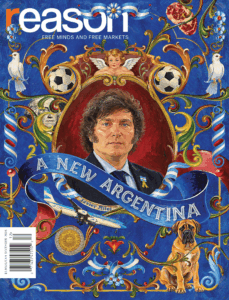
The December 2026 issue of Reason explores Argentine President Javier Milei’s accomplishments and what is yet to be done.
The 2026 World Cup was many Americans’ first exposure to the mafioso politics of the international soccer federation FIFA. The organization’s president, Gianni Infantino, cozied up to host country president Donald Trump in various ways, such as inventing the FIFA Peace Prize to give to Trump and letting him keep the FIFA Club World Cup trophy in the Oval Office. FIFA is permeable to corruption and has a history of providing cover to controversial and sometimes authoritarian rulers—just look at World Cups hosted in Russia in 2018 and Qatar in 2022, an exercise in sportswashing human rights abuses and geopolitical scandals.
But of the 23 quadrennial World Cups, the 1978 World Cup in Argentina is the most informative case study of sportswashing a dictatorial regime.
At the time, the country was ruled by a military junta. Two years prior, it had ousted the democratically elected Isabel Perón, accusing Juan Perón’s third wife of failing to check the threat of far-left guerrilla groups. The dictators carried out the “Dirty War,” deploying the full might of the military not only against the guerrilleros but also against a civil society they saw as infected by foreign subversion. Political parties, trade unions, universities, the press: No limb of the national body was spared from repression. Every smidge of dissidence—from political activism to rock music to harmless eccentricity—was targeted. Around 30,000 people were forcibly disappeared and held in clandestine detention centers for torture and extrajudicial killings. Thousands more were chased into exile, received by a horrified if disbelieving world.
FIFA had chosen Argentina to host 12 years prior. When the World Cup finally came, the junta saw it as a great opportunity to propagandize at home and abroad. Several countries saw through it and publicly considered a boycott, but they ultimately participated. The junta spared no expense building all the physical and media infrastructure that would make for a good spectacle.
The event’s jewel, the Monumental Stadium, was just a mile from the Navy School of Mechanics, the most infamous detention center of the period. It was so close that survivors report hearing cheers from the World Cup matches while being tortured. The junta wanted the world to think it had taken a nation on the brink of civil war and turned it into a tidy and safe society.
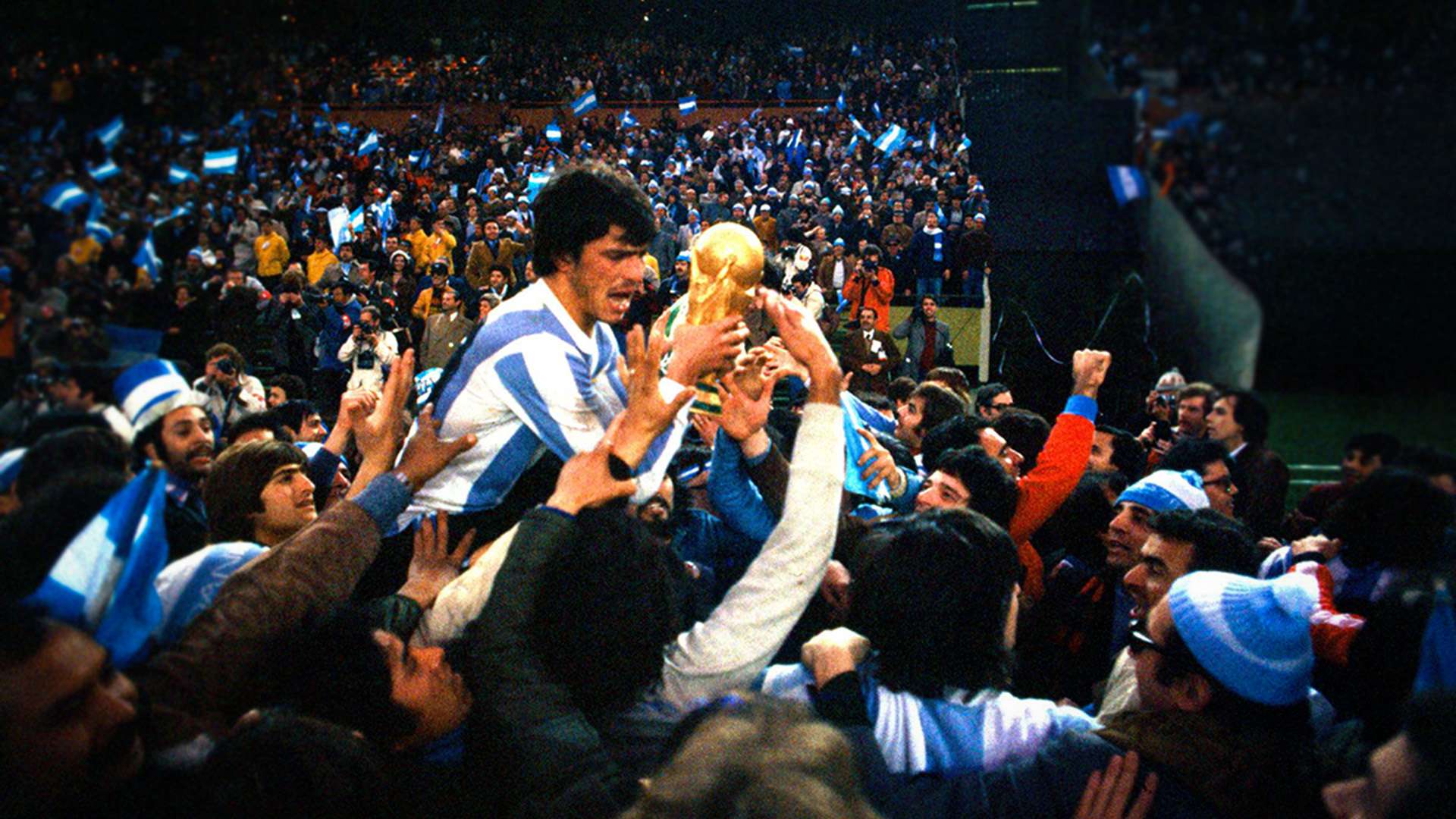
And then Argentina won! This would be a great source of internal legitimacy, the dictators hoped: a sure sign that the Argentine people would forever associate military rule with triumph.
Instead, the team’s defeated rivals accused the organizers of match fixing and FIFA of favoritism, arguing that everything had worked out just too well for the hosting junta. No foul play was ever proved, though accusations swirled around an Argentine 6–0 victory over Peru. (Under the tournament’s format at the time, Argentina needed to win by four goals to make the final.)
The 1978 World Cup did not bring FIFA or the regime positive international press. It shed light on the crookedness of it all. The military could not limit international attention to the pretty face it wanted to show. Fans, exiles, and even one West German player boycotted the event. Human rights activists trained journalists on how to get past the regime’s censorship; they could show the street, interview the victims, ask the authorities poignant questions, and give voice to their silenced colleagues. The military’s fragility and paranoia were evident when it unlawfully arrested a Swedish player and then quickly released him after his identity was revealed. The media–conscious dictator, Gen. Jorge Videla, was publicly humiliated when a Dutch player refused to give him the protocolary salute.
The dictators’ soccer victory didn’t prevent them from losing on all other fronts. They tanked the economy, partly because of the irresponsible spending on the 1978 theatrics. They underwent increased international scrutiny. They lost a war and got diplomatically isolated. They were kicked out by a democratic government that tried and imprisoned them for crimes against humanity. Bread and circuses cannot cover up failures of statecraft. If the 1978 World Cup did anything for the military, it accelerated its downfall; if it did anything for FIFA, it tarnished its reputation and initiated calls for reform.
It isn’t just dictatorships that engage in such theatrics. Weak democracies have tried to use the World Cup as a billboard for prosperity and national unity, as in South Africa in 2010 and Brazil in 2014. The pretense was expensive and ultimately ruinous for both nations. Soon after came FIFA leadership’s own demise with the 2015 corruption crisis. No wonder some saw the World Cup as more of a threat than an opportunity for Trump and Infantino.
But the United States is a strong republic with a vigilant society, structural advantages that helped it avoid the worst of FIFA’s dirty business. Headlines focus on what’s flashy and worrisome about the tournament, but that can distract from the positive side of the game. No matter how much corrupt or authoritarian figures interfere with it, soccer is about the enthusiasm of millions of passionate people who want to test themselves and help each other improve.
This article originally appeared in print under the headline “How Soccer Covers Up for Dictators—and Brings Them Down.”




Leave a comment