
As housing protests sweep Portugal, police and politicians here seem bent on making the crisis worse | Ana Naomi de Sousa
 adminUpdated 14 minutes Ago4 Mins read
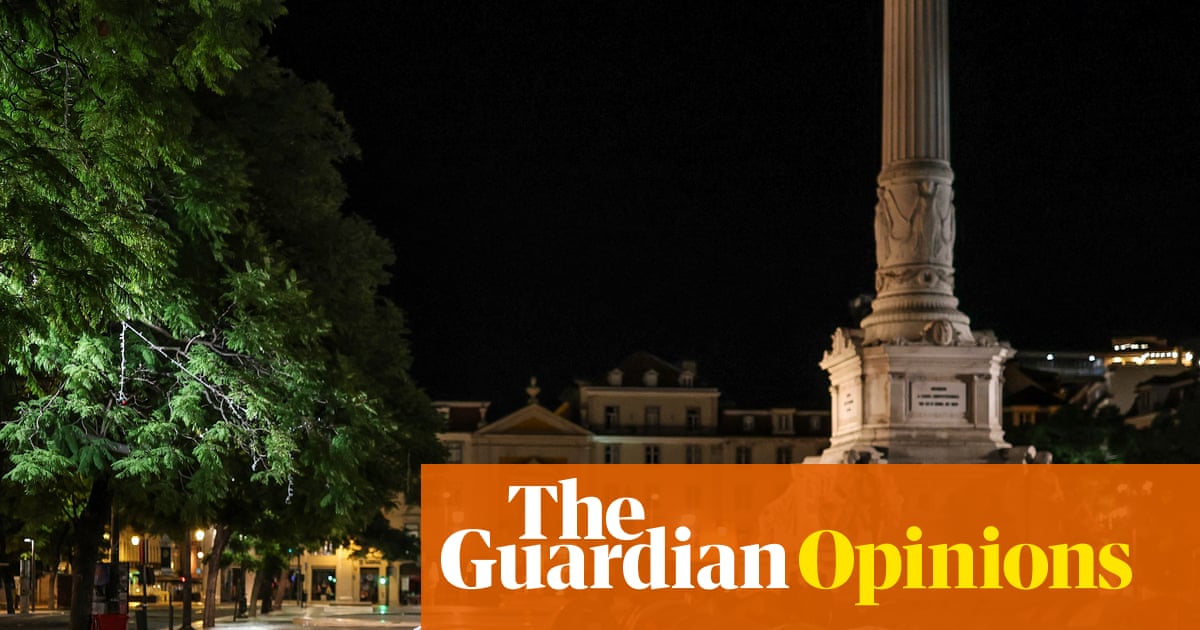
As Storm Charles reached Portugal’s shores this week, flights were aborted, schools were closed, and the global Web Summit in Lisbon was forced to cancel a whole day of lucrative events. But even the promise of some very bad weather was not enough to deter housing protesters from setting up camp for another night on the streets.
Since 14 October, echoing recent eruptions over housing in Spain, and the fierce student-led protests in France, Lisbon and Porto have become the focus for encampments and daily protests drawing people in their thousands. Almost one month later, they show no sign of disappearing.
The breadth of these demonstrations is as wide as the housing crisis that has provoked them. At the protests you might find architects, waiting staff, high school graduates, philosophers, young mothers, professional politicians, projectionists, security guards, graphic designers and master’s students. I met thirtysomething professionals still living with their parents, separated couples having to sleep under the same roof, and families torn between cramped living conditions in the city and moving far away from their jobs, schools and communities.
On the days I spent at the protest camps, the mood was both animated and serious. There was a “people’s university”, a canteen serving free meals and people dropping by after work, university or school. A number of discrete social and housing movements from both cities have joined together. Some have come out to protest against their appalling living conditions, others are fighting eviction orders, and many more have found it impossible to move on with their lives because they can’t move home. In Paris they burned cars, while in Barcelona they built barricades; in Portugal, the most provocative act of the encampment was a giant spooning sleepover. There were also clowns, a dedicated group of supportive “camp mothers”, singalongs, and performances from pop singers Mayra Andrade and Ana Moura.
The government’s responses have only made matters worse, ranging from the farcical to the outright repressive. Prime minister Luís Montenegro called the demonstrations “selfish”, and suggested they were a “foreign import”. Protesters have noted that he owns at least six properties across Portugal, as well as extensive land. Lisbon’s mayor, Carlos Moedas, complained about the impact protests would have on an upcoming German-style Christmas market. Meanwhile, the police reaction has been shocking and aggressive, with Lisbon’s police attacking peaceful protesters while they were sleeping.
According to the Público newspaper more than 160 people have been injured – including some who were shot in the face with rubber bullets – and 99 arrested in Lisbon and Porto. Videos show police actively attacking protesters as they flee. The police brutality and impunity has provoked an outcry. More than 200 lawyers have signed a letter alleging disproportionate force and illegal measures, and demanding an inquiry. Amnesty International issued a statement accusing the police of “beatings and excessive force … causing physical harm and hospitalisations. This response is a choice. It can – and must – be stopped by the Portuguese authorities.”
Why, then, is the government going to such lengths to avoid addressing what is one of Europe’s very worst housing crises? Access to decent, affordable housing has long been an issue that has afflicted low income – and, in particular, racialised – communities in Portugal; but it has become something that now affects even the professional middle classes.
The numbers are so extreme, they seem impossible to ignore. Since 2015, house prices nationwide have increased by 169%; in Porto, that figure rises to 180%; in Lisbon, it is 186%. Meanwhile, wage growth has failed to keep pace. Portugal has the highest discrepancy in the entire EU between house price and income.
This state of crisis did not arrive overnight. The deregulation of Portugal’s housing market was set in motion following the 2011 bailout administered by the Troika (the European Commission, European Central Bank and International Monetary Fund) in the aftermath of a national financial crisis. The bailout conditions restricted government spending and borrowing, prompting the centre-right government at the time to seek new sources of private and foreign capital, making urban development increasingly dependent on private investment rather than public funding. It was also during this period that rental laws were relaxed to favour landlords, stoking a profit-driven rental market. Since then, huge swathes of land and property have become the target of speculation.
A recent tourist boom has further inflated the profits being generated by property in Portugal. Tourism has become a significant driver of economic growth, but it has come at a different kind of cost. In Lisbon and Porto, the proliferation of short-term lets from sites like Airbnb has pushed rents and property prices up across dozens of neighbourhoods, forcing communities out as a consequence.
Demonstrations about housing in Portugal have become increasingly frequent over the past five years, but have fallen on deaf ears. And while Spain, Germany and the UK have all recently implemented laws to protect renters’ rights, Portugal’s centre-right government is now introducing legislation to give greater powers to landlords to raise rents, demand larger deposits and evict tenants more quickly.
after newsletter promotion
Since the protests began, Montenegro has made no signs of considering any concessions. His apparent public indifference has been accompanied by a series of attempts by elected officials to discredit and criminalise protesters. Moedas claimed that cleaning graffiti on Rossio square had cost the disputed sum of €138,000 (£115,000). Meanwhile, the police have been dreaming up some creative new means of repression; on 1 November they announced they would fine motorists €60 for tooting their horns in support of protesters – though they were forced to withdraw the measure within 24 hours.
The response of Montenegro’s government can be understood in the context of Portugal’s current political tensions. Facing a serious challenge from the far-right Chega party, Montenegro’s Social Democratic party – a rightwing party, perhaps contrary to its name – is attempting to bring voters onboard through aggressive rhetoric around public policing and immigration.
These bullying tactics are reminiscent of Portugal’s recent past. The chants frequently aimed at the police over the past month – “It reeks of dictatorship” (“Cheira a ditadura”), or “we are all anti-fascists” (“Somo todos anti-fascistas”) – serve as a reminder that the country’s long imperial dictatorship (1926-1974) is still in living memory. But so is the spirit of resistance that eventually brought it crashing down.
The Portuguese housing crisis isn’t going anywhere without radical interventions. The protesters in Portugal’s streets deserve more just and dignified solutions than to be ignored by politicians and beaten by police.






Leave a comment