
Blaming just RFK Jr. for measles resurgence doesn’t tell the full story
 adminUpdated 36 minutes Ago3 Mins read
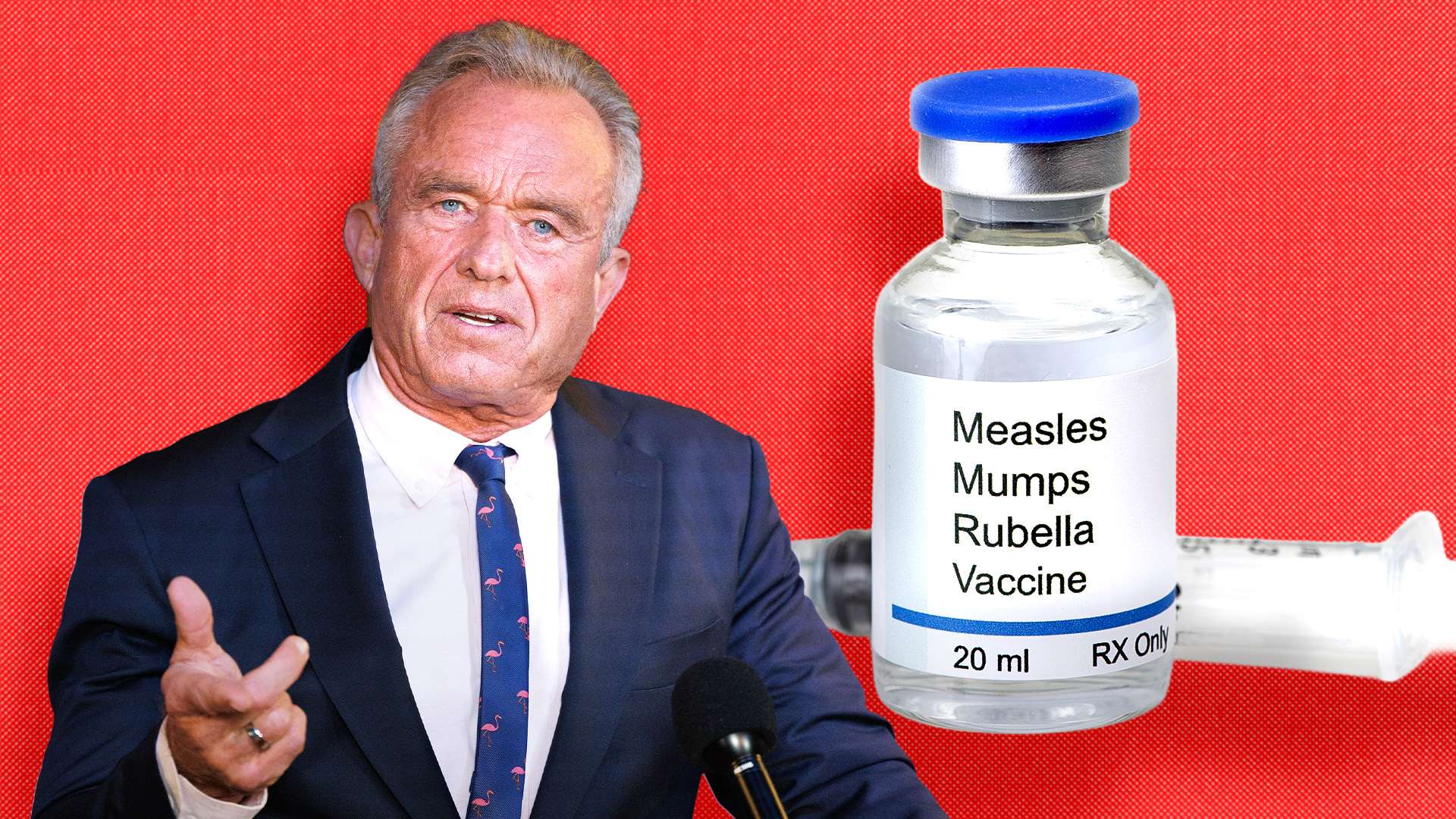
The U.S. has lost its measles-free status after more than 25 years. Many people have been blaming Health and Human Services Secretary Robert F. Kennedy Jr., but the problem is much larger than that.
On Tuesday, the Pan American Health Organization, an arm of the World Health Organization, announced that measles has resurged in the Americas. The group determined that Bolivia, Mexico, and the United States have lost their measles elimination status, meaning that the highly contagious virus has circulated continuously for at least a year.
The U.S. outbreak began on January 20, 2025. In April of that year, two unvaccinated children in a West Texas Mennonite community died. As of November 13, the Americas reported 58,213 confirmed measles cases and 82 deaths in 2026. At least 10 people have died from the virus in the United States in this year alone, reports The Washington Post.
The U.S. outbreak largely stems from declining childhood vaccination rates, which have been going down since 2020. Before the COVID-19 pandemic, almost 95 percent of kindergarteners were vaccinated against measles (widely seen as the threshold required to reach herd immunity), compared to 92.4 percent during the 2025–26 school year, according to the Centers for Disease Control and Prevention.
Democrats have been quick to blame RFK Jr. for the uptick in cases. President Donald Trump, Vice President J.D. Vance, “and Republicans empowered Robert Kennedy and his deputies to run America’s public health into the ground, and they have blood on their hands,” Sen. Ron Wyden (D–Ore.) said in a press release. “Democrats in Congress are going to use our new majorities to expose how this administration lied and pillaged its way to this moment, where the clock has turned backwards and horrible diseases defeated by science and innovation have been resurrected to sicken and kill innocent children.”
Chuck Schumer (D–N.Y.), the Democrats’ leader in the Senate, echoed those sentiments on the Senate floor, saying it “took Trump and RFK Jr. less than two years to undo the decades of work that went into eliminating measles in America” and that they must “answer to Congress and the American people about how it could let this public health crisis get so out of hand.”
Yet the United States is hardly alone in losing its measles elimination status. Canada lost the designation in November 2025, while six countries in the World Health Organization’s European region—including Britain, Spain, and Austria—lost theirs in January 2026.
“RFK Jr. certainly has a long history of fueling vaccine skepticism, including, of course, regarding the measles vaccine,” says Jeffrey Singer, a practicing general surgeon and senior fellow at the Reason Foundation, the nonprofit that publishes Reason. “So he’s not innocent. But I think it’s too simplistic and unfair, actually, to put this all on him.” To the chagrin of some of his fans, Kennedy after taking office publicly endorsed the vaccine, arguing in April 2025 that it was the “most effective way to prevent the spread of measles.”
Singer believes the decline in vaccination rates reflects a broader erosion of trust in public health institutions, particularly following the COVID-19 pandemic. “A lot of their conduct”—including mandates, inconsistent messaging, and dismissing legitimate questions about the pandemic’s origins—”sowed a lot of distrust with public health organizations, and so that plays a significant role too,” he says.
Throughout the COVID-19 pandemic, public health officials routinely dismissed concerns, making skepticism understandable even when the skeptic’s conclusion is incorrect. President Joe Biden inaccurately asserted that the COVID-19 vaccine would stop people from getting the virus altogether, varying opinions on masks were distilled to the American public, and questions over the disease’s origins were brushed aside. Anthony Fauci, the former director of the National Institute of Allergy and Infectious Diseases, was privately informed in early 2020 that scientists were seriously considering whether COVID-19 had originated in a laboratory. Yet in public, Fauci dismissed those suggestions as “conspiracy theories.” Such behavior helps explain Americans’ declining faith in public health officials.
Singer believes greater transparency about scientific uncertainty could help rebuild public trust. Sweden provides a case study. Unlike most European countries, Sweden did not impose a national COVID-19 lockdown, instead relying largely on voluntary public health guidance. Sweden not only recorded one of Europe’s lowest excess mortality rates over the first two years, but it also retained relatively stable social trust. Perhaps it is no coincidence that vaccine uptake remains high in the country too.
Robert F. Kennedy Jr. is not the only problem here. Trust in public health institutions has been eroding for years. If those institutions want an answer as to why some Americans are rejecting life-saving vaccines, they should look in the mirror.







Leave a comment