
Canada should ignore Trump’s protectionism and enact free trade
 adminUpdated 1 hour Ago4 Mins read
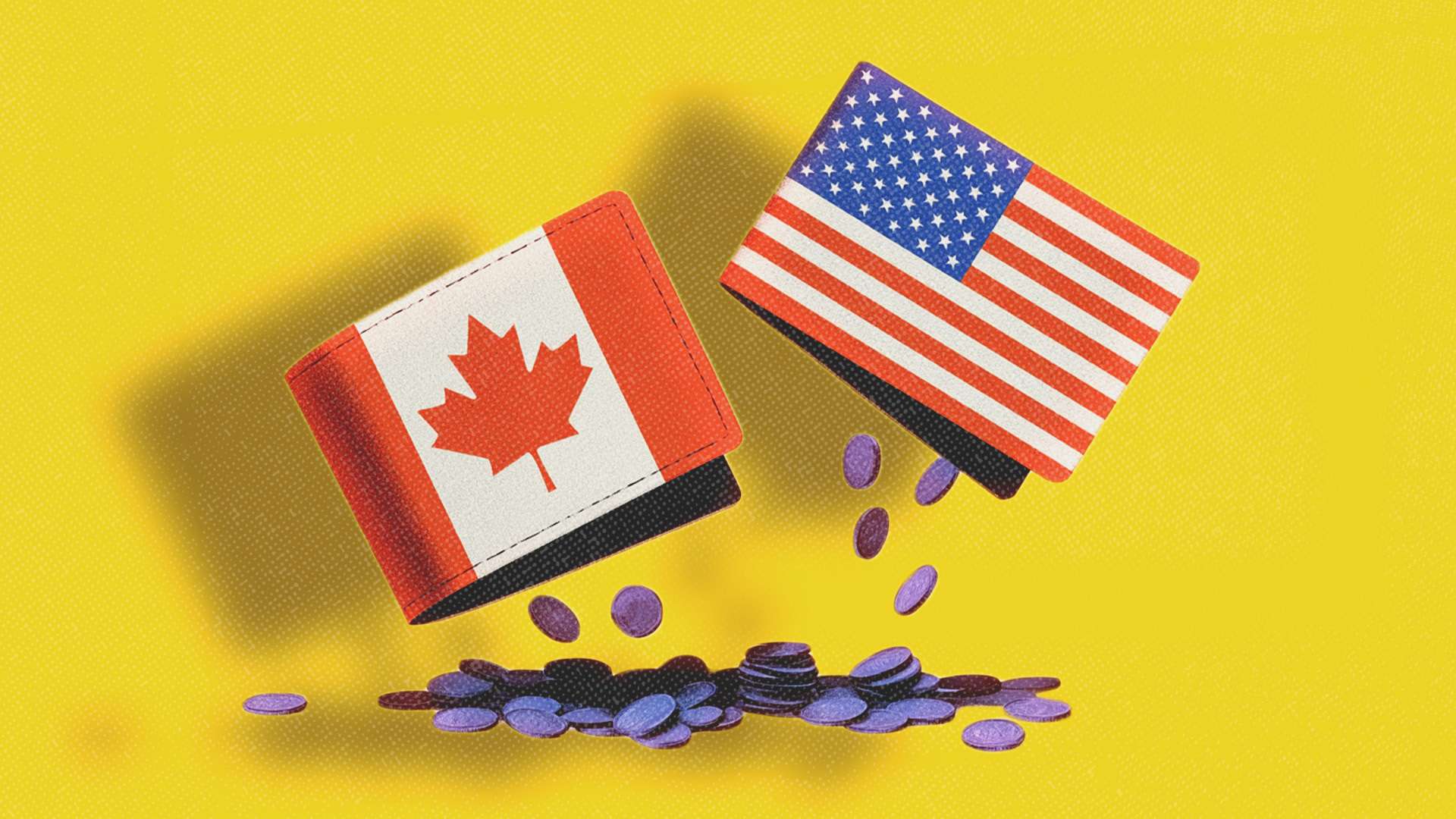
Towards the beginning of the 1974 movie Blazing Saddles, Sheriff Bart, confronted by hostile but not especially bright townspeople, takes himself hostage to make his escape. It’s hilarious precisely because it makes no sense. Just as nuts but less funny is the recent confrontation between United States President Donald Trump and Canada’s Prime Minister Mark Carney in which the Canadian matched the American’s protectionist threats by vowing to force his own people to pay high tariffs on goods imported from the U.S. It’s silver-screen-quality idiocy, but it’s not very entertaining if you understand the advantages of free trade and the pointlessness of holding your own side hostage.
You are reading The Rattler from J.D. Tuccille and Reason. Get more of J.D.’s commentary on government overreach and threats to everyday liberty.
Countering Self-Inflicted Harm With Self-Inflicted Harm
After trade talks between Canada and the U.S. fell apart over the weekend, the prime minister’s office warned, “at midnight tonight, the U.S. intends to impose a 50% tariff on roughly $28 billion of Canadian goods. Canada will match those tariffs dollar for dollar to protect our workers and businesses.”
Sure enough, in dueling announcements, the White House growled, “Canada has been ripping off the United States for decades—and President Donald J. Trump is done letting them get away with it,” while the Canadian government answered, “effective September 8, Canada will impose counter-tariffs of 15, 25 and 50 per cent on products drawn from those targeted by U.S. Section 338 and Section 232 tariffs, with the rate for each product matching the corresponding U.S. rate.”
It was an impressive demonstration of political chest-beating—impressively moronic if you understand that tariffs are largely paid by businesses and consumers in the countries that impose them.
“When the US imposes tariffs on imports, businesses in the United States directly pay import taxes to the US government on their purchases from abroad,” Tax Foundation Senior Economist Alex Durante pointed out last year. “The economic burden of the tariffs, however, could fall on others besides the US business directly paying the tax, including foreign businesses selling goods to US businesses (if foreigners lower their prices to absorb some of the tariffs) or US consumers ultimately purchasing the goods (if US businesses raise their prices to pass on the tariffs).”
Businesses and consumers might also substitute goods imported from other countries or produced locally. But there’s often a cost or quality reason they weren’t buying those alternatives to begin with. Ultimately, Americans end up worse off than they were.
Last month, the Federal Reserve Bank of New York reported that in the U.S. “small businesses were particularly challenged by higher tariffs in 2025 to which they mostly responded by passing on higher tariff costs to their customers.”
The same consideration applies to other countries, including Canada. That is, the U.S. government mostly hurts Americans with tariffs imposed on Canadian goods, and the Canadian government mainly harms its own people with retaliatory tariffs. It’s the townspeople vs. Sheriff Bart all over again.
“Think about what retaliation actually means,” comments Quebec-born Vincent Geloso, an economics professor at Virginia’s George Mason University. “Trump imposes a tax on Americans who buy Canadian goods. So our response is supposed to be…imposing a tax on Canadians who buy American goods? How exactly does making Canadians poorer punish Donald Trump?”
“Canadian retaliation will lead to higher costs for our firms and consumers, put additional strain on integrated North American supply chains, and slow overall economic growth on our side of the border,” agree Jock Finlayson and Steven Globerman of Canada’s Fraser Institute.
Holding Canadians Hostage Won’t Deter Trump’s Protectionism
Carney’s defenders north of the border argue that retaliation is the only way to get American attention—Canada must punish itself with tariffs to convince the U.S. to back down on its own trade barriers. Many economists remain unconvinced that this sort of self-inflicted pain will prove decisive.
“Retaliatory tariffs will increase the cost of living for Canadian households but are unlikely to weaken Trump’s tariff fixation,” caution Finlayson and Globerman. “Indeed, the Trump administration may respond to any incremental Canadian ‘retaliation’ by announcing additional market access restrictions targeting various Canadian industries.”
“Canadian Prime Minister Carney’s retaliatory tariffs come from understandable feelings of frustration and betrayal but will not change Trump’s behavior,” adds Competitive Enterprise Institute Senior Economist Ryan Young. “Restraint is difficult in the face of such taunting but is probably the right thing to do.”
Geloso notes that Canada has attempted countering American protectionism in the past with retaliatory tariffs that did more harm than good: “Canada tried this in the 1930s in response to Smoot-Hawley. It changed absolutely nothing for the better. If anything, it simply deepened the Depression in Canada.”
Worse, Geloso adds, imposing protectionist measures creates an environment in which companies expect and demand special favors: “What you ultimately get is more protection, more subsidies, higher costs, less competitiveness, and, yes, even more collusion between firms.”
Unilateral Free Trade Is Easy To Enact and Benefits Everybody
Geloso’s advice to Carney and company is that “Canada’s response to American tariffs should be incredibly simple: slash our own tariffs and trade barriers. And do not impose counter-tariffs.” He adds that “free trade does not require the other guy to be smart enough to reciprocate. Historically, a huge share of trade liberalization has been unilateral.”
In this, Geloso is hardly alone. His suggestion is the same that Milton Friedman offered decades ago when Americans were worried that Japan would outcompete the United States while closing its own markets.
“We only increase the hurt to us—and also to them—by imposing additional restrictions in our turn,” the prominent economist wrote. “The wise course for us is precisely the opposite—to move unilaterally toward free trade. If they still choose to impose restrictions, that is too bad but at least we have not added insult to injury.”
Undoubtedly, it’s emotionally and politically satisfying to push back against Trump’s bullying. But countering self-inflicted harm on Americans with self-inflicted harm on Canadians doesn’t lead anywhere good. Carney’s threats against his own people aren’t likely to end as well as things did for Sheriff Bart.










Leave a comment