
Central Bank Museum tells Argentina’s monetary history
 adminUpdated 22 minutes Ago1 Mins read
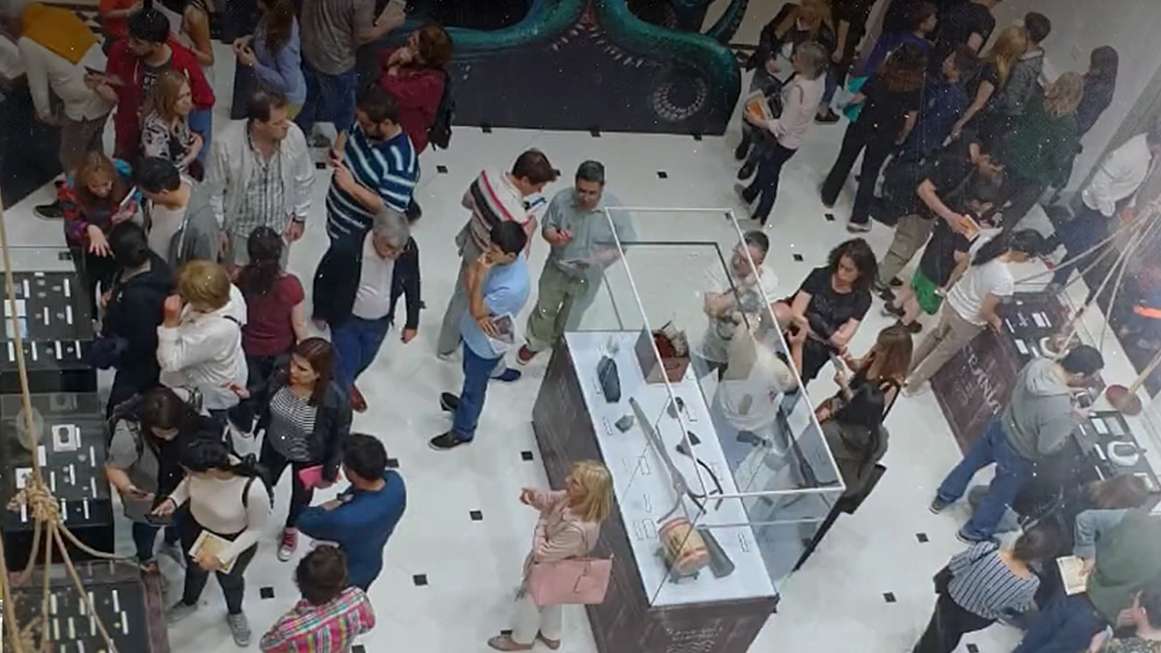
Located a stone’s throw from the Central Bank of Argentina in Buenos Aires, the Museo Histórico y Numismático Héctor Carlos Janson, also known as the Central Bank Museum, tells the story of a country plagued by hyperinflation.
The permanent exhibition is located on the first floor, where six rooms display Argentine currency throughout history, plus the tools used to create them. The exhibit begins with the pre-European economy, in which natives used cocoa beans, cowrie shells, and small pieces of metal as units of exchange. Colonial-era coins were minted in Bolivia. One has “VTRAQUE VNUM” written on the front, meaning “Both Are One,” referring to Spain and its colonies.
As the exhibit moves on to 19th and 20th century currencies, the economic chaos is evident: The display contains 1 peso notes, 10 peso notes, and 50 peso notes, all the way up to the hyperinflation-era 1,000 peso notes. Under President Juan Perón, government spending increased substantially, and deficits were increasingly financed through the Central Bank, which increased the money supply, accelerating inflation.
In 1970, the Argentine military government replaced the peso moneda nacional with the peso ley. A museum sign, translated from Spanish, says that the system “encouraged an enormous increase in the money supply based on foreign borrowing to cover the required reserves,” leading to “a major financial crisis.”
In 1983, the country scrapped the peso ley and introduced the peso argentino. Two years later, Argentina ditched the peso argentino and replaced it with the austral. In 1992, it replaced the austral with a new peso, which the government pegged one-to-one to the U.S. dollar for the next decade. As it kept changing its cash’s name, design, and denomination, Argentina continued to spend beyond its means and expand the money supply.
While governments declare what is legal tender, Argentina’s monetary history reminds us that money is merely a medium of exchange—and that governments aren’t great at controlling it.








Leave a comment