
D.C.’s never-ending campaign to abolish the tipped minimum wage
 adminUpdated 12 minutes Ago2 Mins read
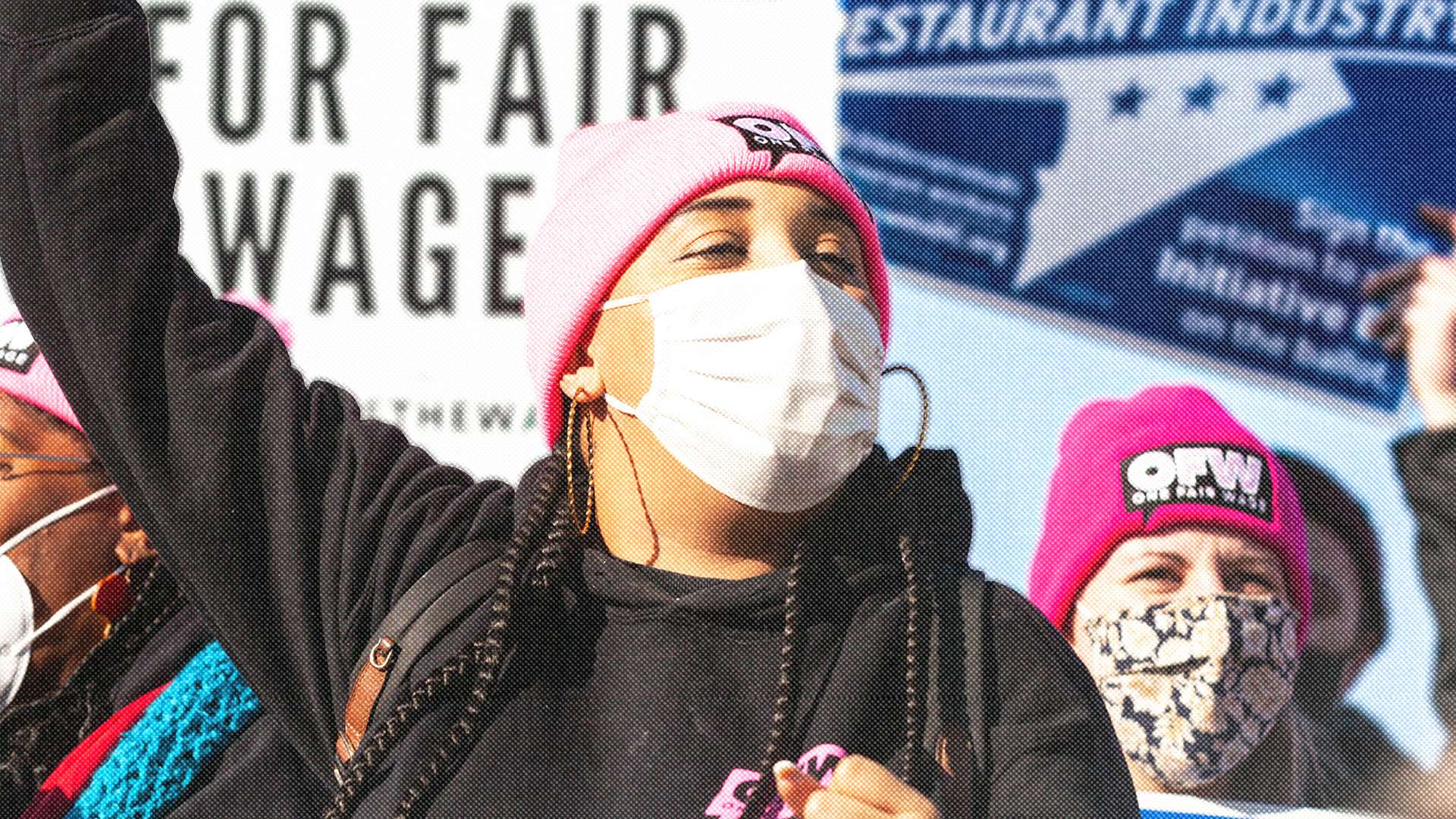
In 2022, voters in Washington, D.C., opted to eliminate the District’s tip wage credit—which allows businesses to pay restaurant servers and other tipped employees a lower hourly base that they supplement with gratuities. Known as Initiative 82, the ballot measure passed with over 70 percent support and promised to gradually raise the minimum wage for waiters until it matched D.C.’s traditional minimum wage.
On cue, the District suffered a host of deleterious economic consequences, prompting the city council to partially repeal Initiative 82 last year. Now, just over a year later, the campaign against D.C.’s tip credit is back.
The restaurant industry has long operated under a tipped-wage structure. As such, servers are legally allowed to receive a minimum wage below that of the traditional statutory minimum—so long as their tips make up the difference. (If they don’t, the employer must rectify that.)
At the time of Initiative 82’s repeal, waiters could be paid $5.35 an hour under D.C. law, with their tips making up the gap between that and the traditional $16.10 minimum. (D.C.’s minimum wage now sits at $18.40, due to inflation adjustments.) Initiative 82 sought to upend this structure by repealing the tip credit altogether and requiring servers in the district to be paid the full traditional statutory wage by 2027.
What happened next was sadly predictable. After Initiative 82’s passage, full-service bar and restaurant jobs declined by 5 percent in D.C., while worker earnings fell by over $11 million as restaurants cut hours and staff. Surrounding counties in Virginia and Maryland endured declines of less than 1 percent during this same timeframe, providing a ready counterfactual by which to measure the negative impact of D.C.’s tip credit elimination. At the same time, many D.C. establishments began to add “service fees”—sometimes known as “auto-gratuity“—onto bills, thereby raising the cost of dining by a significant margin. Many D.C. tipped employees themselves have come out against the law.
In the face of this fallout, D.C. Mayor Muriel Bowser called for the full repeal of Initiative 82; the D.C. Council ultimately settled on a partial reversal. This was a familiar story. In 2018, D.C. voters passed Initiative 77, which likewise sought to end the tip credit. Just a few months later, the council repealed it in full.
But just when it appeared that D.C.’s campaign against the tip credit was finally expiring, it sprang back to life. Now comes Initiative 87, which not only seeks to raise the District’s minimum wage to $25 by 2029 but would also phase out the tip credit by 2031. Supporters of the initiative have delivered the requisite signatures to the D.C. Board of Elections, likely teeing up the initiative for an April 2027 District-wide vote.
The push is spearheaded by a New York–based organization known as One Fair Wage, which over the past few years has orchestrated a campaign to eliminate the tip credit in cities across America. As in D.C., this general effort has run into economic headwinds. A One Fair Wage effort in Chicago saw restaurants raise prices and cut staff hours, leading Chicago’s City Council—a body not exactly known for fiscally conservative politics—to approve a temporary freeze on the tip credit’s elimination.
Despite this clear negative track record, there’s reason to think that Initiative 87 may survive in D.C., unlike its predecessor initiatives. That’s because D.C. Mayor-elect Janeese Lewis George has voiced support for scrapping the tip wage credit—distinguishing her from Bowser—even while expressing reservations about a top-line minimum wage increase to $25.
When it comes to eliminating the tip wage credit in D.C., the third time, unfortunately, may be the charm.











Leave a comment