
Federal judges say Trump’s DOJ has destroyed the ‘presumption of regularity’
 adminUpdated 1 hour Ago4 Mins read
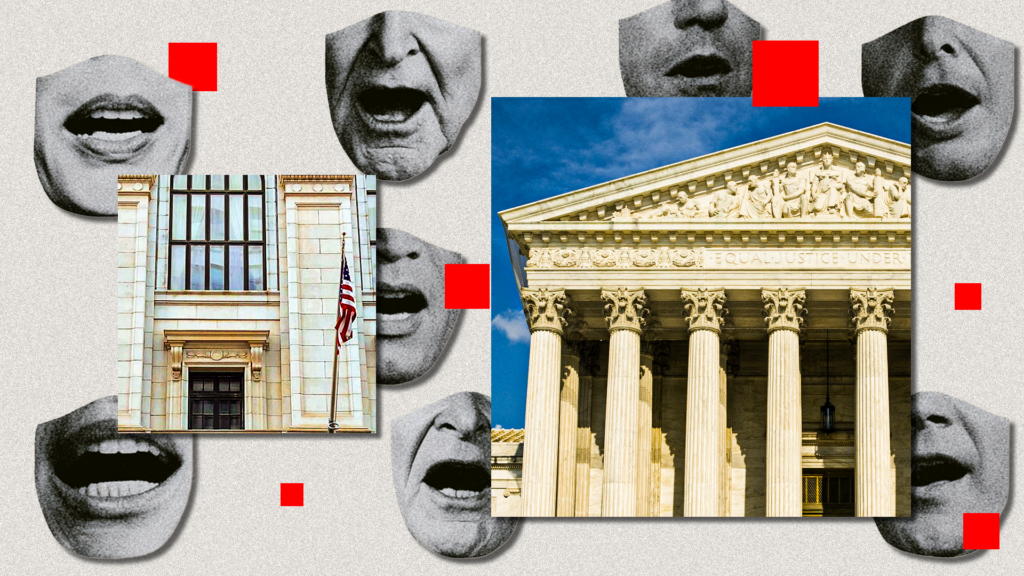
Federal judges across the country say the Trump administration has lost the confidence of courts, complaining that the “presumption of regularity”—the traditional trust that the government is acting in good faith—has been “dislodged,” “destroyed,” and “undeniably eroded.”
The warnings come amid the Trump administration’s radical makeover of the Department of Justice (DOJ), which has seen the exodus of hundreds of career attorneys and the elevation of others based largely on loyalty to the president. This has led to a noticeable decline in the quality of court filings by the DOJ, repeated instances of its attorneys being threatened with sanctions, and an end to the department’s traditionally near-perfect record in high-profile prosecutions.
But it certainly might not be a bad thing if judges were more skeptical of the government.
The presumption of regularity is a formal legal principle that raises the burden of proof for parties in court alleging things like government retaliation or selective prosecution, but it’s also “a mindset or a cultural commitment within the federal courts to give the government the benefit of the doubt,” Carissa Hessick, a professor at the University of North Carolina School of Law, tells Reason.
The cultural side of the presumption of regularity is based largely on federal judges’ perception that the Justice Department holds its attorneys to particularly high professional standards, but in case after case, federal judges say those standards have disappeared. A recent ProPublica review found more than 40 recent cases in which judges referenced the presumption of regularity in their opinions. The New York Times also recently noted the rising frustration of judges.
However, former U.S. District Judge Liam O’Grady, who was appointed to the Eastern District of Virginia in 2007 and retired in 2023, says the presumption is “overstated in its importance.”
“District judges look at prosecutors individually and assess whether they’re honest, whether they’re ethical and credible based in part on their reputation,” O’Grady tells Reason. “So maybe that’s a presumption of regularity, but also what happens in the courtroom.”
The language in some of the cases, though, has been striking. In one of the most high-profile cases, the government’s illegal deportation of Maryland resident Kilmar Abrego Garcia to El Salvador, U.S. District Judge Paula Xinis wrote, “You have taken the presumption of regularity, and you’ve destroyed it.”
With exceptions for notable stylists or would-be stylists, federal judges have typically strived to maintain a measured, impersonal tone and have been hesitant to accuse the government of blatant misconduct in their opinions.
In a May 14 ruling, U.S. District Judge Mary S. McElroy wrote that the government “has proven unworthy of this trust at every point.”
“The discrepancy between the honorable conduct expected of federal prosecutors and DOJ’s tactics in this case is unsettling,” McElroy wrote. “The Court cannot help but share the sentiment that ‘[t]he presumption of regularity that has previously been extended to [DOJ] that it could be taken at its word—with little doubt about its intentions and stated purposes—no longer holds.'”
Is the presumption of regularity worth saving, though? The idea that the government deserves a higher level of trust than a private party simply because it is the government would strike many outside of a courtroom as illogical, if not dangerous.
“I don’t know that you need to have purposeful misconduct on the part of attorneys to say maybe the presumption of regularity isn’t the best idea,” Hessick says.
Hessick wrote in a 2019 blog post that the presumption is built on a “shaky foundation” of a few cases, which do little more than invoke the phrase.
Most notably, the Supreme Court cited the presumption of regularity in U.S. v. Armstrong, a 1996 case in which defendants charged with crack cocaine and firearms offenses unsuccessfully tried to compel the federal government to disclose charging data showing that the Bureau of Alcohol, Tobacco, and Firearms (ATF) was selectively targeting black men.
In essence, the Court ruled that litigants alleging government impropriety face a higher burden of proof than they would against a private party because of the courts’ self-referencing assumption that government officials are acting in the faithful furtherance of their official duties.
The Court would later write in a 2004 Freedom of Information Act case that “there is a presumption of legitimacy accorded to the Government’s official conduct. The presumption perhaps is less a rule of evidence than a general working principle. However the rule is characterized, where the presumption is applicable, clear evidence is usually required to displace it.”
Hessick argues that the current presumption mutated out of a much older and more benign legal principle that, in a dispute between two parties, a record like a bank statement or ledger was assumed to be correct—that is, presumed regular—unless contrary evidence was introduced.
“It was really just a way of figuring out how to deal with evidence and how to set up a tie-break,” Hessick says. “It got distorted from a rule about how we’re going to treat evidence into a reason to not make the government play by the same rules as other people.”
Consistent with his belief that individual reputation matters more to federal judges than a vague concept, O’Grady believes that holding individual federal prosecutors responsible for their actions will solve the larger question of the DOJ’s professionalism.
O’Grady is a member of the Article III Coalition of Keep Our Republic, a nonprofit civic engagement group. The coalition of more than 50 retired judges advocates judicial independence.
For assistant U.S. attorneys forced to choose between doing something unethical or leaving the department, O’Grady says the choice is clear: Every Justice Department attorney has a law license that requires ethical conduct and has taken an oath to uphold the rule of law.
“It’s a shame, but we move forward,” O’Grady says. “The rule of law is what separates us from the rest of the world and has held us together for 250 years over some really significant, traumatic times, whether you’re talking about the internment of the Japanese, ‘separate but equal,’ or some of the 9/11 interrogations. We’ve made some significant mistakes, but the rule of law has eventually gotten it right. It’s made most of the decisions that are made here good ones, so this, too, will be resolved.”









Leave a comment