
Florida city drops St. Patrick’s Day parade, cites new anti-DEI law
 adminUpdated 10 minutes Ago5 Mins read
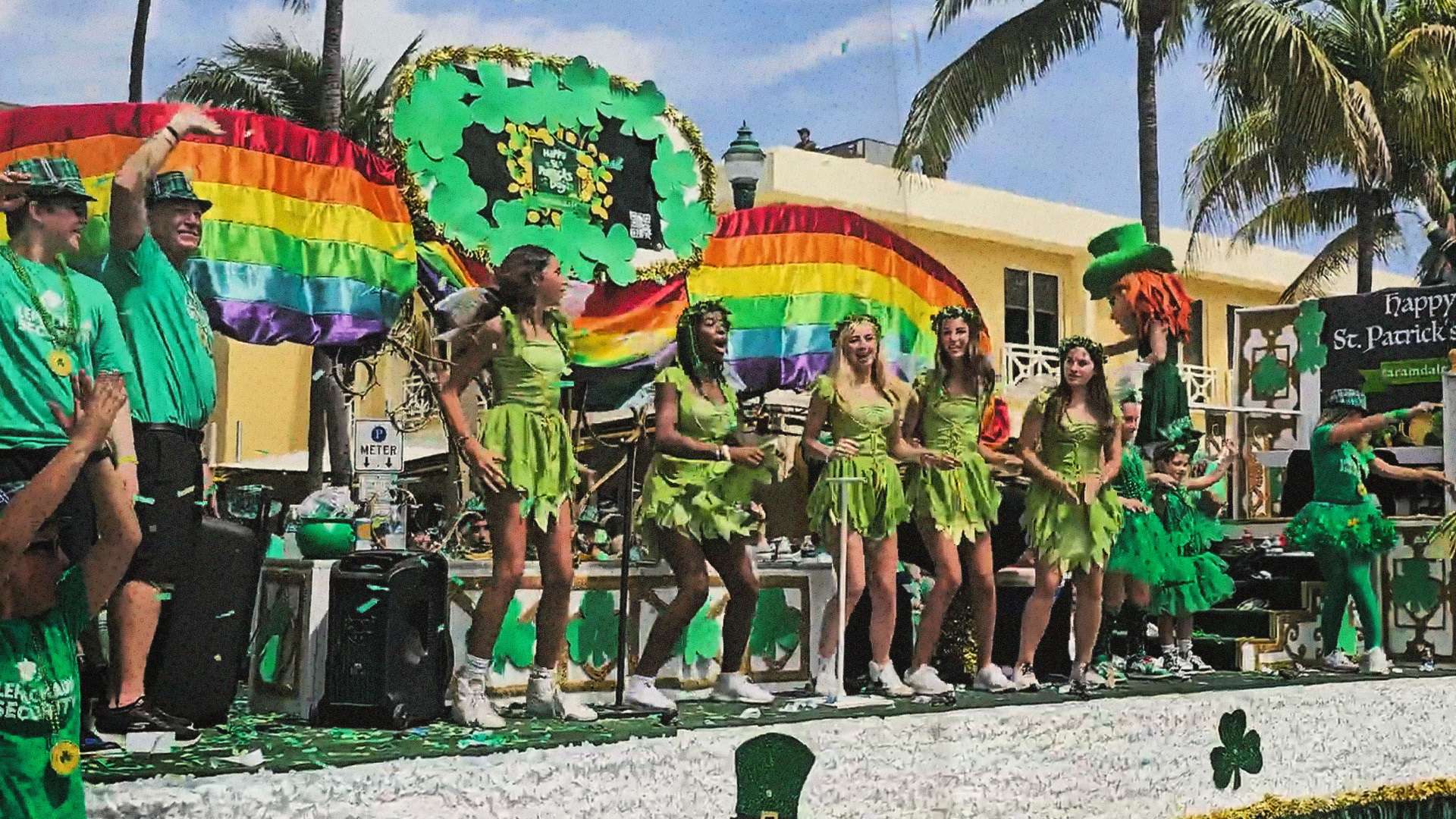
Last week, the city of Delray Beach, Florida, announced that it will not organize or sponsor next year’s St. Patrick’s Day parade, citing a state law that takes effect on January 1. That law, S.B. 1134, says local governments may not “promote or provide preferential treatment or special benefits to a person or group based on that person’s or group’s race, color, sex, ethnicity, gender identity, or sexual orientation.”
Delray Beach Mayor Tom Carney, a Republican, says the parade decision illustrates the “unintended consequences” of S.B. 1134, which targets diversity, equity, and inclusion (DEI) policies that offend Gov. Ron DeSantis. The governor accuses Carney of trying to discredit the new law by engaging in “malicious compliance.” Whatever you make of that spat, the upshot seems like a win for taxpayers, since Carney says the parade can still proceed with private funding, as it has for most of its history. But that take is complicated by the long yet haphazard list of exemptions incorporated into the law, which draws distinctions with little rhyme or reason.
The withdrawal of taxpayer support for the parade “is not mandated by Florida law,” DeSantis wrote on X last Friday. “It’s just an attempt to make a political point—a point that legacy media will no doubt try to amplify. We’ve seen these stunts throughout the years. Rinse and repeat.”
Carney insists his legal concerns are sincere. “The governor may genuinely believe what he [says], and I take him at his word,” the mayor told NPR. “Our city attorney came up with a different conclusion.”
It is not hard to see why S.B. 1134 might have given a lawyer pause. In addition to its broad language, the potential penalty for noncompliance is daunting. The law says “any member of the governing body of a municipality or other municipal official acting in an official capacity who violates this section commits misfeasance or malfeasance in office,” suggesting that the governor can suspend him on that basis. That provision, the American Civil Liberties Union (ACLU) of Florida argues, is inconsistent with the state constitution, which “authorizes suspension of elected municipal officers only upon indictment for a crime.”
State Rep. Rob Long, a Democrat whose district includes Delray Beach, said the parade controversy confirms his concerns about S.B. 1134. “Governor DeSantis calls it ‘malicious compliance,'” Long wrote on Instagram. “I call it the predictable consequence of a bad law. I voted against it, and I’m not going to let Tallahassee blame Delray Beach for the mess it created.”
That framing raises an obvious question: What mess?
Carney “said he’s hopeful that the city can find a path forward—and a way to preserve the event,” NPR reports. “Carney, who is of Irish descent, said the parade was privately run until about eight years ago—so returning to a private-sponsorship model would be a callback to the parade’s origins.”
Carney said the city’s announcement had prompted a flood of complaints from residents. “It was kind of a call to action to me,” he told NPR. “The community really wants to have it, so we should go ahead and have it. We just need to get it privately funded.”
Given the parade’s history and the local enthusiasm cited by Carney, that does not seem like a tall order. In fact, you might wonder why taxpayers who have no particular interest in the event should have been on the hook for it in the first place.
The same goes for Delray’s “June Pride celebrations,” which Carney also mentioned. “These types of events we should be celebrating because in this country, people can have these events,” he told NPR. “In other countries, you can’t do this. We have great freedoms here. And if the community wants something and it’s not against public policy, then I would support them to do it if they’re using private dollars. If we can do it, we should do it.”
There is obviously a difference between allowing an event, whether it celebrates Irish heritage or LGBTQ pride, and forcing taxpayers to pick up the tab. Yet neither Carney nor DeSantis, who says there is no reason why Delray Beach should not continue to subsidize the St. Patrick’s Day Parade, seems to be fazed by that distinction.
S.B. 1134’s numerous exceptions compound the confusion. It explicitly does not bar local governments from “recognizing or promoting holidays designated by federal law,” including Christmas, Columbus Day, Juneteenth, and Martin Luther King Jr. Day. It also allows local governments to recognize and promote “patriotic and national observances recognized by federal law,” which include 48 occasions ranging from American Heart Month to Wright Brothers Day, among them National Hispanic Heritage Month and Asian/Pacific American Heritage Month.
Also OK: “recognizing or promoting state holidays and special observances designated by state law,” which include Juneteenth Day, Good Friday, and Florida Jewish History Month. And there is an exception for celebrating “the individuals and groups recognized and honored” by state-recognized “monuments, memorials, and museums,” including the Florida Black History Museum, the Florida African American Heritage Preservation Network, the Florida Slavery Memorial, the Florida Holocaust Memorial, the Florida Women’s Hall of Fame, the Cuban Heritage Trail, the Jewish Heritage Trail, and the Native American Heritage Trail.
All of those exceptions lend credence to Carney’s argument, since neither St. Patrick’s Day nor Gay Pride Month appears on the specified lists. But however arbitrary that might seem, the law expressly does not preclude local governments from “issuing event permits in a content-neutral manner and providing public safety services.”
Opponents of the law nevertheless warned that it would interfere with the celebration of occasions and causes that it does not recognize. S.B. 1134 “could mean that you can’t celebrate Women’s History Month or Women’s Equality Day or Diwali or Chinese New Year or Easter,” state Rep. Christine Hunschofsky (D–Parkland) warned.
An undefined you is doing a lot of work in that sentence, since the relevant provision applies only to local governments and explicitly allows them to accommodate public events “in a content-neutral manner.” So even if Carney and Hunchofsky are right that the law’s broad language plausibly encompasses public funding for events marking occasions that did not make the official lists, the upshot is not that “you can’t celebrate” those occasions.
As interpreted by Carney and Hunchofsky, the ban on “preferential treatment or special benefits” simply means that supporters of those events have to kick in their own money. Generally speaking, that seems like a reasonable ask. Still, the myriad and motley exceptions that Florida legislators saw fit to recognize may raise constitutional issues.
Under the First Amendment and the 14th Amendment’s guarantee of equal protection, the Florida ACLU argued, the law cannot be interpreted “to prohibit local governments from hosting or supporting programming that reflects the diversity of the community.” For example, “if depicting families led by heterosexual couples is permissible, so is depicting families led by same-sex couples,” it said. “If a library event about the ways in which the founding fathers were influenced by the Roman Republic is permissible, so is one about the influence of the Iroquois Confederacy.”
The Florida ACLU offered other examples that are a bit puzzling in light of the distinctions drawn by S.B. 1134. “If an arts event celebrating the contributions of Irish Americans is permissible, so is one celebrating the contributions of African Americans,” it said. “Despite their apparent efforts, the State of Florida cannot functionally require that only white non-Hispanic men receive funding, promotion, and praise.”
If anything, the law’s exceptions favor African Americans over Irish Americans, as illustrated by the flap over the St. Patrick’s Day parade in Delray Beach. And given the exemptions for various African American and Hispanic celebrations, it is hard to discern an animus against those groups. Instead, it looks like legislators, in their rush to limit the impact of a broadly worded anti-DEI law, came up with lists that, taken as a whole, make little sense from any perspective.










Leave a comment