
Going bananas for bandanas: the latest fashion trend that goes back centuries | Accessories
 adminUpdated 2 hours Ago3 Mins read
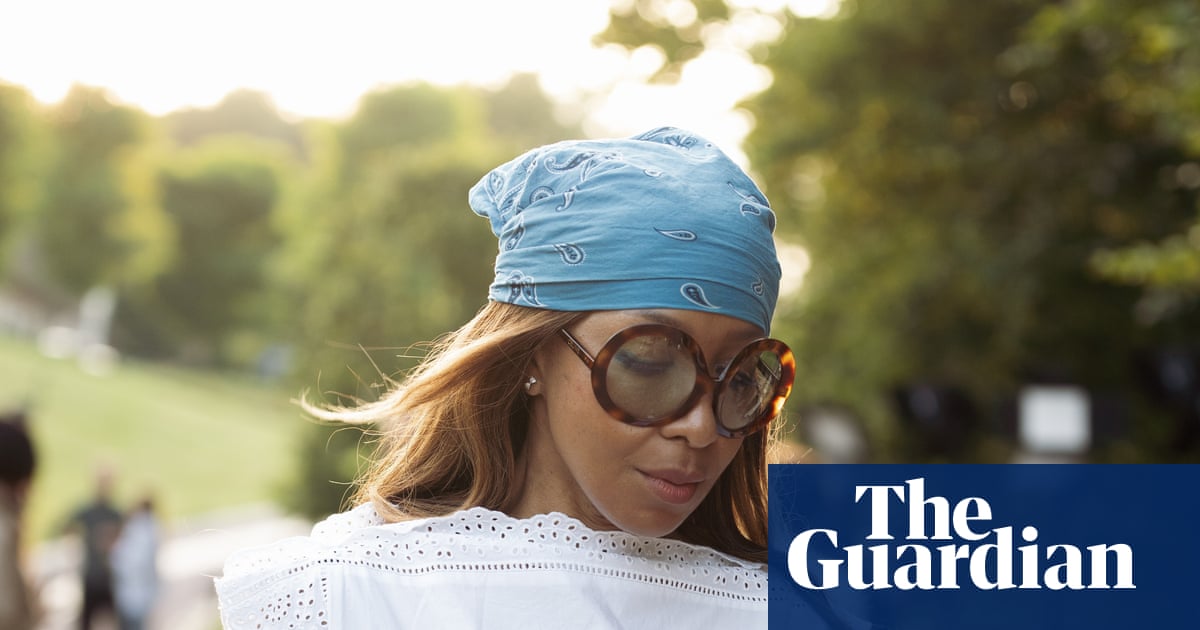
Baseball caps have been keeping the heads of fashion folk covered and shaded for the past few years. But there’s a new accessory to be seen everywhere this summer: the bandana.
They are as common as cinnamon buns at Copenhagen fashion week, which is taking place in the Danish capital this week. They have also recently been worn by Dua Lipa to the beach, Zendaya to shop for books and Priyanka Chopra Jonas to watch the tennis at Wimbledon.
Toast offers them blockprinted by artisans in India, they come in broderie Anglaise at Asos and embroidered at Next. The singer Gracie Abrams, who wore one last summer to play Glastonbury, has since released bandanas as part of her merchandise.
On the secondhand site Depop, which offers bandanas in gingham, with skulls and crossbones, and crocheted, searches have gone up 152% in the past three months. Social media is, unsurprisingly, rich in tutorials on how to style them, whether on days when hair is waiting for a wash or using an elastic headband to keep slippy silk styles in place.
Grazia’s fashion commerce editor, Daisy Murray, “started wearing bandanas last summer as a little Jackie O homage”.
“They offer a little vintage – 60s/70s and 90s – feel to every look,” she says, adding how practical they are. “I live in Brighton and have two small children, so it’s a great way to manage curly hair on a windy beach.”
Bella Webb, sustainability editor at Vogue Business, has been wearing one to the shows in Copenhagen. “I love multi-functional items that can make my outfits feel fresh and playful without buying something new,” she says.
The history goes back far further than Felicity Kendal in a pair of dungarees. Invented in India (the Sanskrit word bandh means “to tie”), according to the Smithsonian magazine, “textile makers employed a millennium-old tie-dyeing technique called bandhani to create colourful silk and cotton kerchiefs covered in lively patterns”.
From south Asia they were imported to England by the Dutch and English East India Companies, where snuff-takers, used to leaving unsightly tobacco stains on their plain hankies, apparently “embraced them to make their habit more discreet”. Paisley, a pattern named after the Scottish town but which originated in Kashmir, is the classic bandana pattern.
With a rich and global lineage, bandanas can signal drastically different things. Throughout history they have been associated with cowboys and robbers, linked to gang affiliation and become a symbol for workers’ rights.
They also fit quietly into Carolyn Bessette-Kennedy’s 90s minimalism. They have been worn by hip-hop stars such as Tupac Shakur, and by Rosie the Riveter, who professed on wartime women’s behalf: “We can do it!”, wearing a red polka dot bandana. In 2003, Missy Elliott matched a pink one with her velour Adidas tracksuit to accept a Grammy. Carrie Bradshaw wore them with abandon in Sex and the City.
after newsletter promotion
Political campaigners have long understood the potential power of a bandana. Martha Washington is thought to have commissioned a bandana design, featuring George on a horse, around 1775, during the revolutionary war, and they have been popular presidential campaign items since at least the 1840s. A red bandana was created for Theodore Roosevelt’s presidential campaign in 1912 (he famously wore one while fighting during the Spanish-American war) and in 1952 Dwight Eisenhower’s campaign emblazoned one with: “Win with Ike for President”.
Bridget Dalton, a semiotician and cultural analyst at Truth Consulting, says: “There is a subtext around race when it comes to headscarves. Black communities have long worn them, obviously hijabi people cover their heads, as do [married women in] Haredi communities.” For many people they serve a specific purpose. “For Black people with natural hair, they protect them, they cover them, they keep [their hair] protected at night. For people with religious beliefs, they’re part of their spiritual life. And for people who wear them for work, then they’re to keep their hair clean and safe.”
All of these references, meanings and iterations are loaded on to what is, on the surface, a simple square of fabric. But for many people this summer, they have become an adornment. As Dalton says, “bandanas are also mad-glamorous”.









Leave a comment