
Here’s how Andy Burnham really could end homelessness | Daniel Lavelle
 adminUpdated 1 day Ago4 Mins read
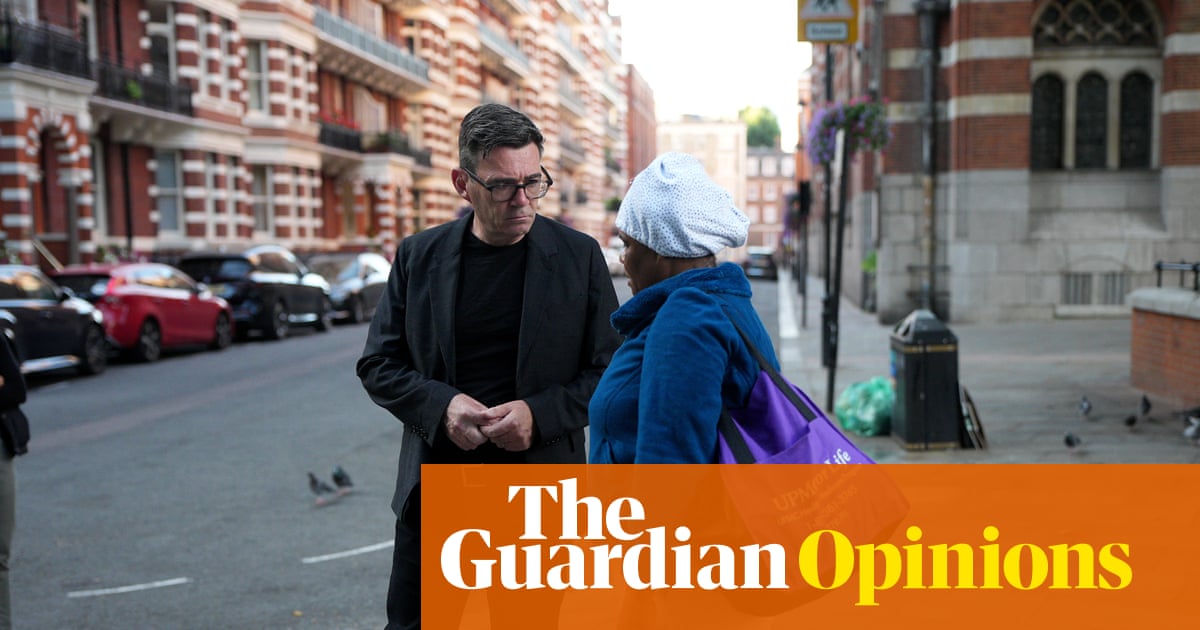
In January 2017, the then mayor of Greater Manchester, Andy Burnham, promised to end rough sleeping in the region by 2020 – a bold, frankly absurd promise that inevitably didn’t materialise. Nearly a decade later, shortly after becoming prime minister, Burnham promised to end rough sleeping again, only this time for the whole of England. So why should we believe him this time around?
I have interviewed Burnham several times over the past decade. At the end of 2019, when it was clear he had not lived up to his promise, I asked him if he regretted making it in the first place. “I wasn’t making what you would call a traditional target,” the mayor said. “I issued my commitment to make it more of a wake-up call to the system. And I think it has had that effect.” Burnham’s advisers had told him to tone down the pledge, but he resisted. “The team here said I should have said: ‘End the need for rough sleeping,’ because you can’t force people into a shelter … In retrospect, if I had said ‘end the need for’, that probably would have been a wiser thing to have done. But I wasn’t in the space of wanting to play semantics with it.”
Official figures showed rough sleeping decreased by two-thirds in Manchester during his first five years as mayor. There are reasons I can quibble with this claim. First of all, it doesn’t pass the eye test. Just walk through the city centre in the early hours, and you’ll find people still bedding down in their dozens. Second, the statistics on rough sleeping are based on single-night snapshots, which involve council representatives walking around counting the people they find rough sleeping. The problem with this is obvious. Third, even those stats, as unreliable as they are, now show that rough sleeping in Manchester is three-quarters of what it was in 2017.
But let’s forget all that, and give the prime minister the benefit of the doubt. Maybe his “promise” was merely a “wake-up call”. He was a metro mayor after all, and for most of his time in office, he depended on the generosity of a Conservative government. He simply didn’t have the resources to end rough sleeping. Let’s also assume that Burnham means what he says. He didn’t have to make his pledge back in 2017, and he certainly didn’t have to make it on the steps of Downing Street on Monday.
The difference is that now he has control of the purse strings, so how does Burnham intend to honour his promise this time around? Initial signs are not encouraging. After Burnham finished his speech, his new government pledged an extra £340m, equivalent to £68m a year over five years, on top of the £3.5bn already allocated, to tackle homelessness. The UK can’t quite agree on how many rough sleepers there are, but I think a sensible estimate is anywhere between 15,000-18,000 unique people over a 12-month period. So, £68m divided among 18,000 people amounts to £3,777 per head. That’s about four months of rent if you’re lucky. It’s less a panacea, more like defending yourself from a tidal wave with a cocktail umbrella.
The government will say it is only targeting 3,000 of the most vulnerable rough sleepers with this cash, and they will receive closer to £22,000 per head. I don’t know how one would qualify for the most-vulnerable list. Just how hopeless do you need to be in the new Burnham era?
If Burnham really wants to live up to his promise, he’ll need to do a lot better than this. He should be aware from the start that rough sleeping represents the very tip of an enormous iceberg, and solving homelessness in this country will demand something close to a revolution. According to Shelter, there are 380,000 homeless people in England, and even that demoralising figure is almost certainly an underestimate. To permanently house those people would require an unprecedented social housebuilding programme that would make the postwar rebuild look like a casual game of Minecraft.
Burnham’s government would also need to reverse 16 years of austerity. This is all quite spendy, and to fund it would require higher taxes, more borrowing and aggressive nationalisation of natural monopolies. An upheaval of the economy of such magnitude is unlikely to happen when so many Labour MPs have their fingernails firmly embedded in the market. If there’s even a suggestion that Burnham intends to depart from turbo capitalism, then he will be out of SW1 faster than you can say Liz Truss.
So, what can Burnham realistically do about homelessness? There are several levers available to him to ease people’s suffering in the short term, and they cost next to nothing in political or real capital.
after newsletter promotion
His priority should be triggering a nationwide Housing First programme. Housing First, a policy pioneered in Finland that effectively eliminated rough sleeping, gives people a home with no preconditions, then tailors support to their individual needs. We know this works because we did it ourselves, only with a different name. The Everyone In campaign, established during the Covid-19 pandemic, virtually ended rough sleeping overnight by emergency block-booking hotels. Surely we can do the same thing again.
The next thing on the agenda should be removing the stick from the benefits system. Currently, the welfare state resembles a gameshow created by Kafka, where contestants have to complete a series of timed trials to win basic subsistence.
There are about 300,000 long-term empty homes in England. Housing people in some of these dwellings might be a good idea; capping rents at an affordable rate would be another, as would fast-tracking asylum applications and enabling asylum seekers to receive benefits and temporary work visas while their claims are processed.
I’m not confident that Burnham will do any of these things. Not because I think he doesn’t care or lacks the political will, but because government apparatus is smothered in molasses, and most Labour politicians are Tories in all but name.
But let’s see what Burnham does before writing him off as yet another neoliberal metronome with fine words and dry parsnips. Let’s give the man his honeymoon period, but the “king of the north” should keep this in mind: winter is coming, and he must act quickly, not just for his premiership, but for the poor souls he has promised to get off the streets.
-
Daniel Lavelle writes on mental health, homelessness and social care. He received the Guardian’s Hugo Young award in 2017, and is the author of Down and Out











Leave a comment