
How to make the perfect Sri Lankan chicken curry – recipe | Curry
 adminUpdated 16 minutes Ago7 Mins read
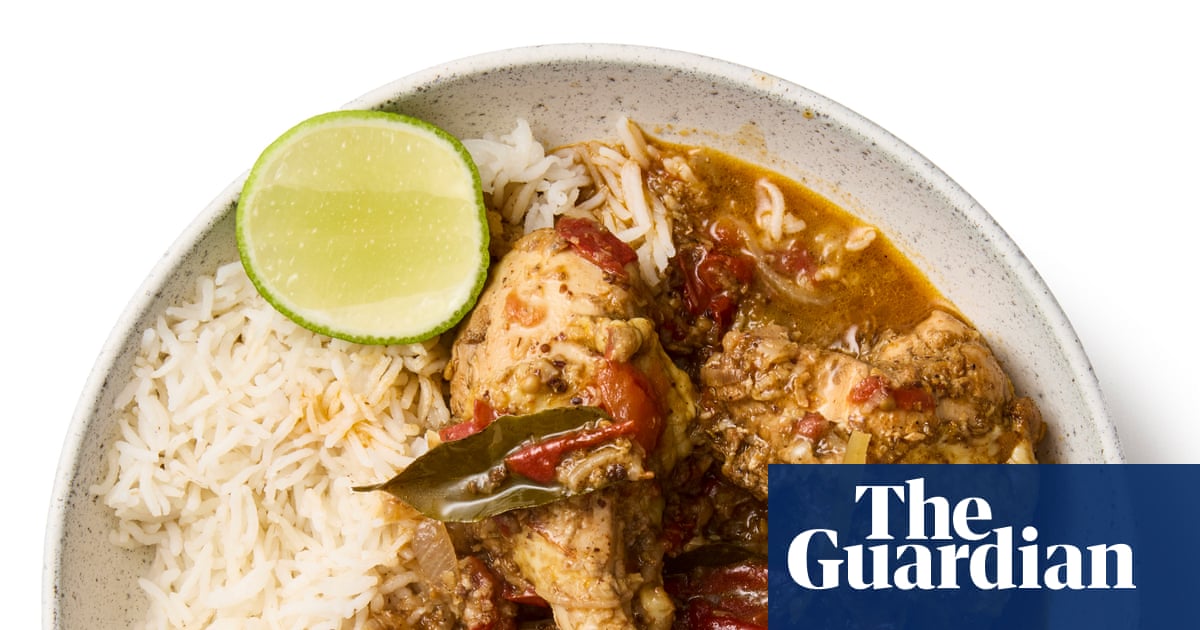
“Every family in our sunny little island craves this creamy chicken,” says Sri Lankan journalist Zinara Rathnayake, “devouring each morsel with carbs of choice: string hoppers, thin rice noodle mats; hoppers, bowl-shaped pancakes; and kiribath, slender rice cooked with coconut milk. All our family recipes may slightly vary, but this glorious dish pins down the labour and love that goes into every Sri Lankan curry.”
After all, Sri Lanka is a country that’s “rich in spices”, chef Peter Kuruvita explains. “Most Sri Lankan cooking,” he writes in Lands of the Curry Leaf, “features unapologetically punch-you-in-the-face, get-the-adrenaline-pumping flavours. But [in part thanks to tropical crops such as coconut, lemongrass and pandan leaf] the heat is more an intensity of spice than actual physical ‘chilli heat’.” Boldly aromatic rather than delicately fragrant, rich and light at the same time, kukul mas, which SH Fernando Jr’s book Rice & Curry calls “a mainstay of Sri Lankan cuisine”, is surprisingly quick to make once you’ve prepared, or bought, the spice blend, yet it tastes as if it’s been simmering for hours.
The meat
“Choosing a chicken is a fine art,” Kuruvita writes in his book Serendip, “and there are two types: a curry chicken and a broiler … The chickens were always sold skinless, as it was a lot quicker for the men to rip the feathers off with the skin rather than to pluck them. The meat was cut up for us and placed in a large ‘elephant ears’ leaf. When we got home, all we had to do was add the spices and cook the curry.” Most recipes indeed call for whole chickens, cut up on the bone – a good cleaver should make this easy, or, if you’re buying from a butcher, they’ll do this for you even quicker. That said, I’m with Fernando, who writes: “I use thighs with the bone in when I make this dish as breast meat tends to dry out.” If, like Karan Gokani of Hoppers, you use thigh fillets, you may wish, as he does, to replace the water with chicken stock; I also favour removing the skin, but that’s up to you.
The marinade
Many recipes, as Kuruvita notes, simply add the chicken to the pot as it is, but Gokani, Kuruvita and Jeffrey Alford and Naomi Duguid in their book Mangoes & Curry Leaves all marinate the meat first: Gokani in ginger, garlic, turmeric, curry powder and salt; Kuruvita in vinegar and curry powder; and Alford and Duguid in curry powder and garlic. Though all the curries taste great, the marinated chicken comes out a clear winner with my testers and I, “because it seems to marry better with the sauce”. If you’ve bought, or already made your curry powder, there’s no need to delay cooking for too long, but it’s well worth blending it while you prepare the rest of the dish, or indeed if you want to get ahead.
The base
All the curries I try are based on onions in some form. Alford and Duguid go for shallots and Rathnayake red onion, both of which mirror the smaller, sweeter and fierier pink onions used in Sri Lanka. Everyone also adds garlic, and ginger is fairly common, too, a combination that echoes the sweet heat of the onions. Kuruvita’s is the only curry not to include tomatoes – fresh in most cases, though Fernando stirs in tomato paste in the end – which feels a shame, because they add a pleasantly fruity note to the sauce.
Curry leaves are almost mandatory – only Alford and Duguid leave them out – and I can’t resist the transporting perfume of lemongrass and pandan leaves. The latter, long green leaves sometimes referred to as screwpine, though they has nothing to do with the pine family, can usually be found in the freezer section at south-east Asian food specialists. If you can’t track any down, leave them out, but I adore their haunting flavour that, to me, combines toasty notes of dulce de leche with a grassy freshness; they also make incredible desserts.
This sweet, zesty freshness can be underlined with a cinnamon stick and some cardamom pods (some recipes also add cloves), with chilli powder and fresh green chillies bringing the heat (though Fernando adds cayenne pepper and Kuruvita black mustard seeds). Many of these spices are also present in the roasted curry powder that’s the backbone of the dish, so adding a little extra during cooking simply nudges them a little higher in the overall flavour profile.
The roasted curry powder
In Sri Lanka, Fernando explains, “spices are usually bought whole, raw and in bulk. They are dried out in the sun in hand-woven palm frond baskets before roasting and grinding.” Using ready-made blends, he suggests, is like swapping freshly ground beans for instant coffee – though Rathnayake, whose mother’s recipe is featured on the website of Kolamba, a Sri Lankan restaurant in London’s Soho, suggests that the stuff sold in Sri Lankan supermarkets (it may be labelled “meat curry powder”) is perfectly acceptable. If you don’t already have an arsenal of individual spices at your disposal, you may well find this the most convenient option.
If you have a wealth of spices to hand, however, it’s really not hard to make the roasted powder that’s usually paired with meat dishes, which, in this survey at least, always contains coriander, cumin, fenugreek, cloves, cardamom, cinnamon, pandan and curry leaves, and often turmeric, fennel, black pepper and mustard seeds as well.
There’s usually some toasted rice in there, too; not only, Gokani explains, for its nutty flavour, but to act as a thickener, though Kuruvita also includes a thickening powder made from extra rice, desiccated coconut and more spices, which gives his sauce considerably more body than many of the others. Alford and Duguid add cashew nuts on top, which supply a sweet nuttiness, while Kuruvita calls for a startling number of dried chillies, which may be something to consider if you find you’d like a little more fire. I’ve based my curry on the Hoppers version, because I like its sweet, peppery warmth, but, as with all such blends, I suspect there’s a lot of room for tinkering around the edges, particularly heat-wise.
Liquid and cooking
The gravy is usually diluted with a mixture of coconut milk and water, though Kuruvita, who includes solid coconut in his thickening powder and tips in an unusual amount of oil, doesn’t bother with the milk. If, as mentioned earlier, you’re using boneless chicken, I’d recommend replacing the water with good, jellied chicken stock.
Cooking the onions until they’re soft and sweet is vital, but there’s no real need to fry most of the spices here, because they’ve already been toasted. Chicken on the bone takes some time to cook through, so most recipes cover the pan and leave it to simmer gently for 30-40 minutes; bear in mind that the coconut milk will split and separate during this time, but it will still taste just as good as it did when it was emulsified. If you’d prefer a thicker gravy, by all means reduce it further after removing the meat, or thicken by stirring in some extra ground rice mixed with a little water to make a paste.
Serving
Gokani recommends serving this curry with rice or bread, plus a fresh sambol, or turning it into a kottu, a Sri Lankan favourite involving curry, chopped roti, eggs, onions and chillies (which is also a very good vehicle for leftovers, should you have any!)
Perfect Sri Lankan chicken curry
Prep 35 min
Marinate 30 min+
Cook 50 min
Serves 4-6
For the roasted curry powder (or use 3 tbsp shop-bought Sri Lankan roasted curry/meat curry powder)
4g green cardamom pods
4 tbsp coriander seeds
2 tsp cumin seeds
1 tsp fennel seeds
½ tsp fenugreek seeds
¼ tsp black peppercorns
2 cloves
5g cinnamon stick
8g rice
3g fresh curry leaves (use a little less if you have only dried ones)
5cm piece pandan leaf
For the curry
1 tbsp grated root ginger
2 garlic cloves, peeled and grated
1 tsp fine salt
1 whole chicken, or 6 chicken legs or thighs, skinned, if you prefer, chopped into on-the-bone pieces
2 tbsp coconut oil, or neutral oil
1 red onion, peeled and thinly sliced
2 garlic cloves, peeled and thinly sliced
1 tbsp grated root ginger
1 lemongrass stalk, trimmed and lightly bruised
4 cardamom pods, squashed
1 cinnamon stick
1 tsp chilli powder
½-1½ tsp roasted curry powder (see above and method), to taste
1 sprig fresh curry leaves
2 ripe plum tomatoes, roughly chopped
2 green finger chillies
10cm piece pandan leaf
100ml coconut milk
Rice and a lime wedge, to serve
Rub the ginger, garlic and salt all over the chicken, then leave to marinate while you prepare the other ingredients (and for up to four hours).
For the curry powder, stir the dried spices in a large, heavy-based frying pan on a medium heat until browned and aromatic, then tip out and leave to cool.
Toast the rice until lightly browned, add to the cooling spices, then toast the curry leaves and 5cm piece of pandan until they’ve dried out and add those to the mix, too.
Once everything is cool, put all the spices and rice in a blender or mortar, then whiz or pound to a powder.
Now for the curry. Put the oil in a wide, heavy-based pan on a medium-low heat, then fry the onion for five or six minutes, until soft. Stir in the garlic, ginger, lemongrass, cardamom, cinnamon and chilli powder, fry for a minute or so, then stir in the curry leaves and tomatoes and fry until the tomatoes soften.
At this point, unless your pan is very large, you might find it easiest to scoop out the contents before you cook the chicken.
Toss three tablespoons of curry powder with the marinated chicken, then add to the pan with a little more oil, if necessary. Turn to coat, then, if necessary, return the tomato mix to the pan and add the chillies and 10cm piece of pandan leaf.
Measure out 200ml water, stir in a splash to help dislodge anything that’s stuck to the base of the pan, then pour in the rest of the water and bring to a simmer. Cover, turn down the heat and leave to cook for 15 minutes.
Turn over the chicken pieces, stir in the coconut milk, cover the pan again and leave to cook for another 15 or so minutes, until cooked through. Leave to cool slightly, then adjust the seasoning if required, just before serving with rice and perhaps a wedge of lime.
-
How do you make your kukul mas? Is this homely dish an emblem of Sri Lankan cuisine, as Zinara Rathnayake suggests, or would you make the case for something else entirely? And please, do share your recommendations for Sri Lankan restaurants around the world – I’d love to hear them.








Leave a comment