
How to make the perfect zaru soba, or cold soba noodles – recipe | Noodles
 adminUpdated 46 minutes Ago6 Mins read
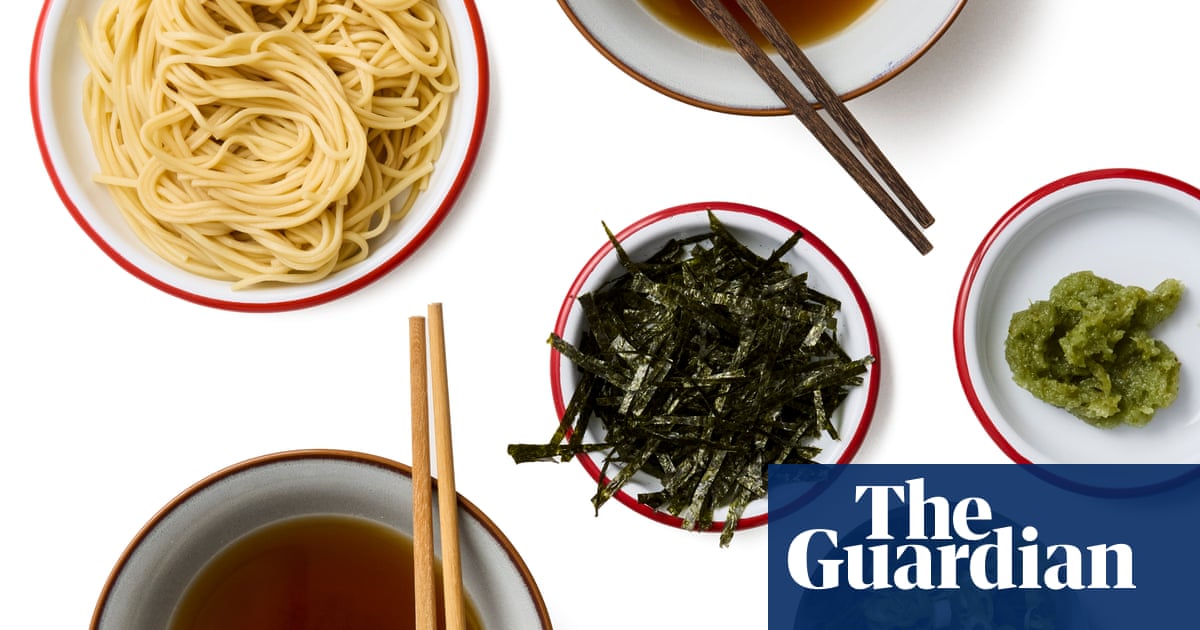
Although every culture craves something different in hot weather – chilled beetroot soup in Lithuania, cooling buttermilk drinks in India, gazpacho in Spain – what many of these dishes have in common is a certain soothing silkiness as they slide down the throat, plus a decent helping of salt. Japan’s zaru soba, which Namiko Hirasawa Chen of Just One Cookbook describes as her family’s “go-to meal when the summer heat and humidity soar”, is no exception. Cold, slippery noodles paired with a savoury dipping sauce, it’s a simple, satisfying dish that’s ready in 15 minutes, and can be accessorised with crunchy salads, sweet seafood or creamy tofu sides for something more substantial. Traditionally served on a bamboo mat, or zaru, to allow the noodles to drain, you can get away without one at home (though lose the seaweed and you can call it mori soba instead), this is definitely one to stick in your summer repertoire alongside the chilled soups, watermelon salads and cucumber sandwiches.
The noodles
Zaru soba isn’t the only chilled noodle dish that Japan slurps in summer – Emiko Davies favours her mother’s somen (delicate wheat-flour strands), while Shota Nakajima makes a case for hiyashi chuka, a Chinese-inspired ramen salad. Sadly, though, spindly somen and fresh ramen are trickier to source in the UK than buckwheat soba, which can be found in many larger supermarkets.
In fact, Yumiko Maehashi of RecipeTin Japan reckons that these noodles’ nutty flavour is best enjoyed cold: “I read in a Japanese soba article that some soba fanatics would not consider the soba in hot soup as ‘soba’.” Not all, however, are created equal, as Maehashi goes on to explain: “Some soba brands indicate the ratio of buckwheat and wheat flours mixed in the soba noodles. The more buckwheat flour, the more flavour and the more expensive … It is really your preference as to what sort of soba noodles are the best, but, in general, the more expensive dried soba noodles cook to al dente better.” If you’d like to keep this dish gluten-free, you’ll need to look for 100% buckwheat noodles (and a gluten-free Japanese soy sauce – Kikkoman makes one), but, otherwise, it’s up to you. Buckwheat can, after all, be an acquired taste, especially in such a simple dish.
The noodles are cooked without salt, I suspect to facilitate the contrast with the dipping sauce. Swirling them around the pan for the first 15 or so seconds, as Maehashi suggests, is a helpful tip to ensure that the strands don’t clump together. It’s also vital to rinse them well afterwards, to quickly cool down the noodles before they overcook, and to wash off some of the starch that will otherwise turn those lovely, silky noodles into a sticky bird’s nest (trust me on this). Chen dunks hers in iced water, too, but I don’t find that this step makes much of a difference texture-wise. Then again, neither do I notice that doing so causes the “noodles to ‘tighten’ up too quickly, losing their texture and flavour”, as Lisa Kitahara at Okonomi Kitchen claims, but I’ll concede I’m no soba expert.
Once cooled, the soba are best consumed immediately, but if you find they’ve started to tangle, give them a rinse under cold water to separate the strands, then drain them well again afterwards. Traditionally, soba are served on a flat bamboo straining mat called a zaru, but as long as you toss them well, a less picturesque plate or bowl is fine.
The sauce
The proper way to eat zaru soba, according to Maehashi, is to “pick up a few strands of noodles and dip only the bottom half of them into the dipping sauce by simply lowering the chopsticks. Many people drop all the noodles they just picked up into the dipping sauce,” she adds, “but this is not a real gourmet way of eating buckwheat noodles. By dipping only part of the soba noodles in, you can taste the flavour of the noodles and enjoy it better.” So that’s you told.
As only a little of the accompanying mentsuyu sauce gilds each helping of noodles, it has to be intense in flavour, hence the principal ingredients: salty soy sauce, mirin (a sweet rice wine; alcohol-free alternatives are available), umami-rich seaweed and dried, smoked tuna flakes. Maehashi points out that you can substitute ready-made dashi stock, easily found in any Japanese specialist store, for the kombu and katsuobushi element of things; indeed, you can even buy mentsuyu in bottles, if you prefer, but it’s so easy to make that it won’t save you much time.
Chen, and chef Aya Nishimura in her book, Japanese Food Made Easy, both add sake as well, which, though not mandatory, does give their sauces an interesting complexity that proves very popular with my testers (save yourself some money and go for a cooking sake, unless you’re planning to drink the rest of the bottle). We also enjoy the brown sugar that Nishimura and chef Maori Murota include, the latter in her book Tokyo Cult Recipes. Feel free to leave it out if you prefer; you can always stir some in at the end if you decide the sauce needs some sweetness. (Equally, Chen explains, if the sauce is too salty for your taste, you can dilute it with iced water.) Nishimura sticks in a couple of shiitake mushrooms too; I find them a bit overwhelming, but it does strike me that if you don’t eat fish, you might like to substitute these for the tuna flakes.
The only small faff with this recipe is thinking ahead to ensure the sauce is cold before you eat, which is why it’s worth making several batches of it in hot weather; once strained, it keeps well in the fridge. I’d recommend keeping the kombu and tuna in for a few hours, as Murota seems to suggest, to extract as much flavour as possible. And don’t discard them once you separate the two, either; they can be saved and used to make furikake rice seasoning.
Chef Masaki Sugisaki of Dinings SW3 in London, meanwhile, advises that, “once you have finished the noodles, heat the reserved noodle cooking water and add it to the dipping sauce. It is traditional to drink this as a soup, because the water contains nourishing minerals.”
The accompaniments
Zaru soba becomes nori soba with the addition of some shredded nori, those roasted laver seaweed sheets used to wrap some sushi rolls. This, along with fiery wasabi and spring onions, are the most common accompaniments in the recipes I try. Murota recommends daikon and garlic chive or the white part of a leek, rather than spring onions, and she and Nishimura include grated ginger too. All of these, along with the ground toasted sesame seeds that add an interesting additional texture to Nishimura’s dish, are possibilities. In fact, in the privacy of your own home, add whatever you want, but do bear in mind that the pleasure of this dish is its simplicity – silky noodles and salty broth – so try to avoid the temptation to load it up like a salad before you’ve even tried it.
Perfect zaru soba
Want to save this recipe? Download the Guardian Feast app to add this to your collection.
Prep 10 min
Cook 10 min
Infuse 30 min
Chill 2 hr+
Serves 2
2 x 75g bunches of soba noodles
1 piece nori (optional)
2 spring onions, or garlic chive leaves
Wasabi, fresh or paste
For the sauce
5cm x 5cm strip kombu
4 tbsp Japanese soy sauce
4 tbsp mirin
2 tbsp sake (optional; if not using, add 2 tbsp extra water)
1 tsp brown sugar
5g katsuobushi (bonito) flakes
Put the kombu and 150ml cold water in a small saucepan and leave to sit for half an hour.
Add all the remaining sauce ingredients, bar the katsuobushi.
Slowly bring to a boil, then turn off the heat, add the katsuobushi, leave to cool, then chill for a few hours, and preferably overnight.
Bring a wide pan of unsalted water to a boil. Add the noodles and stir for a few seconds to ensure they don’t clump together.
Cook according to the packet instructions (usually about five minutes) until very slightly al dente.
Scoop the noodles into a sieve (save the cooking water) and rinse under cold water to cool completely, tossing them with your fingers to separate the strands. Shake the sieve a few times to remove as much water as possible.
Strain the sauce (you can save the kombu and katsuobushi to make furikake). Cut the nori into thin strips, finely chop the spring onion and grate the wasabi, if necessary.
Serve the sauce in individual bowls with the noodles (on bamboo mats, if you have them) and accompaniments on the side for dipping. Once the noodles are finished, add cooking water to the remaining sauce to taste, to make a broth, and drink.
-
Zaru soba: when did you discover this deliciously cooling noodle dish, where can you find the best, and what do you like to serve it with?










Leave a comment