
‘I don’t always go full banana!’ From the yellow man to a playful shrink, stylish people on what they wear every day – and why | Fashion
 adminUpdated 2 hours Ago14 Mins read
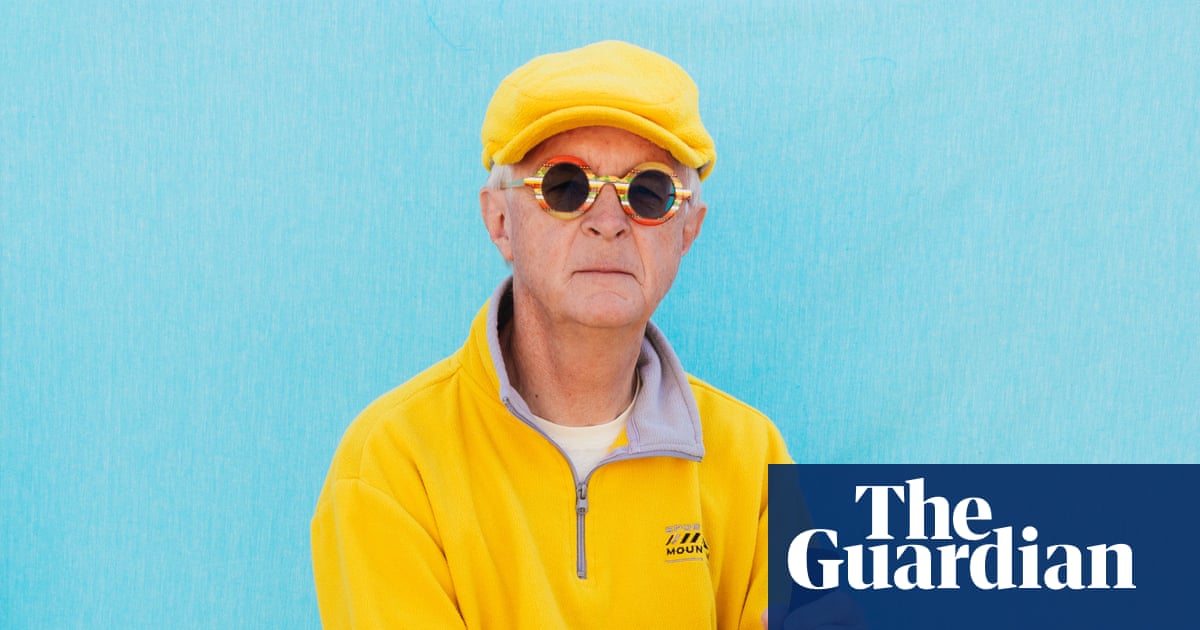
‘Wearing yellow spreads a bit of love’
Andrew Geldart, 65, retired engineer, Cornwall
For 30 years as a civil engineer I wore conventional grey and navy, then I retired at 55, moved down to Bude in Cornwall with my wife, Lynn, and the sun came out. Bude is a positive place, where you can be yourself. Everyone is friendly; it’s paradise.
I first started down the yellow route 10 years ago when we moved to Bude with a camper van called Primrose. People gave me yellow accessories for it and the seed was sown – I thought I might wear yellow myself. Now it’s a mainstay of my wardrobe. I wear it practically every day. I have everything from yellow caps to yellow shoes. I prefer sunflower yellow rather than mustard tones: it’s bright and cheerful.
I don’t always go “full banana”! I dress according to the situation. I wouldn’t wear yellow to a Remembrance Day parade, but I would to a funeral of a friend, as I’m known for wearing it and I would be honouring them. If I want to go under the radar, I wear beige. I’m a church leader and help run the food bank: usually people know me there and adjust their behaviour accordingly, but when they don’t recognise me because I’m not in yellow, I can blend into the background and hear what the community really want.
There are practical benefits. My grandchildren can easily spot me in a crowd. In fact, they walk past me if I’m not wearing yellow, and ask: “Where’s Pops?” But the main reason I choose to stand out is to connect with people, to show that I am friendly and approachable, even if I’m not smiling.
Someone says, “I like your glasses”, nearly every day (I have a jazzy, stripy, bright yellow summer pair and a more muted, translucent yellow winter pair), and that opens the door to a conversation. There are so many isolated people looking down at their phones, and if I can encourage someone to talk, I’m happy. I want to spread a bit of love in the world and to show that it’s safe to say how you really are, to get past just “Good morning”. A coffee and a chat can be a little glimpse of sunshine.
I have toyed with changing to red or green, and that would be a new conversation – “What happened? Why aren’t you wearing yellow?” It’s a colour that works for me, but never say never: men’s fashion is quite limited when it comes to yellow, so I may be forced to change to another bright colour one day.
Sometimes the old conventional and staid engineer part of me thinks, “Can I get away with this? Is this too much?” But I saw a picture of the late David Hockney in his yellow glasses recently and thought, “Maybe I’m not ridiculous.” I want to give people the courage to step outside the box – let’s make life enjoyable.
As told to Emily Cunningham
‘I like to subvert the expectations of how a shrink ought to dress’
Anouchka Grose, 56, psychoanalyst, London
I don’t want to dress too conservatively as I don’t want to look like an authority figure, or like someone who believes that “analytic neutrality” – the idea that the therapist is a blank slate – means some kind of John Lewis cosplay. “Neutrality” can’t mean aligning with a dominant norm – psychotherapists need to be critical thinkers. But what I wear also can’t be so unusual that the client is distracted. Overall, I’m aiming for a kind of quiet surrealism – a balance between comfortable, pleasurable and characterful.
So I have a vague uniform of a genderless jumper or jacket – a strict-looking black jacket with pointy shoulders, say – with a man’s shirt or T-shirt, big trousers (I’m currently loving a stripy pair from Maison Margiela I found on eBay) and ugly shoes, usually Uggs I buy secondhand. Most things are outsized, or loose.
Very often my T-shirts will have a slogan – my favourite is “Dress for the male gays”. It references Laura Mulvey’s theory that there could be a male gaze that things are constructed around, which was one of the first ways into psychoanalysis for me. But it’s also a funny wordplay referencing the post-Freudians, who thought of homosexuality as a kind of sickness to cure. I see that T-shirt as a sort of apology for the past homophobia of psychoanalysis. Plus it makes clients laugh, which is allowed. (Freud took jokes extremely seriously.)
Subverting the expectations of how a shrink ought to dress has been a real theme for me. A patient once asked me: “Are you allowed to wear those trousers to work?” They were balloonish red and white checked ones. And sometimes when I’ve given papers at analytic conferences, the other shrinks will be, like, “Yeah, but what do you wear for work?” (It is no different from what I am wearing at the conference.)
I’ve always loved clothes and the way they transmit meaning. I love the crazy semiotics of them – communicating social signals to other people who know those signals. That seems very psychoanalytic to me.
They always say that as a psychoanalyst you get the patients you deserve. I really like that idea. There have been some people I frightened away because of how I looked, and that’s good.
Maybe that’s why I don’t spend too long worrying how people will perceive me. Psychoanalysis teaches you that associations are fractured and kaleidoscopic. So you can’t really control the meanings that other people make; any garment could mean anything to anyone.
‘My love of vintage is a rejection of capitalism’
Annastasia, 62, author, Devon
What I wear is an integral aspect of my identity. I am what I wear, and what I wear is secondhand, sometimes reproduction, clothing that dates between the 1920s and about 1966. It stops there because I think the mid‑60s is when life started to change from being a very ordered, slow society to something else. I was born in 1964, so I’ve pretty much lived in the something else period; I’ve always rejected the current timeline I live in.
Seeing The Wizard of Oz when I was four was the starting point. I was born into a poor, working-class family, and everything seemed really grey. That film, with its heightened colours, fired my imagination as to what clothing – and the world – could look like. Then, when I was about six, a friend of my mother’s dropped round a pile of what she thought were dressing-up clothes – 50s ball gowns and cocktail dresses. When I put them on, I felt completely myself, which I didn’t in the functional, ubiquitous clothes of the day. I saw then that getting dressed could become a creative thing. At 12, I began dressing like this. Now, every day the first creative choices I make are what to wear. It’s ritualistic.
My love of vintage clothing is an outward rejection of advanced capitalism and the tyranny of its desperate buy, buy, buy culture, which results in so much clothing being sent to landfill. I like colours that are more muted, which you get in vintage fabrics. The last thing I would buy as a winter coat would be a puffer jacket that makes you look like a caterpillar. It would be wool, 1950s, cinched in.
Through my clothing, I am expressing that attire can be inexpensive, ethical, well made and, to me, aesthetically pleasing. I like the values of vintage clothing: care, attention, consideration and slowness. But that isn’t to say that I’m about nostalgia or traditional values. I would hate anyone to think I was espousing tradwife values via the way I dress. Quite honestly, in my 60s, I can dress the way I want to.
I have faced criticism for what I wear. When I was working alongside women and girls in Birmingham in the 70s and 80s, feminist organisations used to be very judgmental towards me. It was as if I had to prove my credentials more than other women because I wasn’t wearing jeans and Dr Martens. By contrast, the people I visited as part of the community outreach I was doing used to say how impressed they were that I had made such an effort to dress nicely for them.
I now write time-slip fiction – where present-day characters get entangled with those from the past – under the pen name Pearl Fane. The pivotal character lives in England in the 50s. It’s so useful because I can relate to how she might have experienced the world by how clothing felt on her.
People are surprised I dress like this every day – but I wouldn’t know any other way of being.
‘I’m a rabbi, and I like to coordinate my shoes with the 12 Hebrew months’
Arielle Stein, 35, rabbi, New York
I have been figuring out my style for a long time. I started out as a visual artist; now I’m a congregational rabbi, and I’ve been working to meld the more formal with the more alternative. The result is a quirky mix of some business-casual, some downtown hipster, and then truly random things that delight me.
Style has always been a way to communicate my identity; I think of it as a form of storytelling. As a rabbi, there are definitely norms around how you should present. But I think being on the younger side, and a woman, freed me from a lot of that; no matter what, I wasn’t going to look like the traditional model. Plus, I deeply love to subvert a norm: for me it’s about adding to the mosaic of what’s possible.
I have a role in a lot of important life-cycle moments and I think it’s vital I don’t take centre stage. But people are drawn to me either on an artistic or creative level, or on a peer level. So the style element is important.
Our generation has had a lot of struggles connecting to religion and spirituality, and I think for people to meet a rabbi who looks like them definitely creates a sense of comfort. My style often functions as an invitation: I get a lot of emails that start with something about style and then get into something that person has wanted to talk about and hasn’t yet found a way that felt comfortable to them.
There are a few occasions when I have more of a uniform. At the synagogue I work at, we’re a pretty traditional Reform congregation, and so we all wear a mandated robe on Rosh Hashanah and Yom Kippur. But, at the same time, because we are a progressive denomination, we all select our own shoes.
Shoes in general are a nice way of bringing that alternative personal flavour. I like to coordinate mine with the 12 Hebrew months: for instance, wearing low-key Birkenstocks for the contemplative month of Tammuz; freaky jelly sandals for Adar, which is the month of Purim and the craziest time of the year; and Vibram five-toed Mary Janes for Nisan, the month of exodus and the Passover story, as they’d be perfect for getting through the desert. In fact, I wear different shoes for each night of Passover, from studded Madewell mules on night five, when I’m thinking about plagues and boils, to blood-red Tory Burch mules on night six, when I’m thinking about the Passover sacrifice.
We often get stuck in an idea that Judaism is one way or one thing only, and that’s exceedingly not true. I think we’re living in a visual culture right now, so this type of representation helps people remember that. It creates an opportunity for people to come as they are and to feel as if they can be Jewish in a way that feels authentic to them.
Key for me is showing the Jewish community and the world that multiplicity is a deep part of who we are, and caring about style doesn’t mean that you don’t have a place in the Jewish world.
‘My bright clothes are welcoming to my patients’
Dr Bhasha Mukherjee, 30, GP, London
There aren’t really any rules for how to dress as a GP. One of my first bosses used to wear a full suit, and another would dress in a band T-shirt and jeans. I think you can take those liberties when you have been around long enough and developed a relationship with patients.
I tend to wear something that is a cross between expressing how I’m feeling and being comfortable. I exercise every day, so part of my outfit is usually sportswear, but it’s a little bit glam, a little bit sexy, and I might wear it under a blazer. I love wearing a blazer; it’s power dressing. But it’s not going to be a boring black blazer. It’s going to be patterned, maybe even fuchsia pink. I love colour – dopamine dressing is a core theme for me.
Jewellery is also important – I’ve got autism and ADHD, and I use it as a tactile, fidgeting thing. I will fidget with my necklace as I’m talking to patients because it helps me stay focused on what they’re saying.
There’s evidence for trust levels in doctors being dependent on what they wear. But it’s not always simple. I remember one day I turned up in scrubs and my boss was, like, “Don’t be looking so scruffy at work.” I think Covid changed scrubs. They were definitely a dress code during the pandemic – they became the norm – but since then they have been hijacked by non-medical people on social media, a status symbol for influencers trying to gain the public’s trust. It confuses patients. I don’t need scrubs and a stethoscope to showcase my professionalism. Plus, I like to express myself more – I feel as if that’s more welcoming to patients, anyway.
A part of me likes being a rebel. All through medical school, as a woman, I got shamed for wearing certain things at work. I would get called out by female colleagues who said my lipstick shade was too dark and unprofessional. Now I don’t feel like anybody can tell me that. I grew up consuming fashion magazines in the 00s – I do not walk out of the house without lipstick on.
One thing I won’t wear in a professional setting is Indian dress. When I dress in that way I’m very maximalist and I will wear the full outfit: the sari, the head jewellery, neck jewellery. I can’t pare it back, so I’ve never dressed that way for work.
‘Grunge feels like a form of quiet rebellion’
Lorenzo Tondo, 44, international correspondent, Sicily
I can pinpoint the exact moment when my obsession with workwear began. It was the winter of 2018 and I was heading to the frozen mountains of Bosnia to cover the refugee crisis. Thousands of Syrian, Iraqi and Afghan refugees were moving along the Balkan route, hoping to reach Europe after weeks of walking through snow, mud and dense forests.
I needed clothes that were practical and forgiving. That was when I remembered a pair of old Carhartt trousers buried in a cupboard. I had worn them heavily in the late 1990s and early 2000s. Wide-cut and designed to take a beating, they were faded now, tighter than I remembered, but still comfortable. I decided to take them with me. I needed trousers I wouldn’t mourn if they ended the day soaked through, caked in mud or torn. Their approachability was a plus, too: I’ve reported on the war in Ukraine, in the occupied West Bank and in Syria for the last six years and know that a blazer, however well intentioned, can quietly reinforce distance.
Ever since then, I’ve hunted down loose-fitting vintage pieces: early-90s Carhartt jackets and at least three pairs of wide-leg trousers not unlike the ones I used to skate in as a teenager. I have worn them on the frontlines of the war in Ukraine, in cities flattened by the earthquake in Turkey, and amid the chalky dust of Idlib, in rebel-held north-west Syria. But also at home in Italy: for shopping, or heading out for a day trip with my children, or going out for dinner with friends.
This was the style I had grown up with in the 90s, in a small town on the south-western coast of Sicily. Grunge originated in the Pacific north-west of America – a place of rain and lumber towns. I might have belonged to a very different community nearly 10,000km away, but I felt a shared sense of values. In my town, people dressed in Dolce & Gabbana and Gucci on Sundays. Wearing old clothes felt like a form of quiet, necessary rebellion against the superficial aesthetics of luxury fashion.
As I got older, I started drifting towards something more conventional. Then grunge came back into fashion, along with the bands I used to listen: Pearl Jam, Nirvana and Rage Against the Machine. Call it Peter Pan syndrome if you like, but slim jeans, tidy knitwear and carefully tailored coats have never felt like home. Grunge is a style that helps me feel rooted, wherever I am. Last year, I attended a press conference that the Israeli prime minister, Benjamin Netanyahu, was giving in Jerusalem. Most people were in suits and ties. I was wearing baggy, faded jeans and a loose beige shirt. Being one of the only people dressed differently brought back that feeling of rebellion that had fuelled my youth.
Lorenzo Tondo
‘My motto now I’ve lost my eyesight is: if they’re gonna look, make them stare’
Lucy Edwards, 30, disability activist, near Birmingham
What I wear has changed a lot over the years. I lost my eyesight nearly 14 years ago – the sight in my right eye at 11 and left eye at 17. I don’t wear the clothes “sighted Lucy” used to wear – I’ve come so far and if I were to dress as her that would be weird. Sighted Lucy had a lot of internalised ableism. She wore things that might have made her feel amazing because she looked in the mirror – they were a lot more skin-tight – and now blind Lucy prioritises things that are flowy and tactile. It’s been a long journey to get here.
I feel happiest when I feel the most comfy, which isn’t necessarily what looks the best, and I’m OK with that. I had this little voice in my head for so long, saying, “A sighted person has to tell you whether it looks good, whether it flatters your body”. Whereas now what I wear is just what I feel the best in, and often that is sequins, feathers, velour, silk – things that feel nice.
When I was planning my wedding, all the girls in my life came down and watched me try on dresses, but it was really important that I put the dress on alone first and asked myself, “Do I want to show this to my family? Do I want their sighted opinion, or do I just want my opinion here?” So that was a big part of me choosing. The dress I picked was so lovely that I didn’t have to have that visual affirmation – I knew in myself it was right. Although I did love their reaction when I came out in it.
I do still ask my sighted family about colour, and my sister is my mirror when I need one. She has autism, and because her world is black and white she will say directly, “No, you can’t wear that” or “Yes, you can.” That provides so much comfort. Often, if I dress in colour it tends to be the same colour top and bottom, which is why I end up wearing a lot of co-ords.
When it comes to what I wear, my voice has definitely got louder the older I’ve become. My motto is: if they’re gonna look, make them stare. So I make sure to have a glittery harness for my guide dog, Miss Molly, or a glittery cane for me. I also make sure me and Miss Molly match. I see it as part of my activism. For so long I hated being a guide-dog user. But now I’m, like, “No, Lucy, that is so much internalised ableism, absolutely effing not.”
I get dressed more for myself now than ever. I still wear heels, which surprises some people. I’m less likely to go for stilettos, but if I do I just change my cane height to match. I put on makeup and get dressed. People will ask why, given it’s so visual. But I’m seeing the non‑visual elements of it. It’s a ritual and it grounds me. What I wear has to feel happy. Getting dressed now is freeing – I can just be myself.










Leave a comment