
‘I don’t chase the dollar. I never did’: the astonishing hidden life of Mr T | Culture
 adminUpdated 2 hours Ago18 Mins read
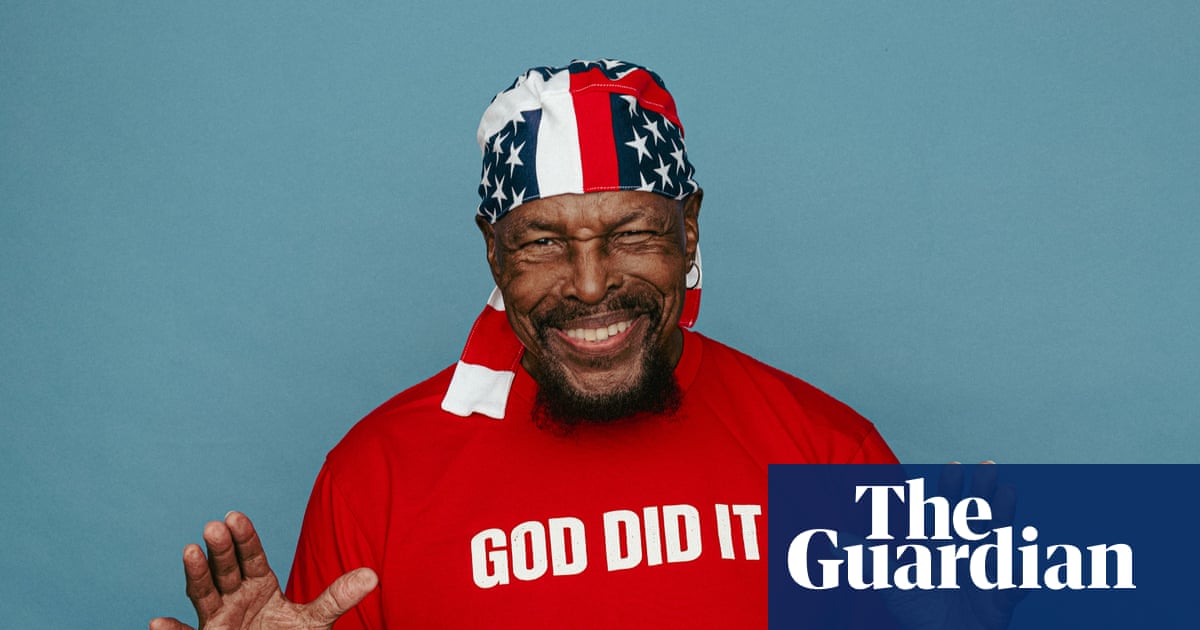
Mr T explains why he’s late, but he wants to make one thing clear – this is not an apology. “You caught me in my devotion, and nothing comes before God. So I won’t say I apologise for the delay. I just want you to know that God comes first in all my life. For allowing my success, I give God the glory.”
He is here to discuss a new Netflix documentary, Untold Mr T: I Pity the Fool. At 74, he rarely gives interviews. But when Mr T decides to talk, he really does talk. What Mr T thinks, Mr T says. And I’ve never heard anyone trash the very thing they’re here to promote quite like Mr T does today.
The actor, former wrestler and cultural icon is full of surprises. Perhaps the most surprising is that he’s still famous. As he says, he has no right to be. It’s more than 32 years since he participated in a wrestling match. Thirty-five years since he had a significant acting role in a TV show. Thirty-nine years since he starred as BA Baracus in The A-Team, and 44 years since Rocky III – the only TV show and movie he’s really remembered for. And yet, somehow, he’s still a household name.
In the 80s, many boys and girls wanted to grow up to be Mr T. The A-Team was shown all over the world. This action-adventure TV series about four US army special forces commandos turned mercenaries became a huge hit and helped define the era.
The movie star George Peppard was supposed to be the show’s headliner. But much to Peppard’s chagrin, Mr T proved far more popular. His BA (Bosco Albert or Bad Attitude, take your pick) Baracus was a mechanical genius and problem-solver; a peerless brawler and human battering ram, who wore an African Mandinka-style haircut, rattled with gold chains and had a pain threshold second to none. In some ways, BA Baracus and Mr T were similar. In others, they couldn’t have been more different.
Born Lawrence Tureaud, Mr T grew up on the south side of Chicago, in poverty. His minister father left home when he was five, leaving his mother, Willie, to bring up their 12 children. The family survived on her work scrubbing floors for the wealthy, and welfare. Lawrence was known to his brothers and sisters as Little T. When he was growing up, everyday racism had a devastating impact on him. He was horrified by the disrespect most white people showed his family.
Aged 18, he changed his name to Mr T. “Let me explain that,” he says. “See, everything I do there is a reason behind it. My father was a minister and I watched him being called Boy. And I watched my uncle being called Boy. I watched one of my brothers who was a marine come home from Vietnam in his beret and uniform, and some white guys were calling him Boy. So at 18 I had to register for the draft. I said, if I’m old enough to fight and die for my country, I’m old enough to be respected as a man, so I self-ordained myself Mr T at first. Then I legally changed my name to Mr T later on, so the first word out of everyone’s mouth would be Mr.”
We meet on a video call. At 74, he looks wonderful. He’s wearing a stars and stripes bandana and a T-shirt that says Lord’s Gym, illustrated with a picture of Jesus doing press-ups with the crucifix on his back. His face, less full than it once was, is magnificently creased and creviced, with laughter lines galore.
Mr T is part preacher, part poet, part pugilist. Close your eyes and you could be chatting to Muhammad Ali in his prime. It’s all there in the rhythm of his speech, the wit and wisdom, the fighting talk. And yet, over the decades, he has often been portrayed as a muscle-bound meathead. He says if he had been that, his mother would never have forgiven him.
He takes me back to his earlier years at school. Sure, he wanted to be tough like his bigger brothers, and hoped to be a successful footballer or boxer. But even more importantly, he wanted to pass his exams, because Willie had taught him the importance of education. She told him how the abolitionist Frederick Douglass, who was born into slavery, had been taught to read by the wife of his enslaver, “and then his slave master told her: ‘Don’t teach a slave to read, because if you do, he won’t be a slave much longer.’” Education was the route to freedom.
What did he study? “Philosophy and theology. A teacher in high school said, there’s no money in that, and I said: ‘Sir, that’s disrespectful. That’s insulting, because not everybody’s about money.’ They didn’t take the time to know who I am.” I tell him I’ve been reading a lot about him, but it’s the first I’ve heard of him studying philosophy and theology. “See, that’s the problem. I’ve told journalists the same thing I’ve told you, but they don’t print that. They didn’t want people to know what Mr T is like. I was born and raised in the ghetto, but the ghetto was not born and raised in me. We was poor financially, but we was rich spiritually. I never robbed nobody, I never raped nobody, I never broke into nobody’s house. I never snatched a purse.”
By the age of 15, he was a celebrated school athlete and looked like an adult bodybuilder. But his peers mocked him. “Growing up in the ghetto, even though I played football and wrestled, the thugs called me a sissy. You know why? Because I never robbed nobody.” He talks louder and louder. Soon he’s shouting. “They called me a sissy for listening to my mother, for listening to the teachers, for doing my homework. They didn’t go to school. They was dropouts. They was thugs. They’re in jail now or dead. They didn’t become nothing. As the Bible says, ‘Unless two agree, they can’t walk together.’ I told my mother I was going to be something in life. I was going to buy her a house and pretty dresses. They wasn’t going anywhere.” At times like this, he reminds me less of Ali and more of Samuel L Jackson’s Jules Winnfield in Pulp Fiction. Except Mr T’s Bible quotes are for real, and they focus on the loving aspect of the Old Testament rather than the hellfire and damnation.
Despite all this, the new Netflix film zeroes in on a violent incident that happened when Mr T was in his teens. In the documentary, he describes how some local thugs robbed his mother of her welfare money, and he knocked their teeth out with the butt of a rifle, and told them that was just the start of it. He leaves the story hanging.
I mention this and he scowls. “There is too much emphasis on that scene. These thugs kept on robbing poor black women, who didn’t have no recourse. So we did what we was supposed to do. We’ll leave it like that. We don’t have to get into gory detail. You touch my mother, you got to pay. Bottom line. Then I would have been a real sissy if I didn’t take care of it.” But he’s not proud of what he did. “Revenge on the guys went against my God’s teaching, because Jesus said, vengeance is mine. But then we wasn’t dealing with the Bible stuff. It’s Dodge City. Somebody got to pay. Case closed. There’s nothing else to talk about. We’re going on to the next thing.”
Did the guys live to tell the tale? “We’re going on to the next thing.” Silence.
After college, he won a football scholarship to Prairie View A&M University, a predominantly Black college in Texas, where he majored in maths and was deputy president of the freshman year. But he was thrown out in 1971 for being part of a protest and uprising against the expulsion of the editor of the student newspaper, The Prairie View Panther. Photographs from the time show a very different Mr T – a smart-suited, clean-shaven student.
He returned to Chicago, did manual jobs (janitor at a local bank; housekeeping at a hotel) while attending local colleges on athletic scholarships. In 1975, he joined the military police corps of the US army and was named top trainee out of 6,000 recruits. He left the army in 1978 with an honourable discharge and, after a knee injury destroyed his dream of playing in the National Football League, he started working as a bouncer.
This is when he developed his look. He was working at Dingbats nightclub, and accumulated gold chains from patrons who dropped jewellery or left it behind after late-night fights. His image was carefully cultivated. The gold, he says, was his way of reclaiming history. Instead of wearing chains of steel, as his forefathers had, he’d wear chains of gold. “People were concerned that I had too much gold and they asked me if it was too heavy. Nobody said to my ancestors: ‘That pregnant lady shouldn’t be in chains.’ Nobody cared about that, but all of a sudden they’re worried about this Black man, Mr T.”
The jewellery and haircut were a way to attract attention, he says. “See, my mother and father taught me it takes a smart man to play dumb. In order to catch a rat, you gotta have cheese, so they want to see this man with the gold, with this funny haircut. Who is this guy? So they give me a chance, and I slip my message in. Maybe he looks crazy, but he’s not crazy. Now I’ve got your attention, I can tell you about me.”
He explains why he used to wear seven earrings – three in his right ear, four in the left. “The three is symbolic of the father, son and the holy ghost; the three wise men; the three Hebrew boys – Shadrach, Meshach and Abed-nego; the three parts of the day – morning, noon and night; the three graces – faith, hope and love; the three civil rights workers that was killed in Mississippi trying to register blacks – James Chaney, Mickey Schwerner and Andrew Goodman. And the four in my left ear are symbolic of the four seasons – spring, winter, summer and fall; the four directions – north, east, south and west; the four gospel writers – Matthew, Mark, Luke and John. You put the three and the four together, it’s seven. There were seven times the Israelites marched around the walls of Jericho, Samson had seven locks of hair, there are seven colours in the rainbow, there are seven musical notes, God made heaven and Earth in six days, and rested on the seventh. I am the seventh son. So everything I do, there is a reason behind it.”
Mr T became a personal bodyguard to the stars, including Michael Jackson, Diana Ross, Steve McQueen and Ali. I ask who he was closest to. He gives me an I’d-have-to-kill-you-if-I-told-you look. “No, I don’t want to name names. Everybody protected was important to me, ’cos it’s a life. If there was a gun, I’d take the bullet; if there was a knife, I’d be stabbed.” Did he ever have to take a bullet or knife for anybody? “No, no, no, it didn’t come to that. But if it had, I was ready.”
He had first met Ali as a 16-year-old. “I was a sophomore in high school. One of my teachers knew Muhammad Ali, and told him about me and he came to my school. He said, ‘I want the baddest kid in the school to meet me in the gym’, because I’d just won the city wrestling championship. Ali became my hero because he stood up during the Vietnam war and said: ‘I have no quarrel with the Viet Cong, they never called me nigger, so why are we fighting the Viet Cong?’”
In 1980, Mr T won an NBC show called America’s Toughest Bouncer. The thing is, he says, there were tougher men than him in the competition, but they didn’t have the right motivation. “I didn’t win because I was the roughest or toughest or baddest – there were some tough guys there. True, you had to be a little tough, a little physical, but I won because I had a greater cause than the other guys. One guy said, if I win I’m gonna buy a car, another said he was gonna party. I said, when I win I’m gonna feed the homeless in the community.”
It was on this show that casting director Rhonda Young spotted him and suggested him to Sylvester Stallone for Rocky III as his antagonist Clubber Lang. Mr T’s performance is astonishing, not least because he had never acted before and many of his lines were improvised. (Most famously, when he taunts Rocky by telling his wife, “Bring your pretty little self over to my apartment tonight, and I’ll show you a real man.”) It was in Rocky III that he first said “I pity the fool,” which became his catchphrase. The film was the second highest grossing movie of 1982, ranking only behind ET the Extra-Terrestrial.
Mr T was on a mission, but he insists it had nothing to do with stardom. “My pastor, Reverend Henry Hardy, said: ‘When you are in Los Angeles filming Rocky III find a place that you can minister to.’ So when I was out there I got connected to this homeless centre called the Midnight Mission.” Half a century on, he can still reel off the names of the other shelters he worked with when making Rocky – the Fred Jordan centre and Union Rescue Mission. “I brought them food and clothes. They didn’t know who I was. Because we were filming Rocky III, I brought a lot of Nike stuff. I left it at the door. Eventually at the Midnight Mission they found out who I was and they asked if I’d come in and pray and deliver a sermon, so I started preaching there.”
A year later, in 1983, the A-Team started and Mr T became a global superstar. It was shown in more than 70 countries, and he soon became the best paid cast member, much to Peppard’s annoyance. He then became a global superstar twice over as the figurehead for the US’s most high-profile anti-drugs campaign.
“The president and his wife, Nancy Reagan, hear about me telling the kids ‘don’t do drugs’, telling the kids ‘don’t rob and steal’, and Nancy Reagan says ‘Mr T would be good for my programme Just Say No’. So they check your background. And when they check my background, it blew them away. They said ‘Wow! He grew up in the ghetto, his mother brought them up on welfare and food stamps and they have no police record! Run that check again!’ They run that check again. ‘And one of his brothers is a Chicago police officer, another brother is a Chicago fireman, how do they do that?’” Mr T answers his own question for me. “Because we love and respected our mother.” There is a famous campaign photograph, taken in December 1983 at the White House, with Mr T dressed as Father Christmas, while Nancy Reagan sits on his knee and kisses his forehead.
In 1985, he became a global superstar thrice over when he starred in the first WrestleMania with Hulk Hogan at Madison Square Garden. Liberace was the guest timekeeper and Ali was the special “outside” referee. By now, you couldn’t move for Mr T merchandise. There were Mr T dolls, Mr T fancy dress sets, Mr T cereal, Mr T lunchboxes, and a Mr T cartoon series.
Does he think Peppard, who reportedly called him “the worst actor on the set” and refused to address Mr T by his name, was jealous of him? “My mother taught me to take the high road. I don’t want to get into that. My job is to love people, and I did. I always respected him. See, I don’t have to hate nobody. How can I claim to be a man of God if I’m hating somebody?”
I was surprised, before our interview, when Netflix told me how much Mr T loved the documentary and how keen he was to promote it. The film suggests that his descent was as rapid as his rise, fuelled by poor decisions and bad behaviour. When I mention this, he tells me it’s a fake narrative. The truth is, he says, he didn’t want to act any more. “I don’t want to sound cocky or conceited, but if I never made another dollar, if I was never on TV again, all I ever wanted to do is done.” What was that? “All I wanted to do was buy my mother a beautiful house and pretty dresses. I done that in the 80s, so the game was over. It was done. I was already walking away. When they called me for the A-Team, I was at the wrap party for Rocky III. I was told, ‘the producer wants to meet you’, and I was like ‘I’m going home, my work is done. I’ve done Rocky III, I’m going back to what I did.’ My mother told me, ‘Son, there are some things that money just can’t buy.’ Like the poem says, if you can walk with kings and queens and not lose your common touch then you will be a man my son. How many people have sold their soul to the devil, chasing money? I’m not chasing the dollar. I never did.”
The problem with the Netflix film, he says, is it focuses on the hardman stereotype and ignores the real Mr T. “The documentary pissed me off, because they didn’t cover a lot of stuff. When I saw it I was like: ‘What the heck?’ It’s garbage. You build me up, then you try to punk me out. I said: ‘Wow man, I’m more than that.’ Two days they interviewed my pastor, and he gets 30 seconds [on screen].” In his view, “That’s what we call, in the black community, a white man wanting to change the story and control the narrative. If you don’t know me, you’re gonna think I’m some monster.”
Mr T appears most unhappy about the prominence given to his former agent, Peter Young. He says they fell out and claims he sued him after discovering that Young was allegedly putting his name to contracts Mr T knew nothing about.
Meanwhile, in the documentary, Young says Mr T made terrible decisions, citing the film Freaked, a comedy set in a sideshow, in which he played the Bearded Lady. Young says Mr T walked away three days before the film wrapped.
“I didn’t have no problem playing Freaked, because we were going against the typecast,” Mr T insists. “Brooke Shields was in it, Keanu Reeves was in it, Randy Quaid was in it. It was a fine role, but he’s putting me down for being in it. He wants to cut Mr T down. The time that it took to put that part [of the documentary] on, you could have had my pastor speaking about the people I changed in the community, but you don’t show that.” To be fair, the documentary does show a bit of that. He starts addressing me as if I made the film. “You see what I mean? Why don’t you show Mr T working with the Make-A-Wish kids, why don’t you show Mr T being in the army? So we show Mr T tough, and then you show Mr T as the Bearded Lady. See, that’s an agenda. It was a hidden agenda, they had to undercut what I’m about. What a joke!”
He’s not done yet. “Here’s the bit that really pisses me off. Me and my manager did a conference call with Scott [Weintrob, the director] and he says, ‘what about Peter Young?’ and I said, ‘we had to sue him, so no, nothing to do with him’. Then we started to ask Scott, ‘OK, we wanna see some footage of what we’re doing, because when we do a movie we see dailies’. But he didn’t show it to me. We started filming last year at Easter. I didn’t see the finished product until a month ago. I didn’t see nothing on film. So now I see it, I say: ‘God dammmmmmmmnmn, ain’t this something.’ We told them ‘Don’t put Peter in my doc’, but he did.”
When he finally saw the film, he says he had to pray for self-control. “I said: ‘Lord, don’t let me go off. Don’t let me go off.’ ’Cos I wanted to go off on Netflix. And I thought: ‘If I go off in here, it’s not going to be pretty.’ I said: ‘Take the high road.’ So I took the high road.”
A message is flashing on my screen from the Netflix rep, who is listening in on the interview, pleading with me to change the subject. But Mr T isn’t quite done. I’ve asked about the comment in the film that he would only turn up to events if a white limousine was booked for him. “What’s wrong with white limousines? Shouldn’t I have a choice of colour? I wear white underwear. That makes me a bad guy? Let’s get real here. I wear white T-shirts sometimes, does that make me a bad person? I wear white socks. So what’s the beef about that? Sure, I like a white limousine. When Elvis Presley died he had a white limousine, so why can’t I have one while I’m living? But Mr T’s a bad guy. We don’t care about him feeding the homeless, but, you know, ‘He wanted a white limousine, he wanted a certain kind of soap in his hotel room. Wow, he’s a bad guy.’”
Mr T is spitting with fury. “I’m not supposed to tell you what I like? I’m just supposed to take what you give me? No, no, no, no, brother, it don’t go like that. ‘When he became successful, he told ’em if they don’t fly his whole family, he ain’t flying,’” he says, as if quoting his critics. “That’s what I told them, too. My family is coming along. If they’re not part of it, I don’t do the deal.” Sure, he got the best deal he could, he says, because he was in a position to, and he knew his worth.
We asked Netflix, Weintrob and Young whether they wanted to comment on the views Mr T has expressed about the film. Young replied: “Please give Mr T my best, and let him know I forgive him.” Netflix and Weintrob have so far declined to comment.
I try to change the subject, and I tell him I love his daughter Erica’s comedy. (She is one of his three children, and a former teacher.) “I don’t go to see the comedy because it’s got four letter words in it and stuff,” he says. He’s still seething at Netflix. I ask him what he’s doing at the moment, and he tells me he’s visiting family in Chicago and spending time with the Pacific Garden Mission. “Once or twice a week I take them hand and foot warmers, ’cos it’s so cold. See, my life is like a rose. You gotta get past the thorns to get to the beautiful rose. So I take all the garbage, the lies, the lawsuits. As my brother would say, in a fight, ‘That’s all you got?’” Somehow the anger has dissipated and calm is restored.
He says he’s so grateful for the difficulties he has faced in life – his childhood poverty and the T-cell lymphoma that almost did for him in the 1990s. And there’s been plenty worse than a film that doesn’t treat him with sufficient respect. “You ain’t gonna hear me crying the blues about ‘we was treated rough’. Life ain’t supposed to be easy. That made me who I am. I think of Maya Angelou’s poem. She said: ‘Still I rise.’ So, whatever you throw at me, I gonna rise from that. If you give me lemons, I’m gonna make lemonade. If you give me crap, I’m gonna make fertiliser.”
I ask him if it’s true that he stopped wearing gold after Hurricane Katrina in 2005. Yes, he says. After helping with relief work in Louisiana, he felt it would be disrespectful to display his wealth while thousands of people had lost everything. Has he started wearing it again? “Sometimes I wear gold. Maybe one earring. I don’t need gold now. My heart is gold. You know why I don’t need to wear gold? The gold got you attention. Like making an announcement ‘Attention! Attention! Attention!’” And now he’s grinning like a little boy. “So, now you got the attention, slowly people know about this guy Mr T. They know his rap; they know what he stands for.”
I tell him I’m going to expose him for having a cute smile, and it will ruin his reputation. I get another flash of it before it turns into a hammy snarl. “Then I’m gonna say: ‘Don’t believe what they say.’”
Netflix asks me to wind up, though it seems as if he could chat for ever. He’s barely taken a breath in almost two hours. I’ve never met a septuagenarian with a set of lungs like Mr T. OK, just a few more questions I say.
Is there a lady in his life at the moment? (In the mid-80s he and Phyllis Clark, the mother of his three children, divorced.) “Oh, there are a lot of ladies in my life. There’s my daughter, my sisters, my nieces. And then there’s the ladies at church.” I ask Mr T if he is teasing me? “Yes, I am. Actually, there is a lady in my life, yes. We’re about to get married. Yes. Now, go with that.” What’s her name? “I ain’t gonna tell you. I gave you enough now.”
If you got offered a decent role in the next Rocky film would you take it? “No, no, no. I’m doing what my calling is. The money I made allowed me to have this free time.”
Has he got much money left? “No. Let’s say I’m broke, because that sells better. People want to hear, he’s broke and he’s run out of money. It works better.” I tell him I don’t want to say it if it’s not true. He’s grinning. “You have no choice. I’m not going to open my wallet to you. See, if I’ve got God I’ve got all I need anyway. All I wanted to do is done – buy my mother a house and pretty dresses. I am complete. I. Am. Complete. All right brother, God bless you.”












Leave a comment