
In three years, Israel’s war on Gaza hasn’t just changed the Middle East, it’s changed the world | Steve Bloomfield
 adminUpdated 1 hour Ago5 Mins read
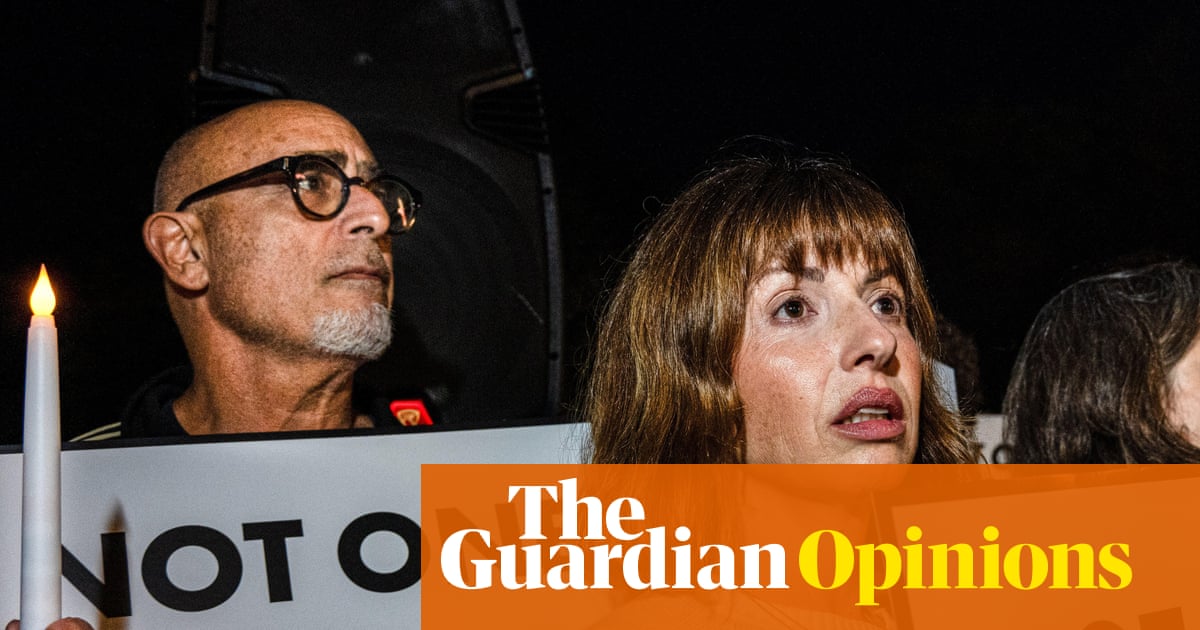
There was a world before 7 October, 2023, and now there is a world after. For Gaza, for Israel, for the wider Middle East, and for everyone else too. Not all hinge points in history are obvious at the time. Three years on from the day it began, and precisely one year since a supposed ceasefire was agreed, this one is now impossible to ignore.
The before-and-after pictures tell part of the story. An update to Google Maps, released last week, underscores just what three years of relentless Israeli military onslaught has done to Gaza. Satellite images show how entire towns have been reduced to rubble. Mosques and hospitals, visible three years ago, have now disappeared. Meanwhile the once-empty shoreline is now crammed with tents. This is what it looks like when an attempt has been made to destroy a people.
For Israel, too, there has been a before and after. Prime minister Benjamin Netanyahu had cultivated a sense of security, even of impregnability. The ease with which Hamas carried out its terrorist attack, killing 1,200 Israelis, including hundreds of young people at a music festival, destroyed that belief for ever.
Three years on from 7 October, both Israel and Gaza have changed beyond recognition. But the consequences of Hamas’s attack and Israel’s brutal response, which has killed more than 73,000 Palestinians, including 21,000 children, have spread far wider.
Under the pretext of protecting its own borders, Israel has launched wars and military offensives across the region, sending troops into Syria; effectively annexing parts of southern Lebanon, deploying the same tactics there that it used in Gaza; and starting, with the US, an unwinnable war with Iran that has spiralled into a regional conflict affecting all six Gulf states.
The Iran war has sparked a new conflict between the Houthis in Yemen and Saudi Arabia, which this week triggered a mutual defence pact with Pakistan and Turkey, dragging two other countries into the maelstrom. Across the Red Sea, some of the same combatants are involved in the war in Sudan and a fresh conflict inside Ethiopia.
More than a dozen countries across two continents are now entangled in a rising number of wars, with overlapping participants and numerous competing interests.
But there is something else, more insidious, that has changed. The rule of international law, tenuous as it was, has been openly replaced by military might. In 2022, western leaders – building a coalition rightly opposed to Vladimir Putin’s full-scale invasion of Ukraine – made moral appeals based on the violation of international law. In Gaza, they encouraged and supported Israel, even when it was clear that the rules were being broken. That hypocrisy has not gone unnoticed, not just in the global south but among many millions of citizens in the west.
We have watched this happen in real time. Despite the ban on international journalists, anyone with a phone knew what was happening in Gaza from the early days of Israel’s response. Hundreds of Palestinian journalists have reported on the bombing of hospitals and schools, the bombing of cafes and wells, the killings at food distribution points, the deaths of children and babies. War crimes have never before been broadcast in real time, relentlessly, every hour of every day, around the world.
Gaza has also changed how wars are fought. Israel has pioneered the use of AI to select targets, accelerating our descent into a future for which we are unprepared.
All of this was allowed to take place in a time when the west could still argue that the “international rules-based order” existed. It may have been destroyed by Donald Trump, but we cannot forget that the dismantling began under Joe Biden. It was Biden who ensured the flow of weapons to Israel continued uninterrupted, Biden who insisted that every United Nations security council resolution calling for a ceasefire was vetoed, and Biden who attacked the international criminal court when it sought to indict Netanyahu for war crimes.
US support for Israel has always been strong and, on the whole, unquestioned. But even Republican presidents have understood they have influence over Israel’s actions and have been prepared to use it.
Ronald Reagan suspended an arms deal in 1981 after Israel annexed the Golan Heights. A year later, his administration stopped supplying cluster weapons to Israel after Menachem Begin’s government used them in populated areas during its invasion of Lebanon. In 2002, the killing of 15 Palestinians in Gaza was enough for Colin Powell, the then secretary of state, to announce a review of Israel’s use of American arms.
Israel was also given a free pass by every other member of the G7, including those run by centrists or centre-left politicians. French president Emmanuel Macron, German chancellor Olaf Scholz, Justin Trudeau in Canada and Australia’s Anthony Albanese all initially gave Israel their backing.
Only António Guterres, the much-maligned UN secretary general, emerges with a modicum of credit. Less than three weeks after 7 October, he called Israel’s response “collective punishment of the Palestinian people” and demanded an immediate ceasefire.
The one ray of hope for the future is that our shared understanding of what has happened over the past three years means that in many countries the political winds have shifted.
after newsletter promotion
Before Andy Burnham even entered Number 10, he apologised for how Labour had handled the early days of the conflict. The UK now has a prime minister who was one of the few western politicians to call for a ceasefire just weeks after 7 October. Ed Miliband’s willingness to accurately describe Israel’s actions in the West Bank as “ethnic cleansing” indicate a change in attitude that could lead to more concerted international action against Israel.
In the US, support for Israel has fallen through the floor. For a Democrat who wants to be president in 2028 there is no credible path to the White House that doesn’t involve support for the Palestinian cause. And yet, we cannot simply close our eyes and hope that a change in America will magically restore the world to how it was on 6 October 2023.
Nor should we pretend that the previous era was one we should wish to return to. Did we enter a new world on 7 October, or did we just notice where we were? In the three years before the Hamas attack, the wars in Tigray and Sudan saw many of the same trends play out.
In Tigray, the northernmost part of Ethiopia, a war between the central government and the Tigray People’s Liberation Front killed 600,000 people. There were brutal massacres, forced starvation, widespread use of drones – and absolutely no accountability. In Sudan, too, hospitals have been hit by drones, women have been raped, children have been shot dead. Again, we could see it happen. Again, there were no consequences.
Gaza, though, has undoubtedly accelerated the trend, normalising the immoral. The wars that have begun, that have spiralled out of control and pulled more countries and more actors into their orbit, cannot easily be stopped. There is a momentum to this conflict, a hardening of positions, as each new outrage leads to a response. When there is impunity, when there is no price that those responsible will ever pay, there are terrifyingly few levers to pull. If war crimes go unpunished, they only escalate.
And so a family in Addis Ababa fears the sound of a drone crashing into their home. A village in Lebanon is evacuated, destroyed and the land made uninhabitable. A mundane job at Riyadh airport becomes a daily deadly gamble. A crew of badly paid seafarers pray to their gods as they cross through the strait of Hormuz. The dreams of millions of children shrink from university, fame or fortune, to the brute reality of survival.
And in Gaza, crammed into tents, deprived of enough food and water, two million Palestinians are still living under the brutal rule of Hamas and the daily threat of death from a military force that fears no consequences.
This is our world now. We need to recognise that, if anything is going to change.









Leave a comment