
Iranian authorities are cracking down on sources who interact with foreign media
 adminUpdated 2 hours Ago5 Mins read
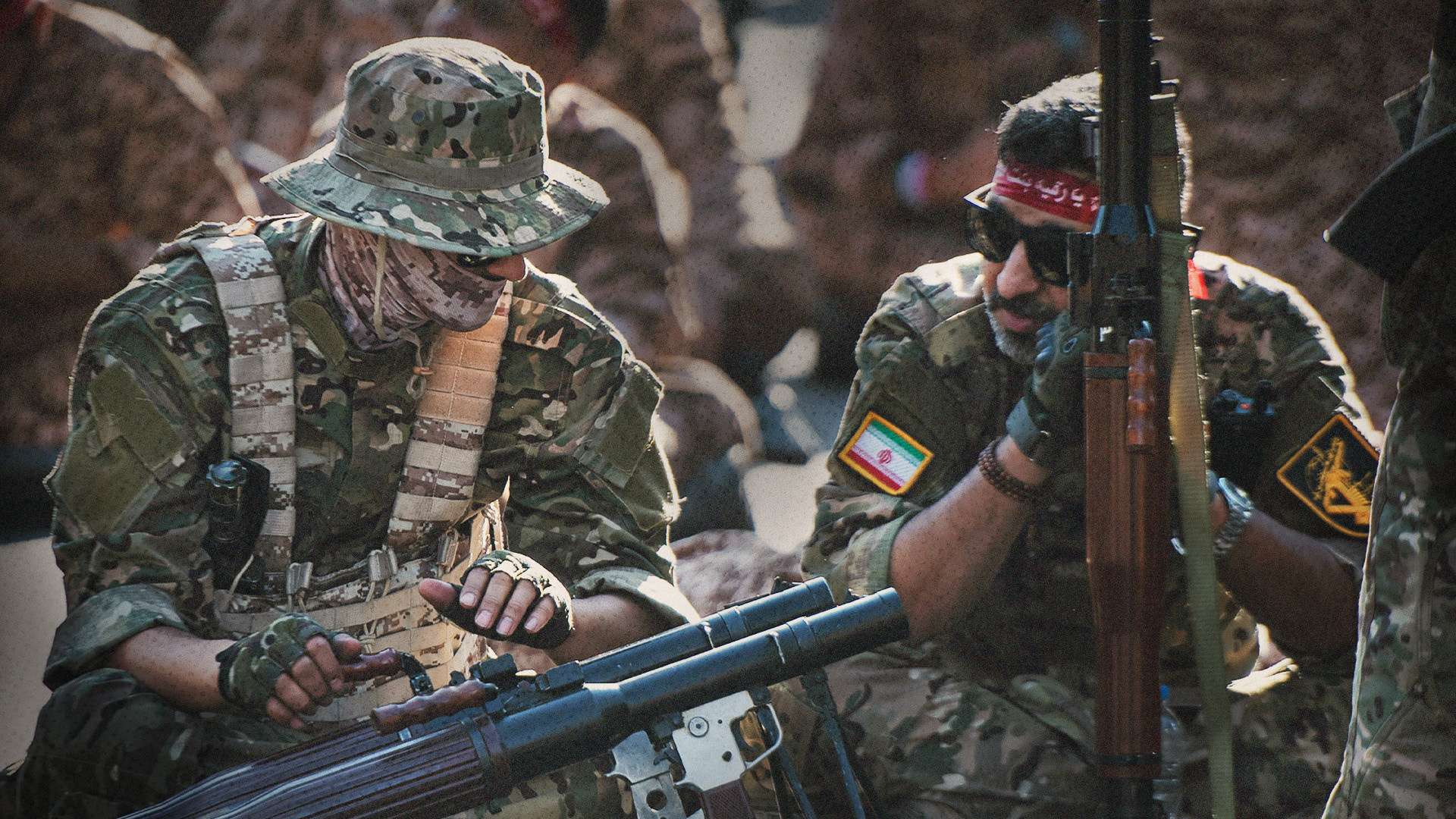
Iran has been an inhospitable setting for journalists for a long time. Last year, Reporters Without Borders classified the country as 176th out of 180 for press freedom. But the U.S.-Israeli war on Iran has made the situation even more precarious for reporters.
A couple of weeks ago, I heard from a source in Iran I had interviewed for my report about the nationwide protests of early 2026. After this person purchased a Starlink terminal, both to maintain internet access during periodic blackouts and to continue working as an online language teacher, law enforcement officials detected the signals and seized the equipment in a raid.
The officers sifted through my contact’s personal communications and found out about the exchange we had had. They subsequently provided a form to offer a written account of how the contact was initiated and what the conversation was about. That person was one of the few people I had managed to get to talk to me during a rare moment of uprising and tension.
My work didn’t get any easier once the protests subsided and were followed by the U.S.-Israeli military aggression. The majority of people I reach out to with interview requests, including those who have lost their loved ones in the war, refuse to talk, either because they are afraid that they may face reprisal at home or because they do not trust a U.S.-based reporter. This skepticism was less common before the war started.
Others are concerned that communicating with people outside Iran on social media may feed AI systems with their coordinates that may eventually end up in the wrong hands. During the early phases of the war, multiple instances of deadly airstrikes on civilian targets across Iran were attributed to AI models that malfunctioned and claimed lives.
International journalists covering Iran have often complained of a chronic lack of access to sources and the limits of how they can verify information about the country. If they are not allowed to be on the ground, are not provided with government records, and do not have the opportunity to interview officials, it won’t be easy to do serious reporting. Journalism will become speculation.
This lack of access partly explains why the coverage of the staggering civilian cost of the war, which has killed at least 3,500 Iranians, has been so limited. War, a full-throated economic blockade, and travel restrictions imposed on Iranian citizens by the United States, Australia, and European governments have pushed the country and its 90 million citizens to the precipice, and their stories deserve to be told.
As a new parliamentary bill to outlaw communication with entities overseas is being debated, Iranian leaders now appear to be trying to formalize the unwritten restrictions that existed previously, making it even harder for accurate information to trickle out of a country that has been, at least during the months of March and April, an active conflict zone.
Citing concerns around foreign invasion, the bill, titled “Combatting the Infiltration of Foreign Intelligence Agencies, Governments, or Entities,” criminalizes different aspects of communication with individuals and institutions overseas and subjects any such engagement to government authorization. The general outlines of the bill, consisting of 33 articles, were approved by parliament on August 16. (It is facing some pushback from President Masoud Pezeshkian’s reformist administration.)
Like most other pieces of legislation hashed out by the currently ultra-hardline parliament—which was elected in a 2024 election with historically low turnout and thousands of candidates disqualified by the government—the bill is drafted rather ambiguously, in a way that maximizes its arbitrariness.
For instance, the bill’s article 28 declares that hosting workshops with foreign organizations “in Iran or abroad,” either virtually or in person, is forbidden unless allowed by the government. The law doesn’t clarify what it means by workshops hosted abroad and who that restriction applies to. (Are Iranian authorities claiming that it’s illegal for a university in Britain to hold a webinar that Iranians might attend?) It’s likely to be used against journalists who take part in training programs.
Even more harmful is article 22, which forbids Iranian citizens from talking to media organizations or journalists that have been designated as “adversarial” or that operate under hostile governments. The parliament, which is reviewing the draft one article at a time, has already approved this section.
With no practical safeguards for independent reporting other than a rhetorical commitment to press freedom laid out in article 24 of the country’s constitution, the chief factors determining how much protection journalists enjoy is the generosity of officials and the degree to which they are willing to entertain criticism.
The hardline-dominated judiciary, made up of stern clerics, and the Ministry of Culture, staffed with performatively pious bureaucrats, are the two bodies that hold the cards when it comes to the survival of media organizations not affiliated with the state. Every online or print publication requires a license from the Ministry of Culture to be able to operate, and that license can be revoked at any time if the authorities decide its coverage is unacceptable.
Although there is no official tally of newspapers that have been banned in Iran since the 1979 revolution, the Committee to Protect Journalists estimated in November 2001 that since the election of then–President Mohammad Khatami in 1997, the judiciary has shut down at least 52 newspapers in a bid to thwart his reforms. Iran has consistently remained one of the worst jailers of journalists.
Meanwhile, Iran has had a love-hate relationship with foreign correspondents. Particularly after the electoral upset pulled by the hardline former President Mahmoud Ahmadinejad in 2005, international journalists based in Iran have been increasingly constrained. Several news bureaus were closed under Ahmadinejad, including those of BBC World, Al-Arabiya, and Reuters. In some cases, operations were never fully restored.
In the wake of the 2009 elections, the Green Movement emerged to dispute Ahmadinejad’s reelection. At that point, individual reporters faced the unpopular president’s wrath as they were chased out of Iran or arbitrarily detained. Yolanda Alvarez, a correspondent with Spain’s RTVE, was removed from the country together with her crew. Ben Knight of ABC News Australia was ordered to leave around the same time. Agence France-Presse editor Jay Deshmukh was expelled in March 2011 without an official explanation.
And for Iranian reporters, the strictures can be frustratingly unpredictable though eerily familiar. In 2023, the popular news site Entekhab was blocked by the administration of President Ebrahim Raisi after publishing a commentary criticizing Iran’s reliance on Russia. In 2008, the Ministry of Culture banned the pro-reform Kargozaran Daily for publishing a statement by a student association criticizing Hamas and its response to Israel’s military offensive in the Gaza Strip.
And in cases unrelated to national security, grievances by mid-ranking officials disturbed by unflattering coverage of their portfolio can cause abiding challenges for journalists. Freelancers and stringers working with international publications are entirely at the mercy of the shifting moods of specific Iranian bureaucrats.
Iranians have seen genuine threats against the country, even before the two sneak attacks Iran suffered in 2025 and 2026 in the middle of diplomatic negotiations with the Trump administration. Many of its neighbors, such as Azerbaijan and the United Arab Emirates, have claims on Iranian territory. Other neighbors have made heavy use of spies. David Barnea, former head of Israeli intelligence, recently bragged about ensuring “that so many people would be arrested in Iran that they wouldn’t be able to separate the wheat from the chaff.” In a securitized environment dominated by war psychosis, it is unavoidable that the government will become more heavy-handed. That’s something many critics of the war had long warned against.
But journalists are not responsible for the country’s security failures. Most well-known cases of espionage and collusion in recent years have involved senior government executives, military officials, and well-connected individuals with close ties to the establishment rather than harmless reporters or academics. In fact, the absence of adequate space for professional reporting has weakened the country internationally, in the same way that secrecy breeds corruption.
Instead of an honest introspection about the professionalism and loyalties of people on its payroll, the Iranian government has fixated on independent storytellers, accusing them of unsubstantiated connections.
The outcome has been growing public mistrust in the national media. Basic journalistic roles have been outsourced to broadcasters in exile, and ultimately drowned out by a propaganda war. Iran has many gifted journalists willing to take risks to bring difficult stories to light. Especially at a time when undistorted portrayals of the country are running dry, their work, and that of foreign correspondents, should be facilitated rather than repressed.







Leave a comment