
Jayden Daniels made one of the dumbest P.R. fumbles in sports history
 adminUpdated 1 hour Ago7 Mins read
Hello and welcome to another edition of Free Agent! This week, it’s time to get a life (or don’t?).
We’ve got a full newsletter this week, starting with the funniest thing to happen in sports this week—not Jayden Daniels’ letter to LSU, but the reaction to it. Then I’ll play jury and deliver a verdict on a couple of other major sports scandals involving Kawhi Leonard and Shohei Ohtani (both, coincidentally, Los Angeles sports stars). All rise!
Don’t miss sports coverage from Jason Russell and Reason.
- A federal investigation into Mark Walter (with ownership stakes of some kind in the Dodgers, Chelsea soccer, motorsports teams, the Professional Women’s Hockey League, and until several days ago, the Lakers) is causing major ripple effects across the sporting world, with Walter reportedly looking to sell off assets. Allegedly, Walter hid debt-related transactions between his own companies through third entities.
- All that has caused even more Lakers-related chaos, with lots of confusion. Did the Buss family vote to sell their remaining 17.8 percent stake in the team, or is Jeanie Buss right in saying the trust vote is “void”?
- Ever wondered all the requirements for hosting ESPN’s College GameDay at your school? FOIAball got the list.
- Very interesting data for each sport on your odds of making an NCAA roster if you’re on a high school team (though some caveats apply).
- The WNBA’s Atlanta Dream skipped the national anthem ahead of their highly anticipated game against the Indiana Fever.
- San Antonio will spend almost $500 million on a new Spurs arena, but won’t let citizens vote on it because, as one councilman said, a ballot proposal would be too expensive.
- Maybe they’d ignore the vote results anyway, which Kansas City, Missouri, appears to be doing en route to spending $600 million (plus huge tax breaks!) on a new Royals stadium.
- Thankfully, sanity prevailed in Orlando, Florida, where officials decided against promising $1 billion to an MLB team that doesn’t exist yet.
- Elsewhere in Reason: “She Spent 7 Months in Legal Hell After Cops Used Flock Surveillance To Identify the Wrong Car“
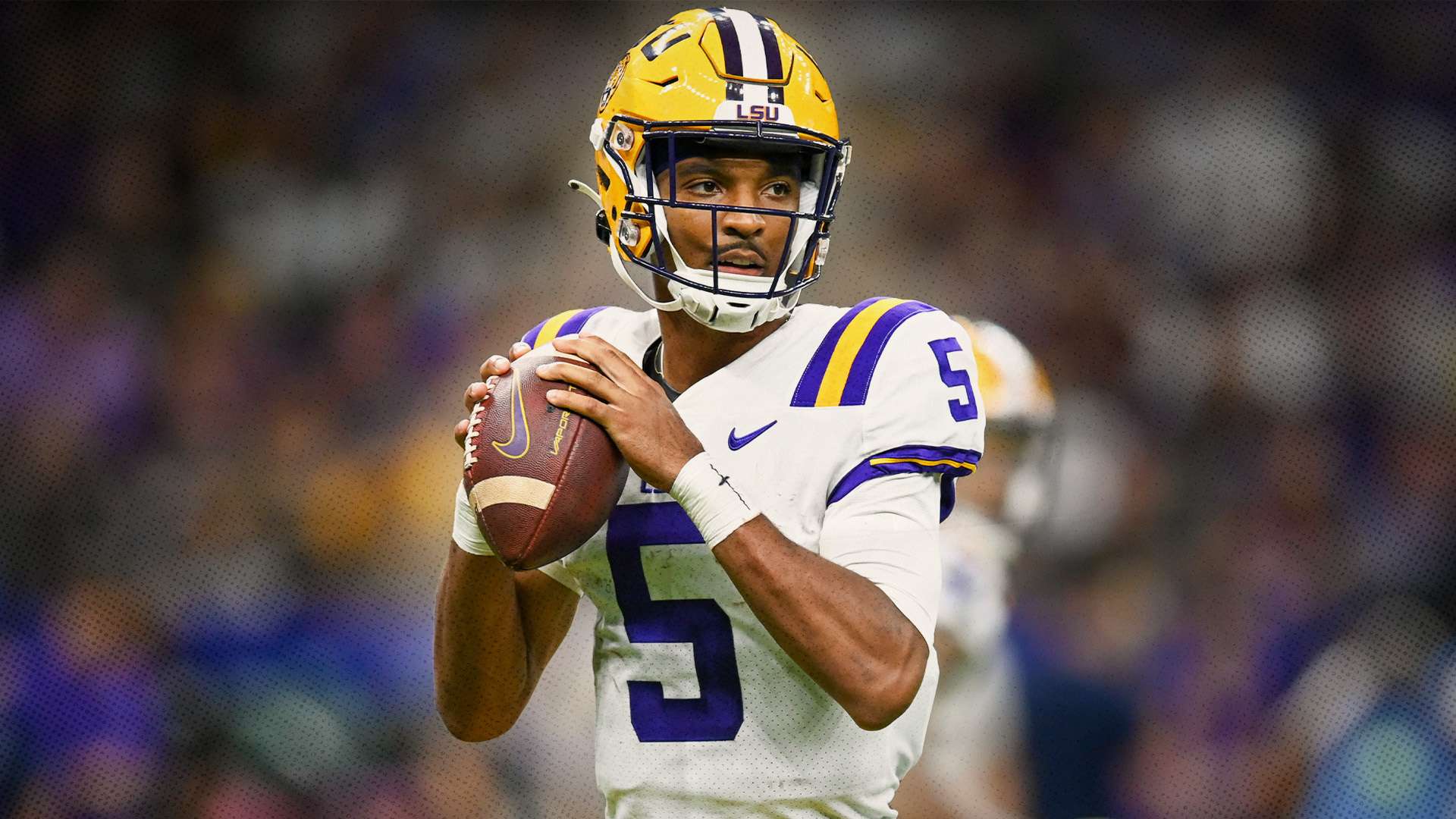
Has any famous athlete ever had such an unnecessary public relations fumble as Jayden Daniels’ demand that LSU stop using his name, image, and likeness (NIL)?
The Commanders quarterback is getting relentlessly mocked online by almost everyone—not just random people online, but even professional teams in other leagues. Examples if you click below:
I mean pic.twitter.com/9HCeuBWkiI
— Dan Steinberg (@dcsportsbog) August 15, 2026
Daniels was apparently so bitter at LSU assigning his no. 5 jersey to sophomore cornerback D.J. Pickett that Daniels sent a cease-and-desist letter (on August 5, naturally, but reported on by ESPN a week later) telling the school to stop using his NIL. But, in a textbook example of the Streisand effect, now everyone is talking about him and how silly this demand is.
Even if Daniels’ NIL contract expired long ago, his demand that no. 5 be retired reeks of entitlement. Especially on the collegiate level, football numbers don’t get retired often because there are a gazillion people on the roster. While he did win the Heisman in his senior year, the team was just 9–3 in both of his LSU regular seasons (a season ending in the ReliaQuest Bowl is not exactly the stuff of history).
The funny thing is, this is basically Daniels complaining about someone doing marketing for him for free. LSU used his likeness to promote themselves, yes, but also to promote their famous alumni. “If you like us,” the marketing might imply, “why not go buy this very successful former player’s NFL jersey?” In theory he could have asked for payment or a cut of proceeds in exchange for NIL rights, but now that ship seems to have sailed with the feud going as public as it has.
There are malevolent P.R. fumbles (drunk driving, domestic abuse, etc.) and ones the victim can eventually laugh along with (butt fumble), but Daniels found the sweet spot as a totally unnecessary loser in this fight. He has, of course, expressed no humor about the situation, issuing a statement that says, “I have been locked in on training camp and that’s been my number one focus.” (He could have at least used ChatGPT to come up with a lame no. 5 joke!)
I, for one, will cut my drinking tonight from five beers to four—out of respect for Jayden Daniels.
I’m very flummoxed by anyone who’s looked into the Kawhi Leonard salary cap–circumvention scandal and still thinks Leonard and Los Angeles Clippers owner Steve Ballmer are innocent.
The latest news comes from ESPN, which reports that “the NBA has found no evidence showing LA Clippers owner Steve Ballmer funneled money through team sponsors to pay Kawhi Leonard in order to circumvent the salary cap, according to three people with knowledge of discussions between the two sides in recent days.”
The NBA and I apparently have different interpretations of what “evidence” is.
The smoking gun in this case is an endorsement deal Leonard signed with Aspiration, an eco-conscious banking company that paid Leonard a combined $48 million. Seven months before that deal, Ballmer invested $50 million in Aspiration (on top of millions he had already invested). And, to my absolute bewilderment, Leonard’s endorsement deal didn’t actually require him to do anything to promote Aspiration. Leonard also had a no-show endorsement deal with Daktronics, a Clippers sponsor who made the massive scoreboard at the team’s arena.
What is the point of a marketing deal that doesn’t involve any marketing?
The NBA’s likely argument (though they say ESPN’s report has “numerous and significant inaccuracies” and their investigation into the situation is ongoing) seems to be that Leonard and Ballmer did nothing wrong, but that the team’s employees may have broken salary cap rules by introducing Leonard to team sponsors (who, the NBA seems to think, made useless no-show endorsement deals because they like losing money?).
If the NBA found that Leonard indeed had these no-show endorsement deals but that Ballmer and Leonard (and his agent, his uncle Dennis Robertson) did nothing wrong, then it needs to tighten up its salary cap rules. They would be far too easy to game, especially now that team owners, players, and sponsors see what they’re allowed to do without reporting anything to the league.
As I wrote back when the scandal first began, “I’d bring down the hammer if I were the NBA.” Instead, the NBA is apparently negotiating with Ballmer for how to resolve the investigation. Weird!
I am confused by some of Leonard and Ballmer’s defenders. Some of the defenders seem to be conservatives who would prefer that journalist Pablo Torre have gotten all of this wrong. I don’t share Torre’s politics—at least as far as I can tell from him having socialist Zohran Mamdani and the worst antitrust enforcer this century, Lina Khan, on his podcast. But if you want to judge this situation based on politics, let it not be forgotten that Ballmer donates millions to Democrats and liberal causes, and that Aspiration was founded by Democrats, one of whom is heading to prison (Leonard, for what it’s worth, seems to keep his politics quiet).
If anything, Torre deserves credit for being willing to go after these progressives.
Many a jealous baseball fan would love to see Shohei Ohtani’s honorable and clean reputation turned to dust by smoking-gun proof that he bet on baseball while his interpreter, Ippei Mizuhara, took the fall. But thanks to a thorough investigation by ESPN’s Tisha Thompson, plus federal prosecutors, I’m convinced Ohtani was rightfully cleared of all wrongdoing.
If you read this newsletter after the MLB trade deadline, you probably figured out I’m one of those baseball fans who’s jealous of the Dodgers’ success and wouldn’t mind to see Ohtani fall from grace. But after listening to all of the 30 for 30 podcast The Betrayal of Shohei Ohtani, I’m more confident than ever before that Ohtani did nothing wrong (other than the huge mistake of entrusting far too much of his affairs to Mizuhara).
I got pulled in by a viral post on X, with over 8 million views, that seemed to give many people what they wanted to see: a direct connection between Ohtani and an illegal bookie, proven by documented bank transfers. But as the podcast goes into later episodes, listeners find out what really happened: All that money came out of a private bank account set up by Mizuhara, an account he’d always managed to convince everyone that Ohtani didn’t want touched. He even called the bank pretending to be Ohtani to get his $500,000 wire transfers to the bookie approved.
The main argument of the Ohtani haters (that Mizuhara is taking the fall) is never 100 percent disproved. But since Mizuhara confessed and pleaded guilty, it seems proven beyond a reasonable doubt that he did it, with no alternative explanation. Mizuhara bet on sports constantly (something like 25 bets a day averaged for more than two years) and lost millions. He bet when Ohtani was on the field and clearly wasn’t betting himself. When the bets lost, it came out of Ohtani’s accounts—when he won, the winnings went to Mizuhara. Similar examples abound, as we hear throughout the closing episode about several times Mizuhara took advantage of Ohtani besides gambling debts. Even after his plea and before his sentencing hearing, Mizuhara was still lying.
Everytime you think “How could this scandal have gotten to this point, and then that point, and then an even worse point?” it comes back to one thing: Ohtani always trusted Mizuhara with everything—translation, bank accounts, important documents, and more. He never doubted Mizuhara until the very end. As Thompson explains it, since Mizuhara was Ohtani’s only translator, Ohtani didn’t even find out about the betting scandal and stolen money until after the clubhouse meeting where Mizuhara told everyone on the Dodgers about the story—and then translated it for Ohtani afterward.
It’s a very well-made podcast, and I highly recommend listening. We get most of a recording of Thompson’s initial interview with Mizuhara just before the scandal came out; we get an after-the-fact interview with the bookie at the center of the case, Mathew Bowyer; and hear from the feds who investigated it all and went through thousands of texts between Ohtani and Mizuhara.
You know what’s never mentioned in those texts? Sports betting.
Scottie Scheffler is so good that even when this happens to him, he can still win a tournament by eight strokes.
I’ve NEVER seen this before.
Legitimately one of the worst breaks I’ve ever seen on a golf course.pic.twitter.com/5v7uPrUN0C
— Jamie Kennedy (@jamierkennedy) August 16, 2026
That’s all for this week. Enjoy watching the real game of the week: It’s not yet time for college football, but you can watch North Dakota against Eastern Michigan in women’s soccer on Saturday.





Leave a comment