
Mamdani’s delivery-worker rules could make Amazon more expensive in NYC
 adminUpdated 2 hours Ago4 Mins read
Zohran Mamdani tries to ruin my life: Like any busy mom running a household, I am an intense Amazon apologist and appreciator. That company can do no wrong. In the last week alone, it’s brought me melatonin; foam baseballs so my 4-year-old can practice indoors without destroying (more) wine glasses; math and reading books that helped me craft lessons for our homeschooling co-op; fully half of the Little House on the Prairie series; and disposable containers so I could make meals for a family from church who just welcomed a new baby. These are very wholesome, worthy purchases: Amazon has enabled indoor sports, lots of reading, meal drop-off, and improved sleep. It would have added a lot of inconvenience to my life if I’d needed to shlep to the shitty Barnes and Noble on Atlantic Avenue, the drugstore, the grocery store, and the sporting goods store on Dekalb (that might not even have had foam balls this light) while also trying to, you know, write this newsletter, write a book, cook all the meals, etc.
The Reason Roundup Newsletter by Liz Wolfe Liz and Reason help you make sense of the day’s news every morning.
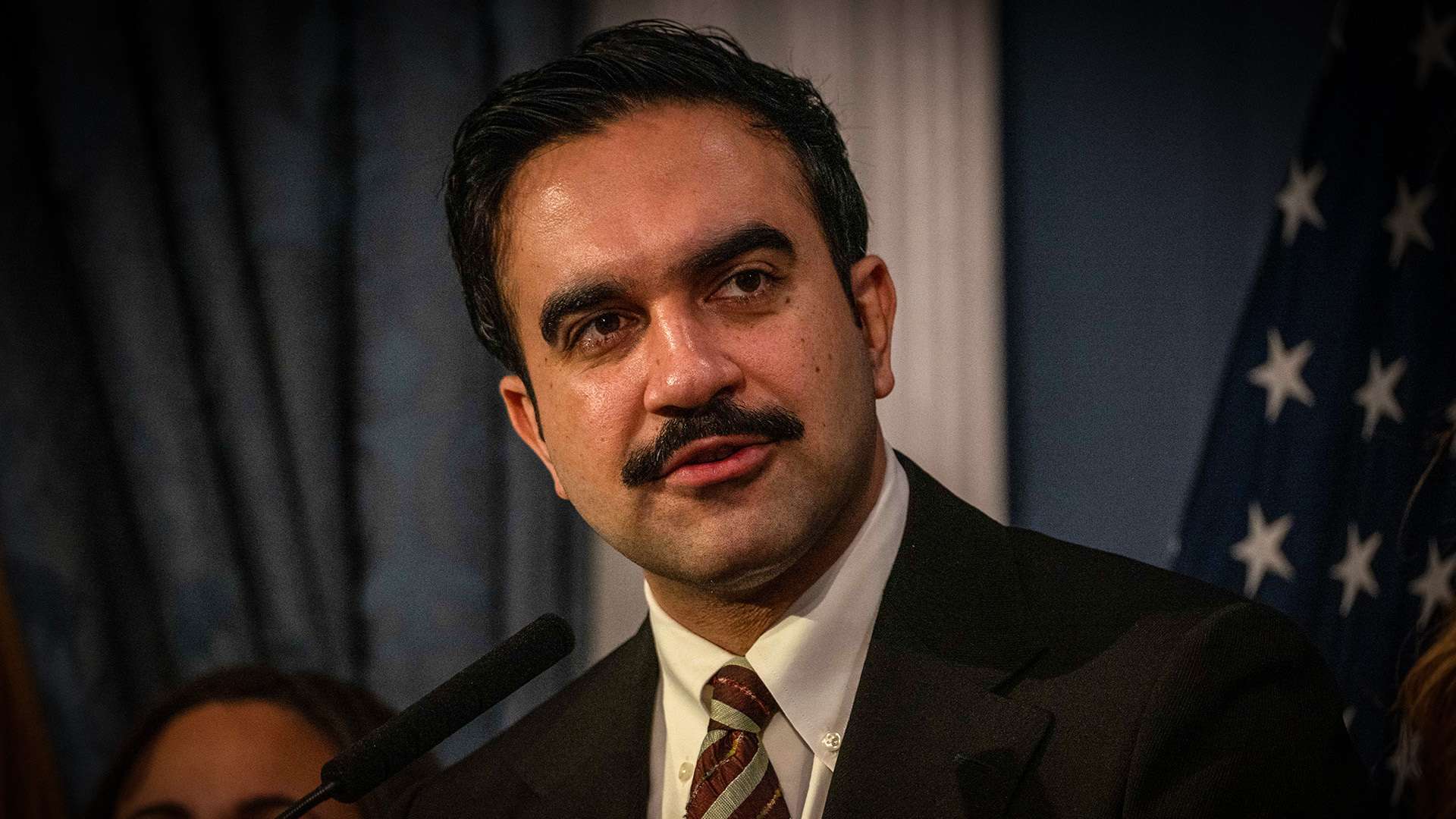
So why does Mamdani, now with a fittingly villainous mustache, hate me so? Why does he seek my ruin and downfall?
A City Council bill, pushed by Mamdani and introduced by Tiffany Caban, would require “last-mile delivery operators to be licensed by the city and directly employ workers rather than contract the work,” which could add up to $5 in cost increase per order. Called Intro 518 or the Delivery Protection Act, the bill would make it so Amazon can no longer work with its existing network of small delivery businesses.
“If this legislation passes,” says a new banner on Amazon’s site, “we’d no longer be able to work with [the existing network], and we’d be forced to consider moving our operations outside of the city. That would likely mean slower and more expensive delivery for millions of customers in New York City, while also threatening small businesses and their thousands of employees.” (Other companies, such as FedEx and DoorDash, would also possibly have their prices raised by this legislation, notes Ars Technica.)
It’s possible Amazon will pass costs onto consumers. That would be rational behavior. But if I had to hazard a guess, their consumers, people like me, are already the ones who fund this damn city on every level. My household pays a fat tax bill. We pay our subway and bus fares (frequently the only chumps doing so as we board the bus). We fund schools with our taxes, but don’t end up using them because of how they’re not up to our standards. (Not unique to us, of course, though vouchers are beginning to put money back in the hands of parents.) At a certain point, people tire of being treated like cash cows and having the things they care about taken away from them.
Amazon started issuing warnings today, via desktop and mobile, to New York City residents that they would be affected by price increases, urging residents to contact their representatives. City Council seems pissed that they’ve inspired trench warfare:
It defies logic that Amazon, a $3 trillion corporation, would raise New Yorkers’ cost of living if it’s forced to adhere to basic regulations and worker protections.
We are crafting legislation that regulates Amazon and protects workers, without impacting prices or jobs.
— Speaker Julie Menin (@SpeakerMenin) November 19, 2026
And our Tom Selleckified mayor says Amazon’s tactics amount to little more than “greed”:
Amazon is a multi-trillion dollar company. If Jeff Bezos adds $5 to your order, it’s not because of City Council’s efforts to protect workers’ rights and keep our streets safe. It’s greed.
Pass the Delivery Protection Act. https://t.co/dpcy5Refw0
— Mayor Zohran Kwame Mamdani (@NYCMayor) November 19, 2026
If it’s greed, why isn’t Amazon doing it today? I wonder whether one of the most successful companies of all time, with 310 million customers globally, knows more about making their financials work than a nepo baby who is finally, at age 35, working the first real job of his life.
Now, to be clear, it’s not that paying delivery workers well is a bad thing. But if the state begins to mandate what specifically good pay is and, in this case, what specific type of training they must endure, there is a high likelihood many of them will end up without jobs altogether. Companies must make decisions that can ensure reasonable margins, and if they decide that operating in a given locality is too expensive due to the regulatory regime, they can just pull out altogether.
When NYC passed its minimum pay rule for food delivery apps, average delivery fees jumped ~66% (from $4.05 to $6.73) and total order costs went up about 10–13% https://t.co/jsMzejEATY
— Phil BuildTheFutureNow 🇺🇸🦅🌲💙 (@PhilSustainable) November 19, 2026
Lol:
It’s terrible to jack up prices and threaten to completely stop working if your demands aren’t met, the Teamsters have informed me. I’m listening and learning. https://t.co/w7AfKEADSg
— Byrne Hobart (@ByrneHobart) November 19, 2026
It does seem like greed is playing a significant role in this political battle, but it’s not afflicting the one that’s converting my hard-earned cash into overnight Little House in the Big Woods deliveries.
Scenes from New York:
Modern American building regulation is funny. At the same time that we impose onerous mandates to deal with extremely unlikely events (second stairwells, sprinklers) we have extremely minimal regulation of noise, arguably the defining quality of life issue in an apartment. https://t.co/lZ4rnSxANP
— M. Nolan Gray 🥑 (@mnolangray) November 19, 2026
QUICK HITS
- “The Defense Department and Environmental Protection Agency have known since at least April that the U.S. Army was sitting on 68 barrels of degrading, volatile lead explosive at its Middletown, Iowa, ammunition plant,” reports The Washington Sun. “The communities surrounding the plant and state leaders only became aware this week that the Army’s plans to detonate the lead explosive on Nov. 20 could result in a plume of toxic lead dust that could travel well beyond the town and possibly into neighboring Illinois.”
- “Venezuelan opposition leader María Corina Machado wants to reshape the country’s energy industry even beyond the dizzying changes it has undergone this year, signaling a more critical role for private industry should she clinch the presidency,” reports Bloomberg.
- “The building that collapsed in Brooklyn last week most likely fell because the excavation at a construction site next door weakened the century-old building’s foundation,” reports The New York Times.





Leave a comment