
My New Jotwell Review of Anna Law’s Book “Migration and the Origins of American Citizenship”
 adminUpdated 2 hours Ago3 Mins read
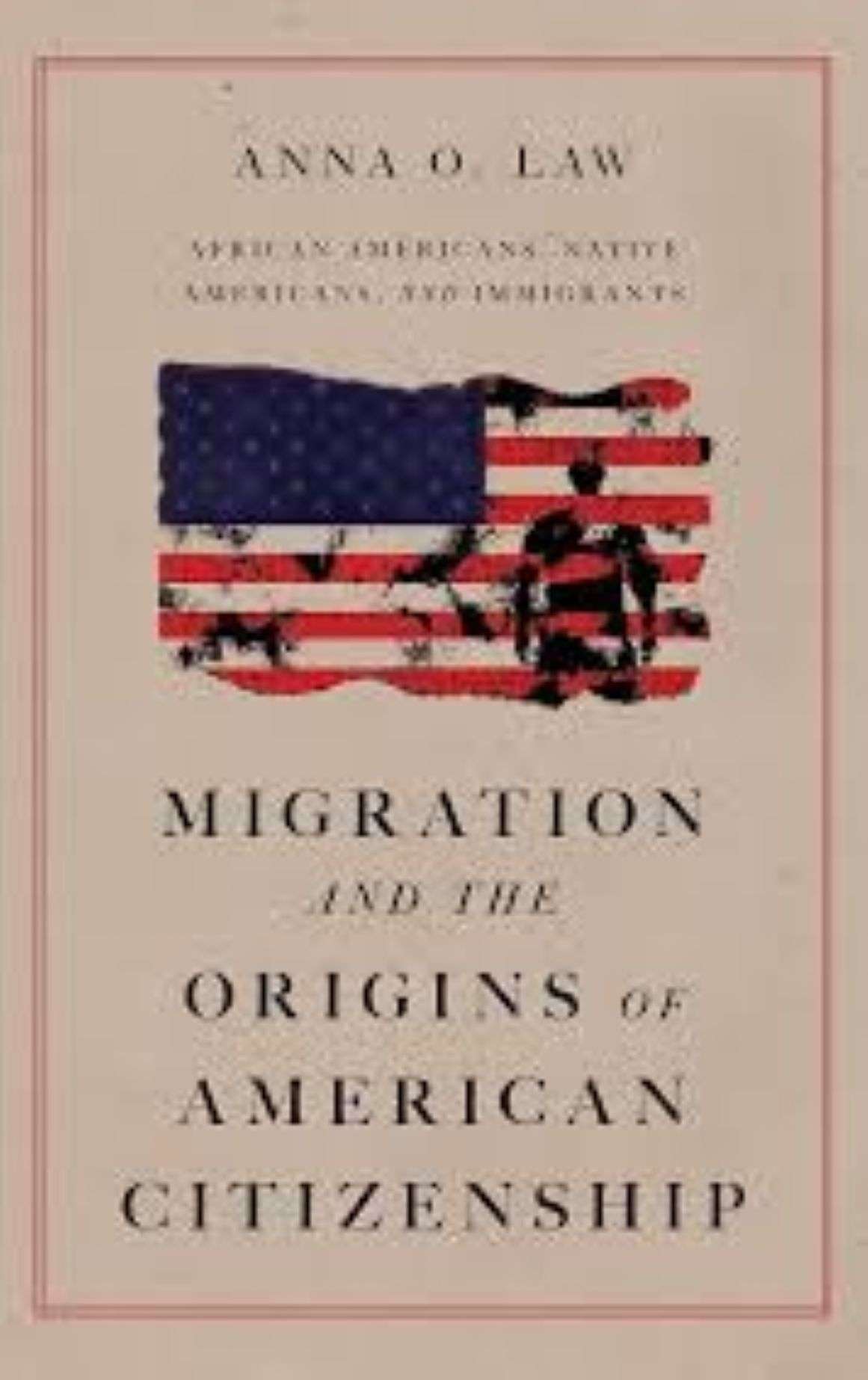
Political scientist Anna O. Law is one of the leading experts on the history and development of American immigration policy…. Her new book builds on her previous scholarship and that of others to bring together three interlinked topics that are usually considered separately: the development of immigration law and policy in the early republic, policies on slavery and internal migration, and policy towards Native Americans.
Law makes the by-now familiar point that, during the first century of American history, power over international migration overwhelmingly resided in the hands of state governments, rather than the federal government. In a more novel and distinctive move, she links this to the desire of many Founding-era Americans and subsequent generations to preserve state authority over internal migration, slavery, and dealings with Native Americans.
Southern slave states sought to retain control over importation of slaves and in-migration of free Blacks—ensuring a steady supply of the former, while restricting the latter, lest they upset the system of racially based slavery. Some northern states also sought to keep out or at least restrict free Blacks, out of racism. Many states further tried to restrict entrance by “paupers”—people believed likely to become dependent on welfare and charity….
All of this helped lead to a Constitution that did not give the federal government much, if any, control over migration, at least in peacetime. States wanted to retain that control for themselves. As Law points out, the Constitution doesn’t clearly assign power over migration to any level of government. But the historical evidence suggests the general understanding in the Founding era was that international and domestic migration were largely under state control.
One can put the point even more strongly: Given the extensive and detailed enumeration of other federal powers in the Constitution—including such relatively minor ones as “fix[ing] the standard of weights and measures” and establishing “post roads”—it would be extremely surprising if the Founders gave the federal government so major a power as that of immigration restriction without making it explicit….
Law concludes that federalism largely failed to enhance liberty when it comes to international and internal migration. She correctly emphasizes the many restrictionist aspects of state control, often motivated by racial or ethnic bigotry. She notes, also, that neighboring states sometimes imitated each other’s restrictive policies rather than countering them.
Law is certainly right that state policy on both internal and international migration during the first century of American history was far from a paragon of virtue and inclusion. But other aspects of her account strongly suggest that leaving this policy area under state control was still likely better than federalization would have been.
Variation between states often worked to the advantage of migrants. As Law describes, ship owners and employers often arranged to land new immigrants in states with less restrictionist polices. From there, they could move on to other states—including those with tighter restrictions on landing. Moreover, as Law outlines in one of the more insightful and original parts of her account, the state of New York—which, in the nineteenth century as now, had the single biggest East Coast port—had very open policies, with few restrictions on migration. Immigrants and shipping lines took advantage of that….
Law also may somewhat overstate the extent to which racial and ethnic discrimination guided immigration policy. Undoubtedly, there was a great deal of that. But many of the Founders also took Enlightenment liberal ideology seriously, and recognized that it implied an open immigration policy.
In his General Orders to the Continental Army, issued at the end of the Revolutionary War in 1783, George Washington stated that one of the reasons the United States was founded was to create “an Asylum for the poor and oppressed of all nations and religions….” Jefferson, Madison, and others said similar things. This talk was backed by actual policy at the federal level, and in more liberal-minded state governments.
When it comes to non-white immigrants, as Law notes, the Naturalization Act of 1790, and succeeding legislation until after the Civil War, limited citizenship to whites. That was undoubtedly caused by a combination of racism and fear that an increasing population of Black immigrants would imperil racially based slavery. But this restriction did not prevent non-white migrants from coming to the US and living and working here….
In sum, leaving immigration policy largely to state governments likely led to substantially more open immigration than might otherwise have been the case, and the Founders’ liberal Enlightenment ideals had some real impact. At the same time, Law is right to point to the many severe deviations from those ideals, especially at the state level and with respect to Blacks….
Law’s new book is essential reading for anyone interested in the constitutional and political history of American migration policy.









Leave a comment