
Prosecutors say a teenager committed murder by livestreaming a California mosque shooting
 adminUpdated 2 hours Ago5 Mins read
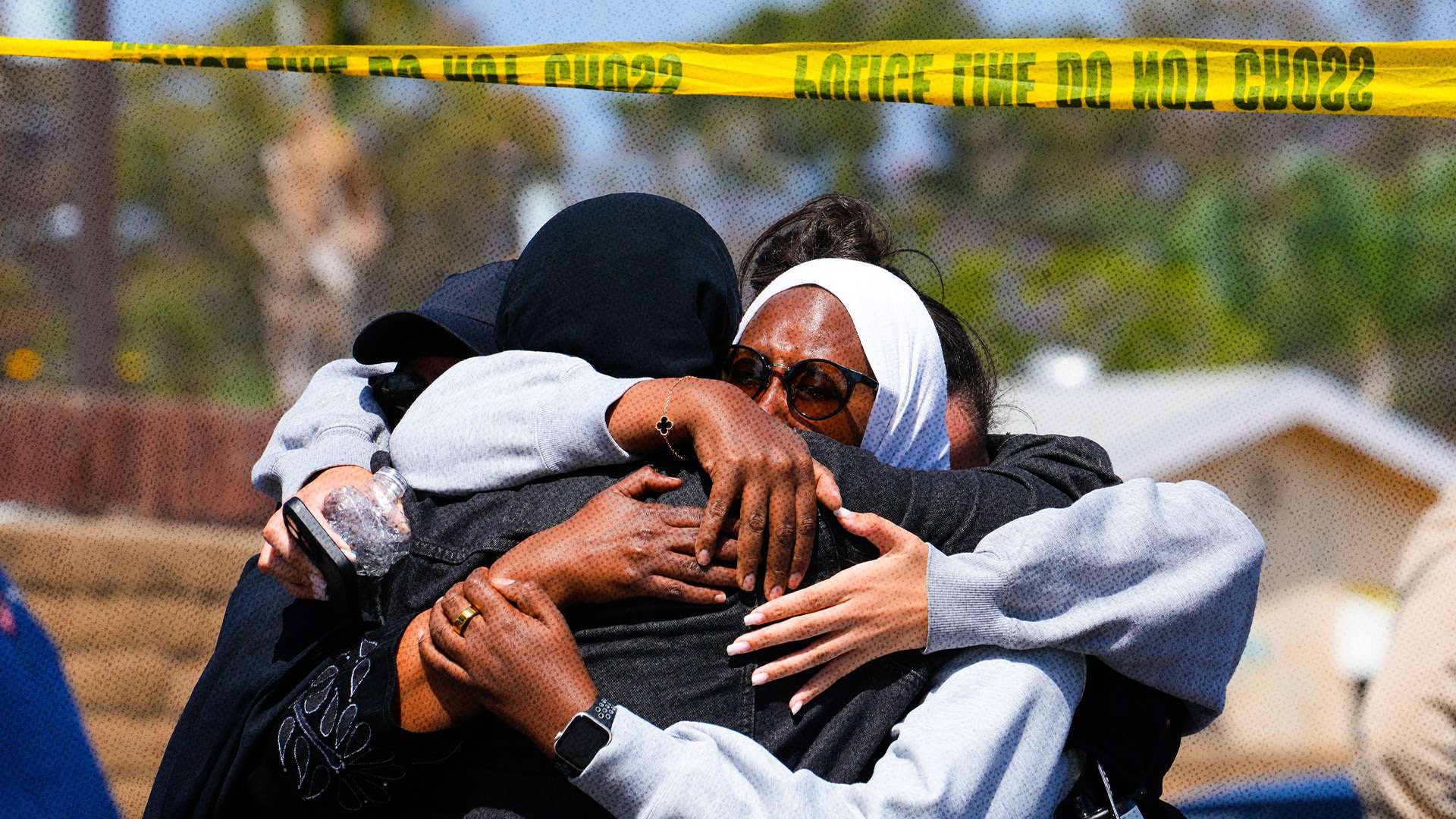
A grand jury in Forsyth County, North Carolina, this week indicted a Winston-Salem teenager, Sarah Lindsey Santiago, on three charges of murder in connection with the May 18 shooting at the Islamic Center of San Diego. The perpetrators of that attack, 17-year-old Cain Clark and 18-year-old Caleb Vazquez, killed themselves shortly afterward. Santiago was not present during their crimes, and her alleged participation consisted mainly of helping to livestream the attack and posting the killers’ manifesto.
Because Santiago aided and abetted Clark and Vazquez, Forsyth County District Attorney Jim O’Neill said at a press conference on Monday, she is guilty of first-degree murder, which in North Carolina is punishable by a mandatory penalty of life in prison without parole when the defendant is 18 or older. Since Santiago is 17, she could, if convicted, receive a life sentence with the possibility of parole after 25 years based on a claim of “mitigating circumstances.”
Assuming the allegations against Santiago are true, her conduct was morally reprehensible and potentially criminal. But the decision to charge her with first-degree murder smacks of a desire for retribution that in this case cannot be satisfied by prosecuting the actual killers. Worse, O’Neill’s explanation of that decision mixes the elements of aiding and abetting with concerns about the promotion of bigotry and glorification of violence, even by people with no advance knowledge of any actual crimes.
“My client is innocent of all these charges,” said Santiago’s lawyer, Alan Doorasamy. The case “touches on major issues in the U.S., including youth and social media and mental health,” he added. “The world will soon know the facts that caused this major tragedy.”
According to O’Neill, Santiago never met Clark or Vazquez in person but communicated with them online. He said she was aware of their plan to attack the San Diego mosque and knew that they also planned to attack a synagogue and “a predominantly African-American high school.” Far from reporting or discouraging those plans, the indictment says, she endorsed them, to the point that she sent Vazquez a Nazi patch that he wore during the mosque attack. She also allegedly agreed to “live stream the attacks planned that day, disseminate the recording publicly and then release the manifesto authored by the attackers purporting to justify the attack.”
O’Neill said the livestream, which was transmitted via GoPro cameras attached to the helmets that Clark and Vazquez wore, was viewed by Santiago and two other people, which explains how investigators were able to zero in on her. Last week, he said, he conferred with Forsyth County Sheriff Bobby Kimbrough, other local law enforcement officials, the FBI, and Assistant U.S. Attorney Anand Ramaswamy about how to proceed with the case.
One question was whether to arrest Santiago right away or wait for an indictment.
O’Neill and the other officials decided an immediate arrest made sense because Santiago might pose an ongoing threat. “With the weekend approaching, holy days approaching,” O’Neill said, “we didn’t know what she was capable of.”
Another question was whether to prosecute Santiago in state or federal court. If she were charged under federal law, O’Neill explained, “the time that she was looking at was only about three or four years.” He may have been referring to the statute criminalizing “misprision of felony,” which is punishable by up to three years in prison and consists of concealing and failing to report a federal felony. If Santiago were charged under state law with aiding and abetting the three murders in San Diego, by contrast, she would face a life sentence. O’Neill thought the latter option was more appropriate in light of “her part in this carnage.”
If a defendant aids and abets a crime, North Carolina’s model jury instruction explains, he “is guilty of the crime, just as if the defendant had personally done all the acts necessary to constitute that crime.” Aiding and abetting requires three elements: 1) the crime was committed by another person, 2) the defendant knowingly “advised,” “instigated,” “encouraged,” “procured,” or “aided” the other person “to commit that crime,” and 3) “the defendant’s actions or statements caused or contributed to the commission of the crime.”
To convict Santiago, prosecutors must prove beyond a reasonable doubt that Santiago’s role in livestreaming and recording the mosque attack, publishing the killers’ manifesto, and supplying Vazquez with a Sonnenrad patch satisfies those three elements. That seems like a tall order, especially regarding the third element, which hinges on what might have happened if Clark and Vazquez had never communicated with Santiago. If they would have carried out their plan anyway, it is hard to see how Santiago’s conduct “caused or contributed to” the murders they committed.
“When someone has credible knowledge of that a crime is gonna be planned or be committed, particularly any act of violence,” FBI Special Agent in Charge Reid Davis said during the press conference, “the law requires them to come forward and report it. Failure to do so is not only irresponsible, but it can also be a crime.” But that crime is a far cry from first-degree murder, and Santiago’s alleged conduct, appalling as it is, does not seem to justify treating her as if she had personally shot and killed the victims of the mosque attack.
In defending that decision, O’Neill suggested that Santiago’s real crime was participating in an online culture that radicalizes potentially violent young people. “There exists in our world an underground subculture,” he said. “It’s an echo chamber of intense hate against different cultures and religions.” Participants in “this underground subculture of hate,” he explained, “listen to each other” and “talk to each other” on “encoded platforms” like Signal, and “it radicalizes” them “to the point where they carry out these horrific crimes of violence and murder.”
O’Neill urged parental awareness as one solution to that problem. But he also said “it is imperative” that “lawmakers prevent these sites” from “being accessible to young people.” In response to a reporter’s question, he reiterated that legislation was necessary, saying “we have the ability to stop people from glorifying their terroristic carnage for other people to watch.” When asked whether there were plans to prosecute the two other people who watched the livestream of the mosque shooting, he declined to comment, saying “it’s a continuing investigation.”
O’Neill portrayed the charges against Santiago as part of a crackdown on “this subculture of hate,” saying “maybe this is the precedent that we need moving forward.” And in elaborating on that theme, he conflated the allegations of aiding and abetting murder with the expression of odious views.
Even people who had no foreknowledge of the mosque attack, O’Neill suggested, might face criminal charges simply for watching the livestream. He went further, arguing that the government should block access not only to such footage but also to websites that foment religious, racial, or ethnic animus, which are clearly protected by the First Amendment regardless of how hateful their content might be.
“Today we send a message, a strong message,” Winston-Salem Police Chief William Penn said at the press conference. “If you commit a crime, especially a heinous crime, you will not be protected by a distance, you will not be protected by your computer monitor, and you will not be protected in your basement. You will be brought to justice.”
Given O’Neill’s broad description of the problem he is targeting, that “strong message” is rather alarming. Reasonable people can disagree about the appropriate charge or penalty for a 17-year-old who does what Santiago allegedly did. But her criminal culpability should hinge on the extent to which she encouraged or facilitated the crimes that Clark and Vazquez committed, as opposed to her opinions about Muslims, Jews, or black people. By presenting the case against her as part of a fight against “this subculture of hate,” O’Neill blurs the distinction between crime and constitutionally protected speech.









Leave a comment