
Rachel Roddy’s recipe for chicken with citrus and oregano | Italian food and drink
 adminUpdated 2 hours Ago3 Mins read
If you look through the window of Piatto Romano between 10am and midday, there will almost certainly be two, maybe three people at the round table trimming vegetables: chicory, artichokes, poppy greens, amaranth. After midday, the crates and trimmings will have been cleared away and the table will now be home to trays of bright-green boiled vegetables and, maybe, baked salt cod. By 12.30pm, everything will have been moved into the small kitchen in time for service, which starts at 12.45pm.
When I first moved to Rome in 2005, Via Bodoni 62 was home to a restaurant called Da Rafaelle, which had white plastic chairs (inside as well) and served traditional Roman food with plenty of offal. We went to Da Rafaelle a few times before it closed in 2009. But, mostly, we went to La Torricella, which is on the other side of Testaccio and serves mainly fish. The owner is Augusto D’Alfonsi and, during lunch one day, he mentioned that he was taking over via Bodoni 62, and that his daughter Francesca would run it. They’d serve traditional Roman food with plenty of offal and it would be called Piatto Romano. This was 2011. My son was born later that year and my memories are not unpleasantly foggy; of the vegetable trolley in the corner, of chicken with red peppers and of Francesca and her father negotiating strongly. I also remember Francesca’s brother, Andrea, starting to be around more, before he eventually took over in late 2013.
Andrea grew up riding his bike along the pavement in front of La Torricella, which his parents had opened in 1973, a few years before he was born. If his lunch didn’t come out of the kitchen at La Torricella, it probably came out of the kitchen at Da Antonio on Via dei Pastini, where Andrea’s maternal grandma cooked, or from the kitchen of his maternal grandfather’s restaurant, Da Giovanni on Via dei Barbieri. As a teenager, Andrea also ate at his paternal grandfather’s osteria, Gran Sasso in Trastevere, and in the various branches of Insalata Ricca, a chain of salad restaurants opened by his entrepreneurial uncle Gino in the 1980s. All the various parts of the family have Abruzzese roots, but Andrea mentions Gino, eccentric and single-minded about history, vegetables and nutrition, as being a particular influence.
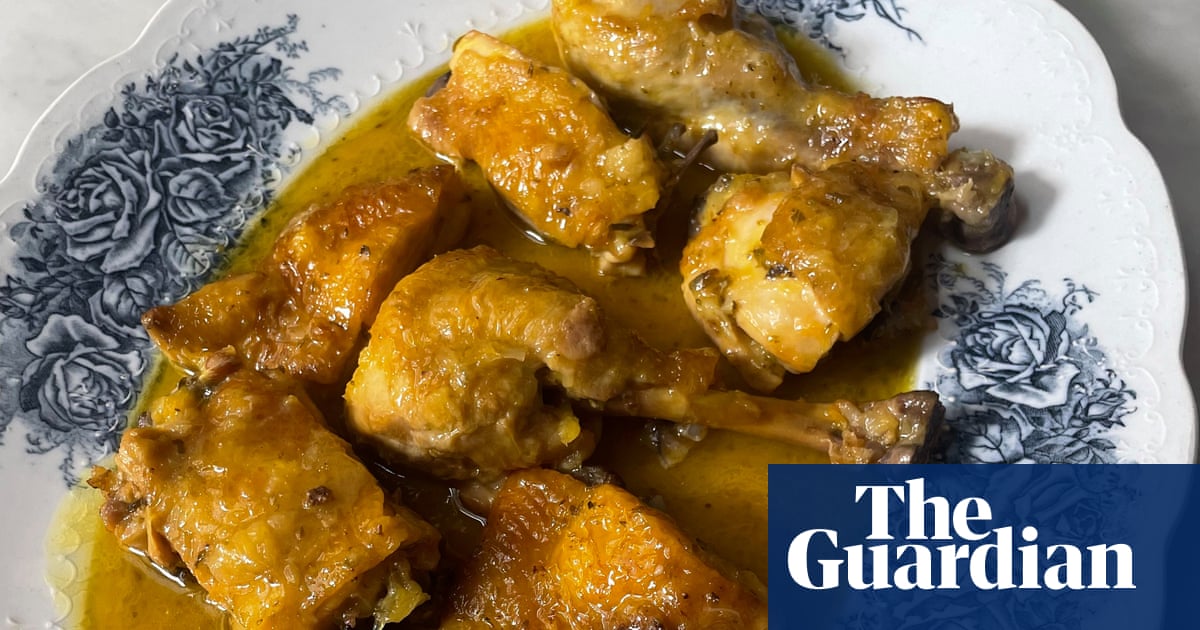
The way Andrea continues to evolve Piatto Romano (which for many is the embodiment of an ideal Roman trattoria) would require several columns. For now, though, I will note his singlemindedness about the vegetables he picks up every day from his various sources. The other night, we had courgette greens – a little hairy and very succulent – with Leprino rabbit (typical of the Tuscia area of Viterbo) braised in wine and citrus, which produces a lipsmacking sauce/gravy. And head chef Umberto Mussato, who has worked with Andrea since 2021, has adapted his recipe for this column, but using chicken instead of rabbit. The dish is made even more tasty by the addition of three to five anchovy fillets mashed with a tablespoon of red-wine vinegar, plus a sprig of fresh thyme or oregano, which is then left to sit for at least half an hour before it’s served with greens and potatoes, if you wish.
Chicken with citrus and herbs
Serves 4
1.2kg skin-on, bone-in chicken thighs (or a mix of legs and thighs)
Salt
4 tbsp olive oil
100-150ml dry white wine
1 tsp dried thyme or oregano
400ml fresh citrus juice – a mix of orange, lemon, grapefruit, mandarin
3-5 anchovies mashed
with 1 tbsp good-quality red-wine vinegar
A few stalks fresh oregano
Season the chicken with salt, rubbing it into the skin. Working in a heavy-based pan, warm the olive oil, then brown the chicken pieces in batches so as not to overcrowd the pan. Once all the pieces are brown, look at the amount of fat in the pan – I suggest leaving it all in there, but remove some, if you prefer.
Return all the browned chicken to the pan, raise the heat and add the wine, which should sizzle and evaporate. Add the dried oregano or thyme, stir, then pour over the citrus juice. Lower the heat so the pan simmers, then cover.
Leave the chicken to cook for 45 minutes to an hour, lifting the lid to turn the pieces every now and then, then lift off the lid and cook for another 20 minutes, so the sauce can reduce. By the end of the cooking, the chicken should be tender and the sauce thick. (If the sauce needs significant reduction, remove the chicken, simmer hard so the sauce reduces to your liking, then return the chicken pieces to the pan.)
To finish, stir in the anchovies mashed in vinegar and a sprig of fresh thyme or oregano, then leave to sit for 30 minutes before serving.






Leave a comment