
Rep. John James proposes using tariff revenue for tariff relief fund
 adminUpdated 1 hour Ago3 Mins read
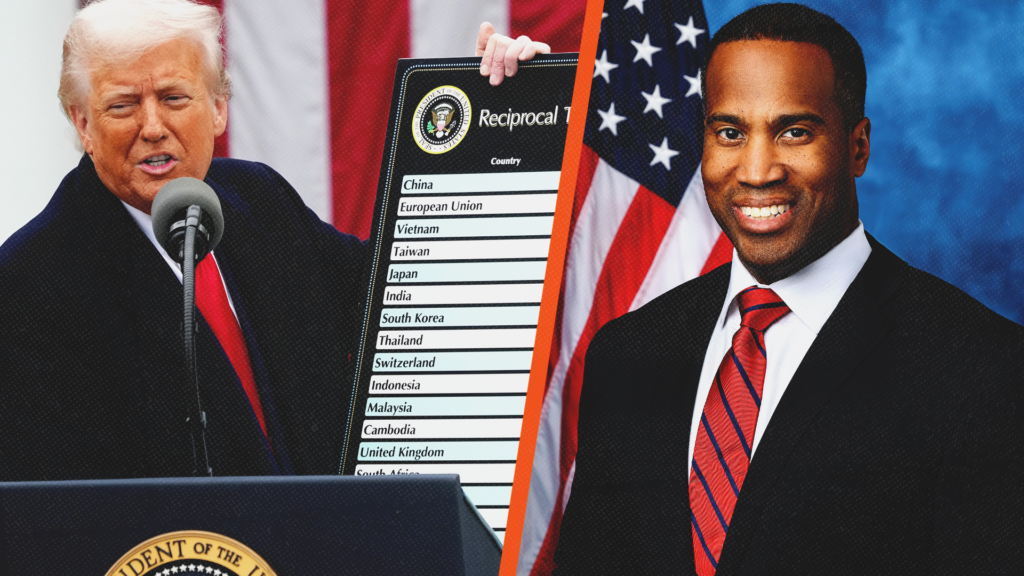
The Republican congressman who hopes to be the next governor of Michigan has a plan to help American businesses hurt by President Donald Trump’s tariffs.
Is he proposing to abolish those tariffs? Hahahaha, oh please.
Instead, Rep. John James (R–Mich.) has introduced a bill that would use some tariff revenue to offset the economic harm being caused by…the tariffs.
James’ proposal, the Tariff Relief for American Development and Employment Act of 2026, would create a new tariff relief fund to be accessed by American businesses that “demonstrate actual tariff-related economic injury.”
“Michigan is disproportionally affected by the trade war, so it’s reasonable to use tariff revenue to reduce the effect on Michigan businesses and workers,” James said in a statement announcing the legislation.
To qualify for the money, businesses would also have to pledge to maintain existing production and employment levels. The bill instructs the Treasury Department, which would administer the fund, to give priority to businesses with larger numbers of American workers and those that avoid layoffs and boost worker pay.
In other words: Pay the tariffs first, then do a bunch of paperwork and cross your fingers that the bureaucrats at the Treasury decide that you qualify for reimbursement. And in the meantime, don’t cut production or lay off workers—things a business might naturally do in response to a new tax burden—or the federal overseers might not favor you.
“You guys remember when Republicans used to criticize Democrats for imposing costly, convoluted taxes and then giving some Americans their own money back?” asks Scott Lincicome, vice president for general economics at the Cato Institute, in response to James’ proposal. Indeed.
For that matter, remember when Republicans understood that concentrating more economic decision-making power in Washington wasn’t the way to help American businesses? This bill requires businesses to jump through a series of hoops—a process that will add more costs and complexity on top of the tariffs—and creates more incentives for executives to work harder at currying favor in Washington rather than succeeding in the marketplace.
The fact that James is running for governor in Michigan—and trailing in the polls—likely sheds some light on his motivations here.
This does not seem like a bill meant for Congress to seriously consider or pass. In all likelihood, it exists solely so James can tell voters in Michigan that he’s trying to ease the pain caused by Trump’s tariffs—which are deeply unpopular and increasingly seem to be strangling the GOP’s prospects in the midterms.
In Michigan, manufacturing employment has declined since April 2025, when Trump launched his second-term tariffs on what the White House dubbed “Liberation Day.” Meanwhile, Michigan households have paid more than $23 billion in tariff-related costs since January 2025, according to a tracker maintained by the National Taxpayers Union Foundation.
By acknowledging that the tariffs are hurting businesses in Michigan, James becomes the latest Republican to openly break with the president over his signature policy. Former congressman Mike Rogers, who is running for Senate in Michigan, has TV ads calling for an end to what he calls the “tariff war.”
It is good that Republicans are finally admitting the reality of the tariffs. Study after study has shown that the import taxes are imposing costs on American businesses and consumers. Last week, the New York Federal Reserve concluded that the average price of 67 common household goods would have fallen over the past year, if not for the tariffs. Instead, those prices increased by about 3 percent.
Fixing that requires repealing Trump’s tariffs, rather than constructing a new labyrinthine process for funneling some of the tariff money back to certain businesses.
James’ bill is a deeply silly proposal, but there’s also something quite pathetic about this. James is, after all, a member of Congress. You know, the branch of government that the U.S. Constitution vests with control over trade and tariffs. You don’t need to build a bureaucratic Rube Goldberg machine to “reduce the effect [of tariffs] on Michigan businesses and workers.”
You just have to do your constitutionally appointed job and tell the president that he can’t unilaterally raise taxes on Americans whenever the mood strikes.










Leave a comment