

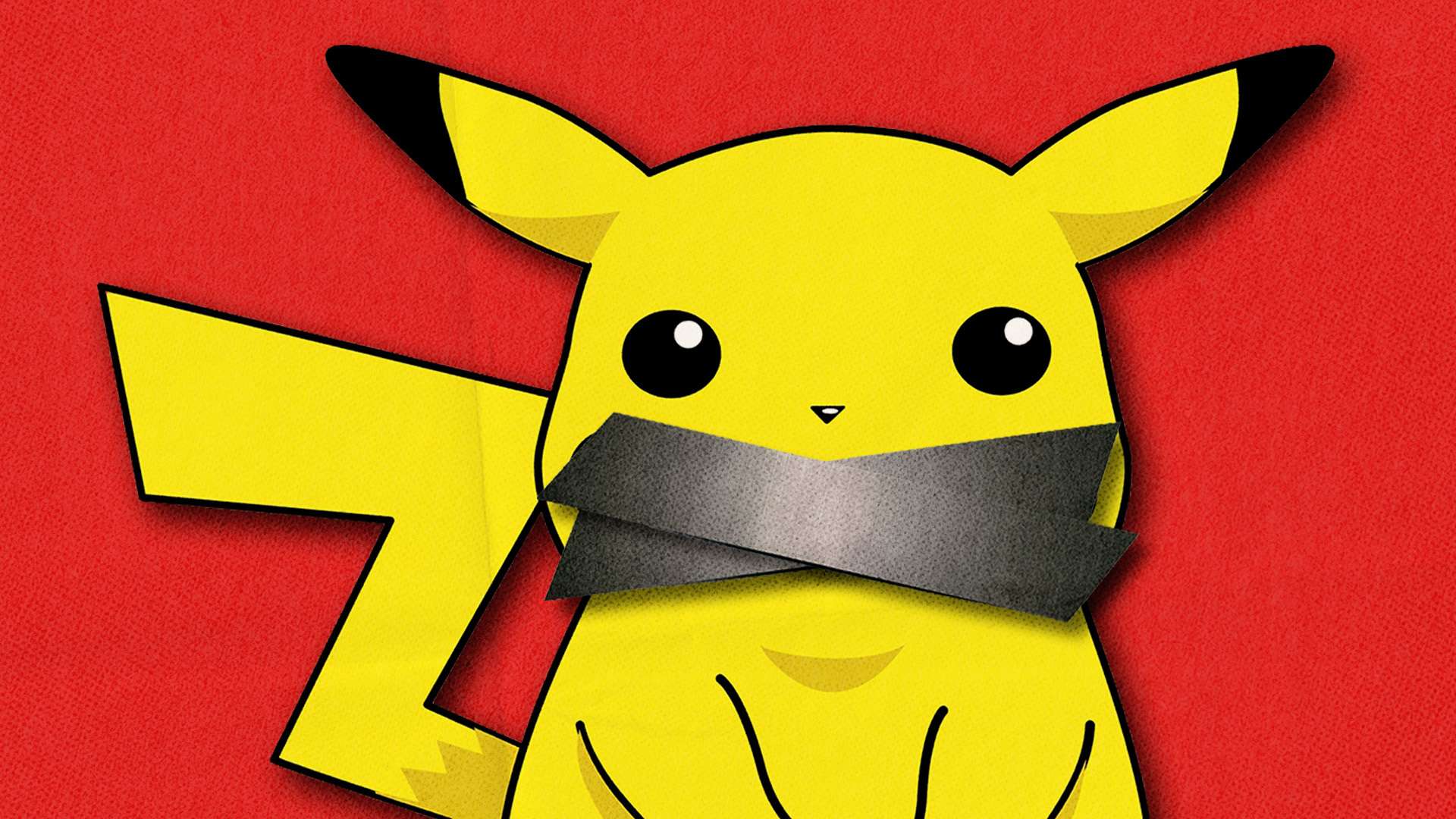
It may sound Farfetch’d, but lawmakers are advancing a bill that would stop minors from nicknaming their Pokémon online—in violation of the First Amendment.
Last month, the House of Representatives passed the KIDS Act, a wide-ranging package of youth online safety bills. It includes the Safer GAMING Act, which would require interactive online video games to “limit communication between” players “under the age of 17” and “any other user.”
That limit must be “enabled by default” and “set to the most restrictive setting,” automatically blocking all “verbal, written, or visual messages” to and from minor users. Parents could adjust the safeguard “to a less restrictive setting,” but silence is the starting point, in every online game.
This sweeping regulation would violate the First Amendment. Minors have a First Amendment right to both speak and receive information, including through video games and the internet. As the Supreme Court explained in 1975 in Erznoznik v. City of Jacksonville, “minors are entitled to a significant measure of First Amendment protection…and only in relatively narrow and well-defined circumstances may government bar public dissemination of protected materials to them.”
The Safer GAMING Act goes far beyond that. The act draws no line between certain restricted categories of speech, such as material that is obscene to minors and true threats, and gamer chatter.
Even if courts ruled that the Safer GAMING Act is content-neutral—regulating only the time, place, or manner of speech rather than its substance—it would still fail intermediate scrutiny, because it fails to “leave open ‘ample alternative channels for communication.'” The act cuts off every channel by default, including “written” and “visual messages,” leaving minors with no way to reach their “intended audience” of other gamers.
The prohibition also reaches well past in-game chat, into far more innocuous communication. In the Pokémon games, for example, gamers can give their Pokémon nicknames. When they battle online, they see their opponents’ nicknames, communicating without messaging directly. Players often nickname for fun—expressing themselves, cracking jokes, and riffing on memes. Nicknames can also be strategic, used to intimidate, tease, or trick opponents. Either way, Pokémon nicknames qualify as “written messages” exchanged online within the meaning of the act. If enacted, this harmless feature would be switched off for young gamers by default.
The bill also bans “visual messages” such as taunts in Super Smash Bros., moves “unrelated to battle” that “show your opponent a little flair.” Taunts work online too, letting players celebrate, “provoke, intimidate, annoy or mock opponents.” Mario taunts by spinning around; others include audio, like Sonic the Hedgehog saying, “You’re too slow.” These are visual or verbal “messages” exchanged between online users, and therefore banned by the act as applied to minors.
Allowing parents to change the default setting does not save the bill. In 2011, the Supreme Court struck down a California law banning the sale of violent video games to children without parental approval because “such laws do not enforce parental authority over children’s speech and religion; they impose governmental authority, subject only to a parental veto.” Under the First Amendment, the government lacks “the power to prevent children from hearing or saying anything without their parents’ prior consent.”
Congress banning nicknames and taunts may seem implausible—lawmakers, one assumes, meant something narrower. But judges interpret laws by the “plain and ordinary meaning of the statute’s terms,” not by what drafters may have intended. On its plain terms, the Safer GAMING Act draws no line between a slur and a Pikachu nickname, between a threat and a Mario taunt.
Ignoring the First Amendment and attempting to silence minors in online video games is a Team Rocket–level blunder. Unfortunately, Congress is blasting off again.





Leave a comment