

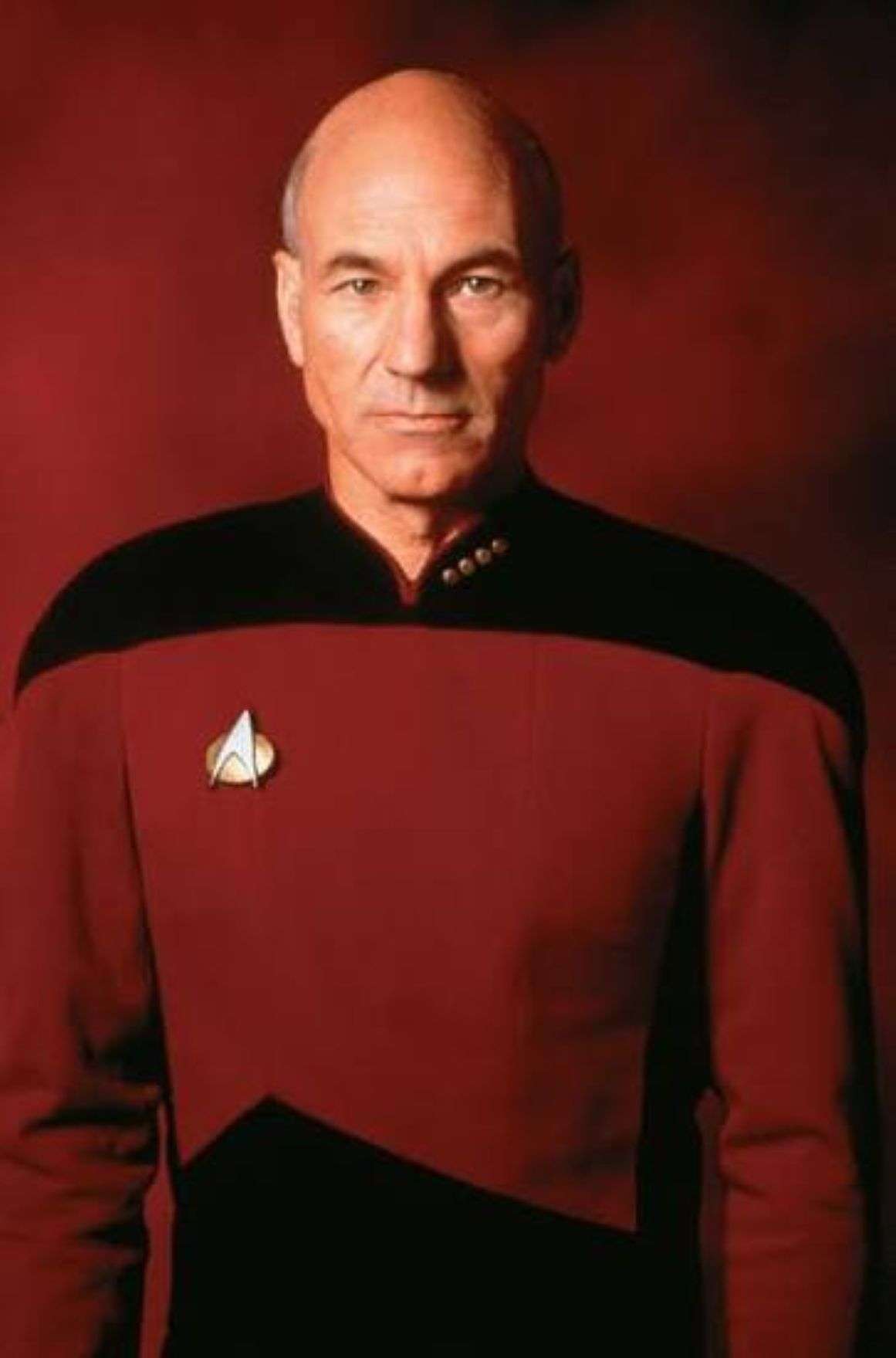
The great British actor, Sir Patrick Stewart, passed away yesterday. While Stewart began his career as a stage actor and performed in many Shakespeare plays, he is best known for his portrayal of Captain Jean-Luc Picard, in Star Trek: The Next Generation. Thanks to his impressive performance, Stewart and the character he played became science fiction icons.
Stewart brought extraordinary depth and perception to the role. And the character is an interesting contrast to the more instinctive and aggressive, less cerebral, Captain Kirk in the original Star Trek Series. Perhaps more than any other character, Stewart’s Picard epitomized Star Trek’s progressive liberal values: Enlightenment rationalism, technological optimism (highlighted by his defense of the rights of the android Data), racial and ethnic equality, and commitment to peace and diplomacy.
In many ways, Picard and TNG promoted these ideas to an even greater extent than the original series. Whereas Captain Kirk was often belligerent and acted on instinct, Picard sought diplomatic solutions to conflict, and tried to avoid doing anything drastic without careful deliberation. In the original series, the Klingons and Romulans are mostly depicted as evil and irreconcilable enemies of the Federation, in TNG the Klingons have become allies and there is hope that there will be peace with the Romulans, as well. In multiple episodes, Picard takes the lead in working to maintain and improve Federation relations with these and other previously hostile alien societies.
There is much to admire in this ideology and Picard’s advocacy of it. But, as I have pointed out in a 2016 article (see also this more recent piece), Star Trek’s ideology has a dark side, as well: its uncritical embrace of socialism. This is also reflected in the Federation’s seeming ideological homogeneity. Picard also exemplifies this negative aspect of Star Trek ideology, with his thinly veiled disdain for private enterprise, and people who seek to make a profit.
As depicted by Stewart, the Picard character also highlights another key tension in Star Trek ideology, this one relating to cultural diversity. Picard is supposed to be French; but other than his noticeable British accent, he seems little different from other human Federation characters. The “Doylist” real-world explanation for this is that Stewart himself was British, and trying to get him to speak with a French accent might have had bad results. But the “Watsonian” in-universe effect of this is to accentuate how the human characters in Star Trek have largely lost their cultural distinctiveness. French, British, and other human cultures have largely blended together, by the 24th century (when the show is set). Star Trek may champion diversity. But, culturally and politically, the human characters are mostly people who look different, but largely think alike on almost all major issues. The few dissenters are generally depicted as either villains or fools.
As I have previously noted, this ideological homogeneity and uncritical acceptance of Federation ideology gets challenged more in later Star Trek series, beginning with Deep Space 9. DS-9 and later series depict more ideological conflict among humans, and raise serious questions about Federation ideology. But Stewart’s Picard remains an iconic depiction of Federation ideals.
As always in assessing actors, we should not assume that the character necessarily reflects the views of the actor. We can and should recognize Picard’s shortcomings and those of Federation ideology, without blaming Stewart for them. Indeed, his performance deserves credit for providing a valuable window into these issues.
The more recent Picard series is not as good as TNG. But I would argue the blame for that rests with the producers and their problematic plotlines, rather than Stewart.
In addition to his justly famous Star Trek role, Stewart also starred in the X-Men movie series (which I won’t comment on, as I know little about it). His first significant science fiction role was playing Gurney Halleck in the 1984 movie version of Dune.
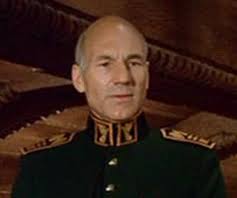
The 1984 Dune movie is an incoherent mess, and not as good as the more recent Denis Villeneuve version (see my reviews of the latter here and here). But Stewart did a great job with his role, and really brought Halleck to life.
In sum, Sir Patrick Stewart was a great actor, and well deserves his status as an SF icon. He will be greatly missed.





Leave a comment