
Stockpile food – and wash your hands: is that really how to prepare for environmental catastrophe? | George Monbiot
 adminUpdated 1 hour Ago4 Mins read
Would you mind fixing the NHS? And while you’re at it, could you please build an anti-missile system in your garden? Then regulate the banks, replace the water mains, tax the very rich and use the proceeds to rebuild our schools. Well, come on people: what are you waiting for?
I exaggerate, but this isn’t very far from the approach taken by the government’s Prepare campaign. Crucial functions, way beyond the scope of individual action, are dumped on our doorsteps while those in power fail to act. As a result, our national resilience is arguably lower than at any time since the second world war. At the Labour conference last week, Andy Burnham promised “a Britain where people feel the country has got their back again”. To make good on that pledge, he will have to change almost everything.
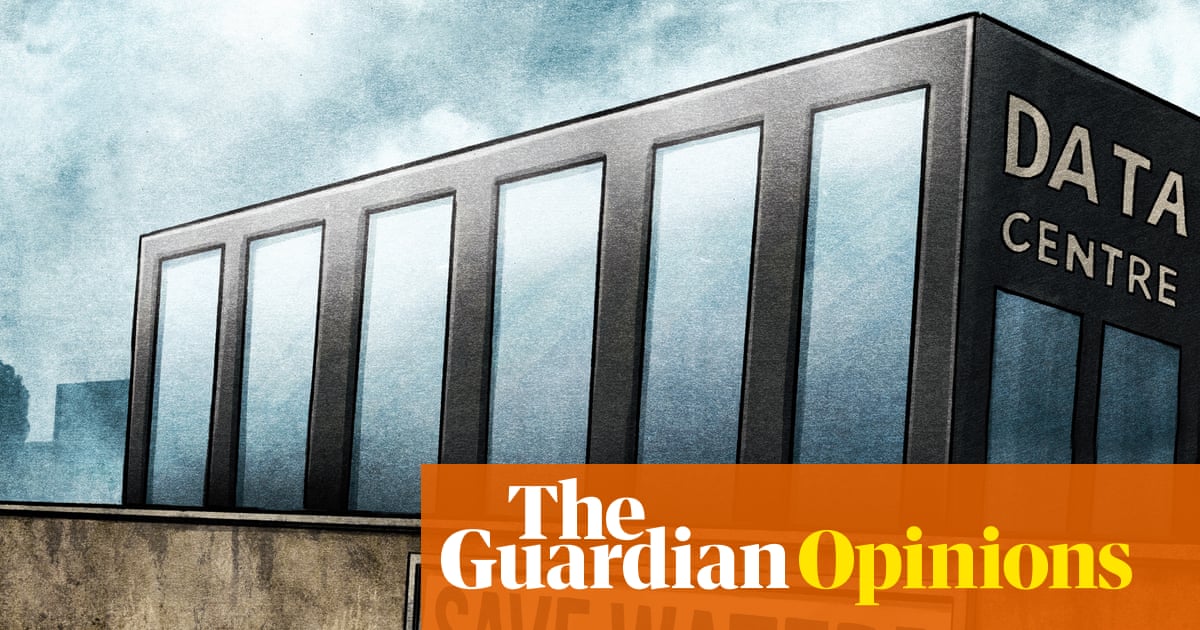
It’s not that the advice offered by Prepare – a government campaign designed to promote readiness for environmental emergencies – is irrational. But when the state is absent or working against us, households and communities cannot fill the gap. The campaign tells us, for example, to conserve water during droughts by turning off the tap while brushing teeth, or taking a shower instead of a bath. For sure. Every citizen should do their duty. But the government has at the same time declared datacentres “nationally significant infrastructure projects” that can be forced through the planning system, despite two startling facts. The first is that even Water UK – the body representing water companies, those paragons of environmental responsibility – has said there isn’t enough water to support the new datacentres. The second is that, as a freedom of information response reveals, the government has no idea what they are being used for. You could be turning off your taps so the water can be used to nudify celebrities.
Talking of droughts, the government’s National Risk Register seems seriously out of whack. It estimates the risk of a drought with a moderate impact occurring in the next five years at just 0.2-1%. What?? It also estimates the risk of heatwaves with a “significant” impact – by which it means between 200 and 1,000 deaths – at only 1-5% over the next five years. The government estimates there were 2,877 heat-associated excess deaths in England during this year’s hot weather in May and June. There were a similar number of deaths in the heatwave of 2022.
But never mind: the Prepare campaign advises that “if you live in a home that is more likely to overheat … contact your local council, your letting agency or Citizens Advice to find out what help and support they can provide”. Good luck with that. In the meantime, the “future homes standard” is at last due to come into force in March 2028, but thanks to lobbying by the building sector, according to some practitioners it still won’t deliver new homes matched to the climate challenges we face. And local authorities have been blocked from demanding anything better, thanks to the same corporate pressure.
Survive floods, the Prepare campaign tells us, by “packing a ‘grab bag’ of essentials in advance”, moving “valuable items upstairs” and making “changes to your property to reduce the damage flooding can do”. But one in nine new homes are being built in areas at risk of flooding according to data from Aviva, and a recent high court judgment reveals that the law prevents local authorities from blocking such developments, even if they fail a crucial safety test.
These are not the starkest examples of public exhortation colliding with government failure. The Prepare campaign tells us to help stop the spread of avian flu by washing hands “with soap and water” after feeding wild birds. Fine. But at the same time, at the behest of lobbyists, the government is pushing a “poultry sector growth plan”. This will multiply the number of super-incubators of avian flu: namely the factory farms rearing chickens. As the Scientific Task Force on Avian Influenza and Wild Birds points out, poultry farms are where highly pathogenic bird flu first arose. Through their growth and intensification, the spreading of their manure on fields and its runoff into rivers, we could scarcely devise a better formula for generating new variants of the virus and the attendant ecological disasters. Oh hang on, we could: the shooting industry is still allowed to breed tens of millions of pheasants and partridges in similar conditions each year, then release them into the countryside to mingle with wild birds. But do wash your hands.
You’re also advised to “reduce your exposure to air pollution”. How? The government is allowing new homes to be equipped with wood-burning stoves, building huge and arguably pointless new roads and consulting on radically delaying the transition to all-electric vehicles. All, once again, in response to lobbying.
As for food resilience, the Prepare campaign scarcely mentions it, except to say we should stock some “non-perishable food that doesn’t need cooking” in our homes. Last week, a group of anonymous senior food executives warned that, in the face of “material reductions in yield, quality and reliability of supply”, their industry was “defaulting to quick-fix crisis management” rather than taking a strategic, long-term approach. “At present, we are seeing companies either consistently lobby against necessary regulations or stay silent,” they said. The result is a likely failure to address an existential threat.
There was much in Burnham’s speech that delighted me, especially his listing of deregulation as one of the five great evils putting Britain on “the wrong path”. That’s a break with 47 years of policy, in which all governments have dismissed essential public protections as “red tape” that must be cut. The Tories were still at it in their own conference this week – telling us, in effect, they are here to burn it all down. But, like Keir Starmer, Burnham has tied his own hands by pledging to “stick to our fiscal rules”. These rules did not come from government. They were developed by Westminster junktanks and pushed into being by the media. As Larry Elliott has argued persuasively, they are unnecessary and self-defeating.
after newsletter promotion
The threats to our resilience are the same as the threats to our democracy: what Burnham called “that sense of the powers-that-be pulling against the people, not with them”. We’ve had five decades of lobbyists shaping policy, with devastating consequences for our ability to withstand crises. Willing to play our part as we may be, we cannot do the work of government.








Leave a comment