
Suri Core 1.0 electric toothbrush review: this new budget model is still sustainable – and the one I’d buy | Health & wellbeing
 adminUpdated 37 minutes Ago9 Mins read
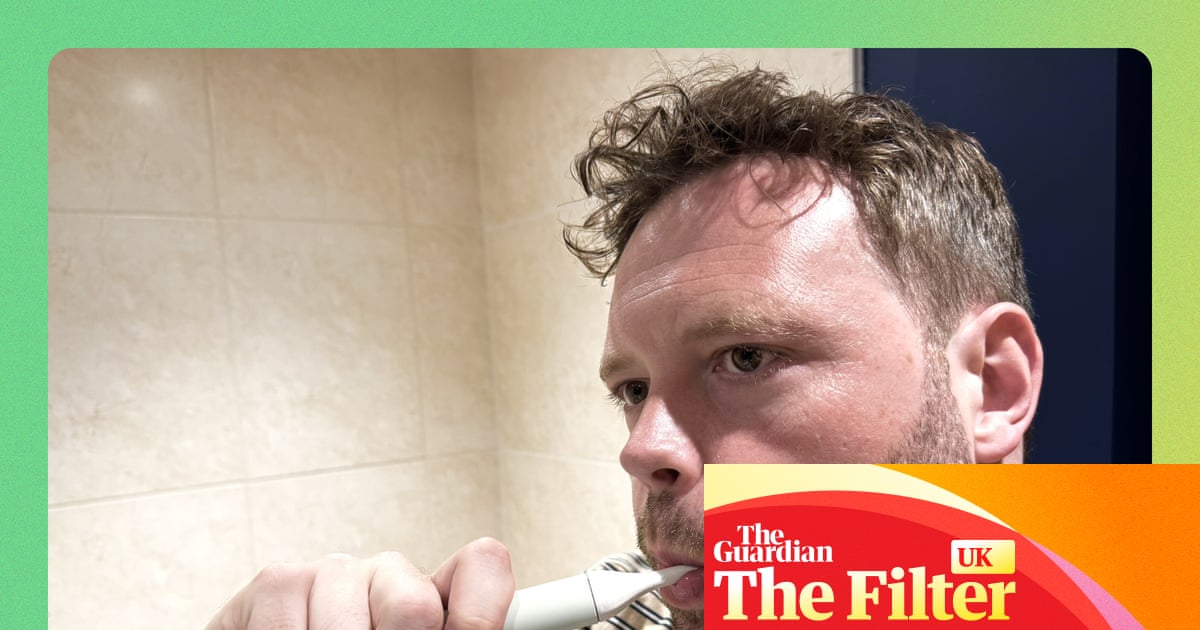
Last year’s Suri 2.0 toothbrush was a huge improvement on its predecessor. It fixed a handful of things that made the original hard for me to recommend, while continuing to focus on sustainability with recyclable heads made of cornstarch and castor oil.
But that kind of innovation doesn’t come cheap, and the Suri 2.0 brush costs £105 with the charging case, or £85 without (an option that wasn’t available at launch).
Now Suri has sought to tackle that problem with a cheaper brush: the Suri Core 1.0. It’s £65, and keeps the key improvements of Suri 2.0 (now rebranded as Suri Pro 2.0), making it a strong option for those who put sustainability at the top of their shopping priorities.
How I tested
Having tested more than 30 brushes for the Filter’s guide to the best electric toothbrushes, this isn’t my first toothbrushing rodeo, if you’ll excuse the confusing mental image. In short, you brush, brush and brush again – well beyond the twice-a-day recommendation of dentists and into obsessive territory.
While brushing, I look for grip, how it feels in the mouth and – most importantly – how clean my teeth feel after use. That may sound pretty basic, but having tested so many electric toothbrushes, some really do feel more effective than others, and clearly cope better with stubborn plaque.
Fortunately, Suri gave me the Core 1.0 brush two weeks ahead of launch day, so I’ve been using it every day since. I also have a Suri Pro 2.0 brush for direct comparison.
Suri Core 1.0 electric toothbrush: what you need to know
The Suri Core 1.0 is Suri’s first attempt at a lower-cost brush. Given the 1.0 in the title, it’s safe to assume it won’t be the last, either.
Fortunately, the cost-cutting required to produce a cheaper toothbrush hasn’t seen a return to the weak spots of the now-retired first-generation Suri brush. The Suri Core 1.0 has a pressure sensor and a wireless charging cradle – not the more easily breakable spring-pin base of the original.
It also uses the same cornstarch and castor oil heads that you can send back free for recycling. There’s also a two-minute timer with a friendly buzz every 30 seconds to remind you to move on to the next mouth quadrant.
So what is it missing, exactly? The motor is slightly weaker, producing 28,000 sonic vibrations per minute, rather than the 30,000 on the Suri Pro 2.0, and the battery lasts up to four weeks, rather than more than four weeks as the more expensive model promises. Its plastic handle is made from more than 90% bio-circular material (including used cooking oil and other waste feedstocks), rather than the aluminium of previous models (it’s still IPX7 waterproof).
But the biggest change is that the Suri Core 1.0 brush doesn’t come with a case. Granted, you can now buy the Suri Pro 2.0 without a case, but you can always buy one at a later date. Not so with the Suri Core 1.0: it’s slightly shorter than the more expensive model, so doesn’t fit snugly, and it won’t charge within it either.
However, for travel, there’s a plant-based head cover included, and there’s a travel lock to stop it going off in your bag.
All of this will set you back £65. For comparison, the Suri Pro 2.0 is £105 with a charging case, or £85 without.
Suri Core 1.0 specifications
Type: sonic
Modes: two (clean and polish)
Power: up to 28,000 BPM
Pressure sensor? Yes
Battery life: up to four weeks
App? No
Warranty: one year (extended to two years with registration)
What we love
The main thing to celebrate about the Suri Core 1.0 is how little the company has had to cut to make a cheaper brush. It would have been easy for the company to simply stuff the now-retired original Suri brush’s innards into the new bio-circular plastic shell, flaws and all.
But Suri hasn’t done that: a pressure sensor and wireless charging – by far the biggest improvements in Suri Pro 2.0 over its predecessor – are present. Given I got through no fewer than three spring-pin chargers on my original brush, that’s quite a big deal.
What’s more, if I were to do a blind test on the Suri Pro 2.0 and Suri Core 1.0 – something I’d not advise if you don’t want to spend the rest of the day cleaning your mirror – I’m not convinced I’d be able to tell the difference in performance either. The motor speed is only 6.7% lower, after all, and while the Suri Pro 2.0 is weightier and clearly more premium with its cold-to-the-touch aluminium finish, there’s not much in it.
Trying both side by side reveals a similar feel, and a similar level of mouth cleanliness. And while the Core 1.0 has a battery life that’s “up to a month” rather than “over a month”, it doesn’t feel that this will make much of a difference in practical terms. Indeed, Suri tells me the Core 1.0 has a 700mAh cell to the Suri Pro 2.0’s 800mAh, so not a huge difference.
And then, of course, there’s Suri’s main selling point: its sustainability credentials. Like its pricier sibling, the brush uses heads made from cornstarch with castor oil bristles. These can be sent back to Suri for recycling, with compostable postage-paid envelopes supplied to make the process as frictionless as possible. A pack of three costs £14.99, but you can subscribe and receive two every six months for £8.98 so you’re never stuck using a head past its best.
The Core 1.0’s head is white, giving the brush a two-tone design with whichever base colour you pick. The heads are the same for every model, so there’s nothing stopping you getting a colour designed for the Suri Pro 2.0 instead – though it won’t exactly match the colour of the base. This is a deliberate design decision, according to Suri, to prevent people confusing the Core 1.0 with the 2.0.
What we don’t love
Tackling the elephant in the room first, is the lack of travel case a problem? For me, not particularly. With Suri Pro 2.0, the company introduced a travel lock and a plant-based travel head cover, and both are present here. Once capped and locked with a long press of the power button, you can toss the Suri Core 1.0 in your bag and not worry about it getting dirty or being misidentified as a bomb threat.
The Pro 2.0 case on its own costs £30, so this seems like a sensible cost-saving decision – and more sustainable too, given that the case contains a battery (used to power a UVC light cleaner).
after newsletter promotion
But you can’t decide to simply buy this case later, as the Core 1.0 is slightly shorter than the 2.0, meaning it rattles around rather than fitting snugly. And it won’t charge in the case either, even when cleanly touching the base. You can still use the UVC light on it, as the size difference isn’t huge. All the same, this feels like artificially weakening the Core 1.0 to give users more reason to buy the Suri Pro 2.0, and that leaves a slightly bad taste in the mouth.
Speaking of bad tastes in the mouth, while both of Suri’s brushes offer a very respectable clean that’s far superior to any manual toothbrush, their maximum power of 28,000/30,000 BPM feels considerably less powerful than most of their electric toothbrush rivals.
You don’t have to spend a fortune for something more powerful, either: the Odonta PowerPlus brush reaches 42,000 BPM, and it costs just £29.99. Though I have to say that it pays to go higher: the Laifen Wave Pro (66,000 BPM) and Spotlight Pro (50,000 RPM, both about £99) have been my go-to when teeth have felt extra furry after a night on the cider.
Sustainability
Sustainability, as ever, is Suri’s strongest suit. The world of electric toothbrushes isn’t an especially sustainable one, but B Corp-certified Suri is at least making efforts in the right direction.
Beyond the recyclable plant-based heads, the packaging is moulded sugarcane pulp and the new shell is made from more than 90% bio-circular material – plastic made from cooking waste, largely – to reduce reliance on petroleum-based materials. It’s debatable whether this is a more ecological choice than the aluminium used on the original Suri, but the lack of bundled travel case means one fewer plastic, battery-containing accessory.
There are limitations to Suri’s ecological ambitions – you can’t make an electric toothbrush without a built-in battery, after all – but the founders acknowledge it’s not a “perfect business” in the company’s latest impact report. “As we continue to grow we want to fully own what that growth creates – the emissions, the complexity, the gaps we haven’t yet closed,” it reads.
Still, the progress is promising: two tonnes of brush heads collected (with the company using some to make soap dishes), 201kg of packaging removed by changes to its design, and a clearer idea of where the majority of its carbon emissions come from, which it says will help it make further reductions. You can read the 2025 impact report for yourself.
Suri Core 1.0: should I buy it?
It would have been easy for Suri to repackage its retired 1.0 brush in a new plastic coating and call it a new product. But the company hasn’t taken that route, instead maintaining a pressure sensor, travel lock, plant-based travel head cover and wireless charging of the Suri Pro 2.0 model.
For me, the compromises over the Suri Pro 2.0 brush are so minor that if I had to pick a Suri toothbrush today, the Core 1.0 is the one I’d choose. Sure, there’s no travel case, but that’s a minor inconvenience, and better for the planet.
But I have to admit that other toothbrushes I’ve tested have offered a better clean than either of these Suri brushes, so it really depends on your priorities. If you want the best clean possible or need a more affordable brush, I’ve included some alternatives below. But if sustainability is your number-one concern, then this is a toothbrush you should certainly consider.
Suri Core 1.0 vs …
Suri Pro 2.0 electric toothbrush
When I wrote my Suri Pro 2.0 review, it was £105 with the case included. You can now buy it as a stand-alone brush for £85, so is it worth spending the additional £20 or £40 over the Suri Core 1.0?
My feeling is “no” for the former, and “maybe” for the latter. The brush has 2,000 BPM more power in the motor, a slightly longer battery life and an aluminium frame, all of which are – as far as I’m concerned – nice to have rather than essential. But given the Suri Core 1.0 doesn’t support the travel case, the £105 bundle is a different proposition for frequent travellers, or germophobes who want to take advantage of the built-in UVC disinfection light.
Laifen Wave Pro electric toothbrush
Most electric toothbrush heads either vibrate or oscillate to clean. Laifen has discovered this doesn’t have to be an either/or decision, building a toothbrush that does both.
The result is by far the most thorough clean my teeth have had outside a dentist’s chair. With three modes on the brush, all customisable to 1,000 different combinations in the app, you can get up to 66,000 BPM and 60 degrees of oscillation for two types of cleaning on your teeth. If you’re put off by having to use an app, rest assured that, once you’ve set it to your liking, you can forget it exists.
Odonta PowerPlus electric toothbrush
If money is tight, you can’t do better than the Odonta PowerPlus. At just £29.99, it’s the cheapest brush I’ve tested that comes with a built-in pressure sensor (an upgrade that usually starts around the £65 mark). On top of that, it features 42,000 BPM of power across five different brushing modes, IPX7 water resistance and three weeks of battery life.
For the same price, Odonta also has the PowerLite, which is aimed at people who want something lighter for travel. Despite having a smaller frame, it doubles the battery life, but you do lose the pressure sensor and a little power, at 40,000 BPM.
For more:
The best electric toothbrushes for every budget
How to make your toothbrush last longer
The best water flossers – tested
Alan Martin is a writer who has been putting products – including phones, gaming devices and wearables – through their paces for more than a decade. Although he wouldn’t call teeth brushing a hobby, it’s something he’s been doing for decades with a degree of aptitude that has largely satisfied dentists







Leave a comment