
Switchblade Ban Violates Second Amendment, Fifth Circuit Holds
 adminUpdated 46 minutes Ago4 Mins read
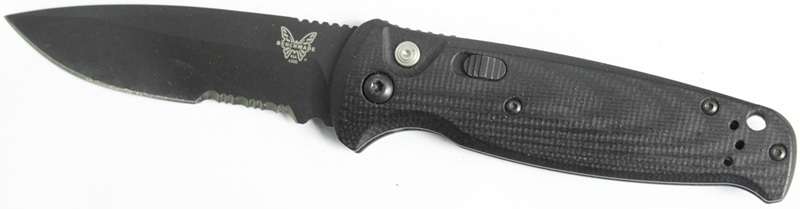
From Knife Rights, Inc. v. Blanche, decided yesterday by Fifth Circuit Judge Jennifer Walker Elrod, joined by Judges Don Willett and Cory Wilson:
This case presents a Second Amendment challenge to the Federal Switchblade Act (FSA)’s restrictions on switchblade knives. {Section 2 of the FSA, codified as 15 U.S.C. § 1242, … place[s] a fine of up to “$2,000 or imprison[ment] not more than five years, or both” for anyone who “knowingly introduces, or manufactures for introduction, into interstate commerce, or transports or distributes in interstate commerce, any switchblade knife.”}
Applying the framework articulated in New York State Rifle & Pistol Association, Inc. v. Bruen, we hold that the FSA is unconstitutional. We determine that switchblade knives qualify as “Arms” and are covered by the “plain text” of the Second Amendment. Because the regulation implicates the amendment, the government bears the burden of establishing that the FSA comports with well-established principles of the Second Amendment and its regulatory tradition. The government fails to meet its burden. Specifically, the FSA’s restrictions on the introduction, manufacture, transportation, and distribution of switchblades fail step two’s “how” analysis….
Amongst other definitions, Heller highlighted that the founding era understood the term to mean “any thing that a man wears for his defence, or takes into his hands, or useth in wrath to cast at or strike another.” Switchblade knives have surely been used for “defence” and to “strike another.”
Knives have been used for defense throughout human history, including the American founding. During the colonial period, “[e]veryone had a knife,” and “as long as a man was required to defend his life,” a “knife was a constant necessity.” In the 1700s and during the American Revolution, knives were used for scavenging, hunting, and defense, and “[b]elt and pocket knives” accompanied frontiersmen “in the developing eastern settlements and on the western frontiers.” Well into the 1800s, “men of all walks of life” were “accustomed to wear a knife as a necessary part of their garb.”
Switchblade knives are no exception. “Springblade knives” (precursors to the modern switchblade) “have been made for hundreds of years because there has always been a need for a pocketknife that can be opened easily when the hands are wet, cold, or covered with gloves.” In the 1700s, such knives were a part of certain types of flint-lock pistols: “[i]f the pistol mis-fired (which frequently happened) the person would touch the release button and the blade would open up, and be available for use.” After the Civil War, patents for switchblade knives proliferated, and the large-scale production of “switchblades in the United States began in the 1880s, shortly” thereafter. Then, “[o]ver a 50 year period from the mid 1890s to the mid 1940s there had been approximately 20 different companies who had manufactured switchblade knives in this country.” In short, some forms of switchblades have been commonly used for defense for hundreds of years. They are “arms.”
Accordingly, the government’s not-in-common-use argument fails. In addition to the wealth of history indicating the founding-era uses of switchblades for defense, the record indicates that there are “millions” of automatically opening knives in the United States now. The record further reflects that switchblade knives are lawfully used for “every day utility use, hunting, fishing, recreation, and camping and hiking.” Despite the FSA, there are still lawful sales of switchblade knives in the United States. Consequently, switchblade knives are “arms” “in common use” both then and now….
We proceed to step two [of the Bruen analysis]. Here, we assess whether § 1242 is consistent with the principles that flow from the Second Amendment’s history and tradition….
The government makes its stand primarily by citing a host of nineteenth-century cases in support of its argument that there existed a well-established tradition of regulating “inherently concealable weapons.” The concealable nature of these weapons, the argument goes, makes them “particularly dangerous.” The government connects this with the clear congressional history that suggests that Congress enacted the FSA because it believed that switchblades posed a unique danger and therefore needed to be restricted. This line of argument is focused on answering the “why” portion of the step two inquiry.
However, we do not reach the question of whether the government meets its burden as to the “why” analysis because it fails the “how” analysis. As mentioned, the Supreme Court has informed us that “[e]ven when a law regulates arms-bearing for a permissible reason,” it may not be “compatible with the right if it does so to an extent beyond what was done at the founding.” So, even if we grant the government’s argument that there is a well-established tradition of regulating “inherently concealable weapons,” this only addresses the “why” inquiry.
The government cites no historical analogue that regulates the manufacture, transportation, or distribution of “inherently concealable weapons,” much less switchblade knives. Rather, its analogues suggest that there is a tradition of regulating the manner of carrying concealable weapons….
The government’s best attempt at meeting its burden is through a single citation to a treatise-length law review article. See Gov’t Br. at 16–17 (citing David B. Kopel & Joseph G.S. Greenlee, The History of Bans on Types of Arms Before 1900, 50 J. Legis. 223 (2024)). It cites the article to show how “statutes regulated concealable weapons in a variety of different ways, including banning carry or concealed carry, prohibiting their possession in specific locations, subjecting their sale or possession to taxes, or restricting the sale to minors.” The referenced section of the article catalogs nearly two hundred pre-1900 statutes regulating daggers, dirks, and sword canes.
Of the nearly two-hundred statutes, only two regulate bladed weapons in an analogous manner as § 1242. See 1881 Ark. Acts 191, 192 (proscribing the “sell[ing], barter[ing] or exchang[ing]” of “any dirk or bowie knife, or sword or spear in a cane”); 1837 Ga. Laws 90, 90–91 (making unlawful “for any merchant, or vend[o]r of wares or merchandize in this State, or any other person or persons whatsoever, to sell, or offer to sell … Bowie, or any other kinds of knives, manufactured and sold for the purpose of wearing, or carrying the same as arms of offence or defense, pistols, dirks, sword canes, spears, &c”). Two laws out of nearly two hundred bring us into outlier territory….
John William Dillon (Dillon Law Group, A.P.C.), Richard Brent Cooper (Cooper & Scully, P.C.), and Daniel Schmutter (Hartman & Winnicki, P.C.) represent plaintiffs.










Leave a comment