
The Guardian view on Kemi Badenoch and the economy: a plan stuck in the Tory comfort zone | Editorial
 adminUpdated 17 minutes Ago2 Mins read
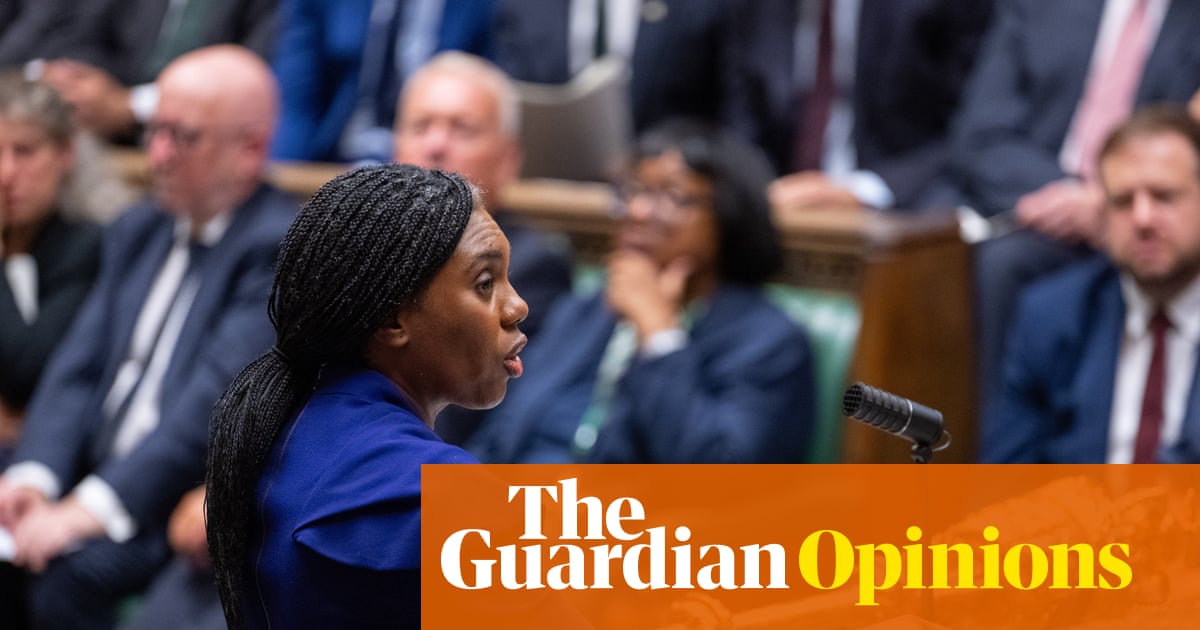
To outlast a prime minister always counts as some kind of achievement for an opposition leader, although Kemi Badenoch cannot claim credit for Sir Keir Starmer’s downfall. Sir Keir’s wounds were mostly self-inflicted. To the extent that opposition pressure was involved, it was electoral threats from Reform UK and the Green party that stoked Labour party frustration to a regicidal pitch. The Tory leader’s role was largely as a spectator.
Mrs Badenoch still hopes to use regime change to her advantage. She thinks the economy, and fiscal discipline in particular, will be her most fruitful line of attack. In their first confrontation at prime minister’s questions on Wednesday, the Conservative leader called Mr Burnham a “spendthrift” and “people pleaser” who will dodge the tough decisions required to prove Britain’s creditworthiness on international markets. She expects him to yield to Labour MPs’ demands for budget increases, which will then have to be financed with tax rises.
In that scenario, Mrs Badenoch imagines a vacancy for a rehabilitated small-state Conservative party offering hard-headed budget management, less profligate than Labour; more sober and respectable than Reform UK. That message would unite what remains of her depleted party. She can’t compete with Nigel Farage on the terrain of anti-immigrant rhetoric (although that doesn’t stop her aping his stances). She shows no interest in finding political accommodation for socially liberal, pro-European one-nation Tories who now have more in common with the Liberal Democrats than the modern Conservative party.
This leaves the Tories with a narrow focus on tax cuts, reining in welfare spending and deregulation as a spur to enterprise. Mr Farage supports those things too, but Mrs Badenoch believes that Reform UK’s maverick style and the whiff of impropriety around its financial dealings make it an unreliable vehicle for a classically Thatcherite agenda that belongs, by rights, to Lady Thatcher’s own party.
The claim to be the true keeper of the Thatcherite flame has become a ritual for Tory leaders. The mantle has passed through so many hands, it is threadbare as a political definition in 2026. It was worn most preposterously by Liz Truss, who posted photos of herself on social media recreating iconic images of the Iron Lady in her pomp. She then detonated her government with a “mini-budget” that was a crass pastiche of the economic ideas she claimed to venerate – a wild foray into fiscal irresponsibility masquerading as free-market radicalism.
One of the Treasury ministers who enthusiastically endorsed Ms Truss’s plan, Andrew Griffith, was this week appointed Mrs Badenoch’s new shadow chancellor. He replaces Mel Stride, a lower-octane performer who was deemed not to have made sufficient impact in the role. It is a revealing choice that undermines the Tory leader’s plan to make economic competence the centrepiece of her pitch to lead the nation. When considering a potential chancellor, she clearly values the ability to grab attention over economic judgment.
This is consistent with a pattern of failure to engage with the full spectrum of failures over many years that accounts for the scale of Tory defeat at the last election. What Mrs Badenoch imagines to be a political strategy looks more like retreat to an ideological comfort zone in the hope that a second prime minister will self-destruct while she watches from the sidelines.







Leave a comment