
The Guardian view on ponds: these freshwater havens need a law of their own | Editorial
 adminUpdated 2 hours Ago2 Mins read
Frogs; newts; small fish such as minnows and sticklebacks; dragonflies; water boatmen and water snails: these are just a few of the hundreds of animal species that make their homes in Britain’s ponds alongside diverse wetland plants, some of which are endangered. Yet while small bodies of water are cherished by hobbyists as well as scientists, they have startlingly few protections – even at a time when the polluted state of rivers, lakes and coastlines is a key focus of environmentalists.
With a clean water bill expected soon, this official neglect of ponds should soon be consigned to the past. While rewilding projects have overseen the rediscovery of older “ghost ponds” as well as the creation of new, and householders are encouraged to create miniature ones in their gardens, charities including the specialist Freshwater Habitats Trust point to the growing body of international research that testifies to their ecological importance. In 1996 the first-ever national survey estimated that there were 228,900 ponds in Britain. Thirty years on would be an apt moment to grant them enhanced status.
The decline of ponds is part of a wider story of damage to the UK’s waterways by a combination of intensive agriculture, building development, pollution and the failure to manage it. One local study in Leicestershire has found an average 1% species loss every year for 15 years. But unlike rivers, many of which disappeared underground when they were culverted by the Victorians, around two-thirds of ancient ponds in England and Wales have vanished altogether either through drainage or infilling for farmland. When horses were replaced by tractors, it was wrongly thought that these pools had served their purpose.
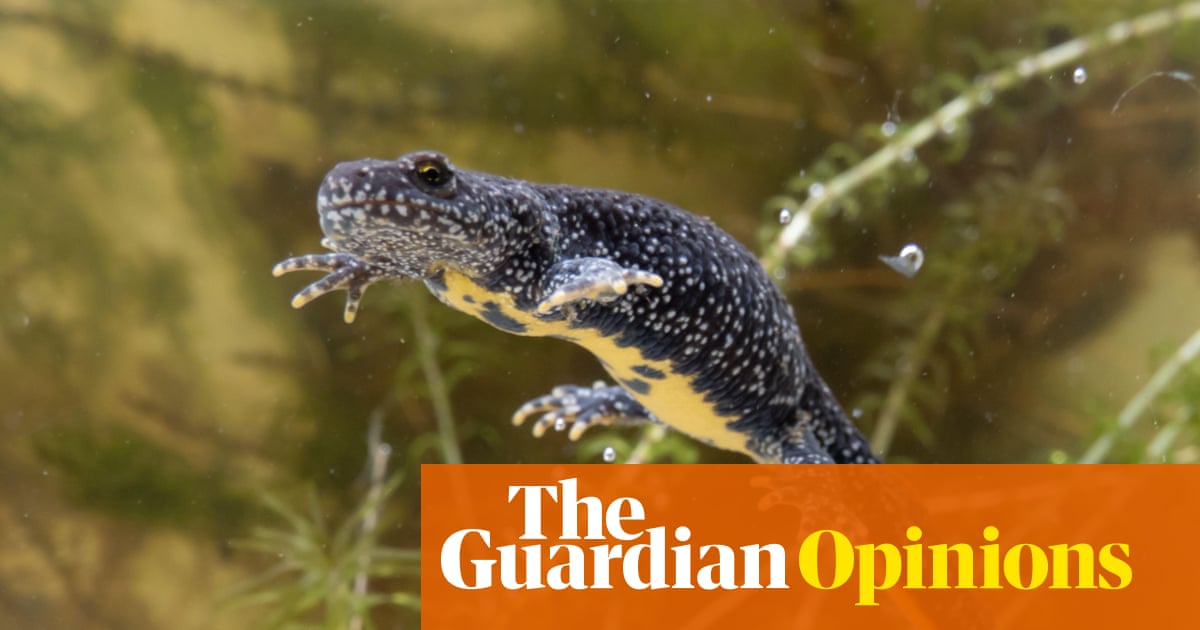
To the extent that ponds have been legally shielded, this has been largely due to great-crested newts – a protected species since 1981 and one that cannot thrive in rivers with large fish. These rare amphibians even had the dubious honour of becoming an anti-red-tape trope, with Angela Rayner, the housing and communities secretary, among senior politicians to have suggested that rules were overly tilted towards wildlife.
More recently, Rachel Reeves, then chancellor, criticised the way that a development in Sussex was delayed by concerns about another freshwater creature, the little whirlpool ramshorn snail. While it is right for regulation to take account of individual species, the broader point about ponds is their contribution to biodiversity overall.
Increasing heat and drought, and the stress they impose on natural systems, make the presence of water in landscapes all the more urgent. Ministers should heed calls to add targets for ponds to the plans that govern England’s 10 river basin districts. They should also embrace a broader lifting of ambition, whereby the target of high ecological status would be set for a limited number of streams, rivers and lakes.
Compared with the challenges around water companies, sewage and pollution from roads and farming, ponds and streams might sound unimportant. But the Climate Change Committee and other experts consistently stress the importance of nature recovery – and one of the distinctive benefits offered by small water bodies is the speed at which they are capable of being restored under careful management. What is good for newts and snails could also be good for politicians and the public.
-
Do you have an opinion on the issues raised in this article? If you would like to submit a response of up to 300 words by email to be considered for publication in our letters section, please click here.










Leave a comment