
The World Cup has upended the old world order – and despite Trump and Infantino, it still inspires | Simon Tisdall
 adminUpdated 2 hours Ago5 Mins read
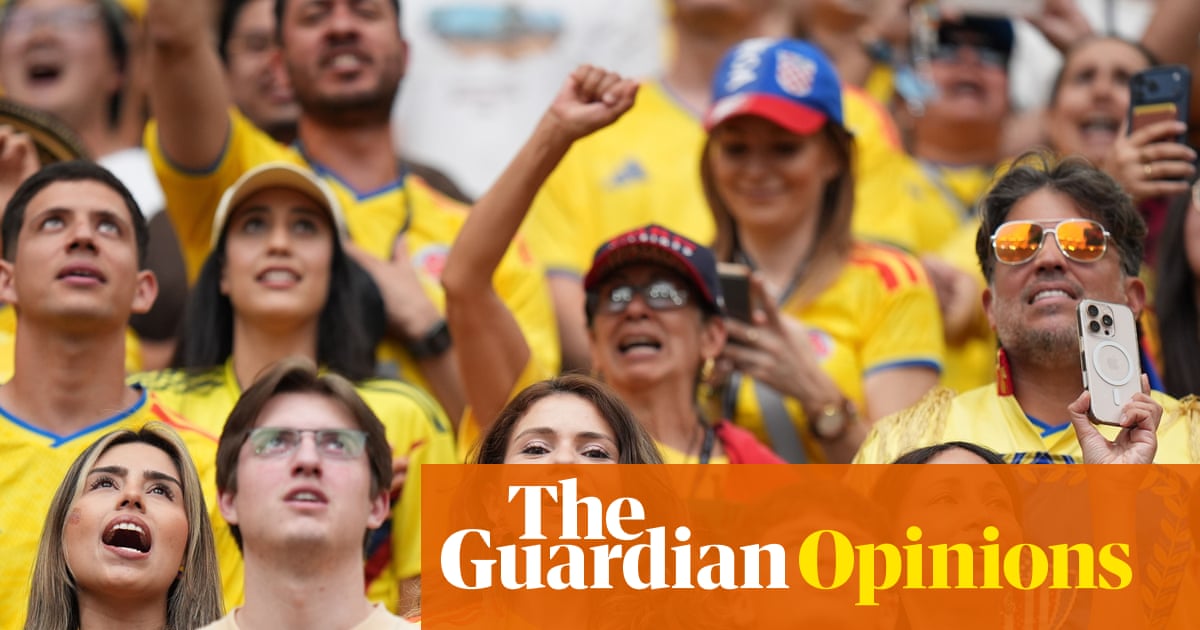
Of all the outrageous things Donald Trump has done, from bombing other countries to appeasing dictators, his sneaky interference in last week’s USA v Belgium World Cup match sparked by far the most united and furious reaction across the world. Condemnation was all but universal. Trump’s cheating heart cannot understand the unmatched, ubiquitous power that the “beautiful game” exercises over ordinary lives everywhere. It massively surpasses his own. The world truly loves football. It doesn’t love him. And then USA lost the match anyway. Karma. This modern morality play joyously illuminated the limits of authoritarianism.
In an age dominated by overbearing, illiberal economic and military powers, the men’s World Cup is upending the conventional geopolitical pecking order and power balances in refreshing and instructive ways. In this alternative universe, smaller nations – and ordinary people – can and often do get a bigger shout. Despite huge state investment in all aspects of the game, China again failed to qualify. Russia, never much good at football in the first place, was kicked out after invading Ukraine. And despite all Trump’s Maga hooliganism, the US remains soccer small fry. So much for superpowers.
Tiny Belgium was understandably shocked by Fifa’s rule-shredding decision to reinstate a red-carded USA player, Folarin Balogun, at Trump’s furtive request. The riposte came on the pitch. The co-hosts were crushed 4-1 on an evening when the entire world beyond the US seemed to be rooting for Belgium. This was a triumph of democratic as well as sporting significance. The machinations of a megalomaniac bully and an organisation infamous for corruption and greed were thwarted. In the tournament’s early stages, a clutch of underdog countries also proudly defied the powers-that-be. Give it up for Cape Verde, Curaçao and DR Congo! How often do you hear that?
The fact eight of the planet’s 10 most populous countries are absent from the world’s largest-ever sporting event represents another saturnalian upheaval in the traditional order. India is often described, along with China, as the 21st century’s new big hitter. Yet despite a world-beating total population of nearly 1.5 billion, including millions of football fans, it has always struggled to get past the World Cup qualifying stages. Two other emerging powerhouses, Indonesia and Nigeria, are also absent. Meanwhile, minnows such as Ecuador and Bosnia and Herzegovina have scored big on the world stage.
This tournament is a much-needed if temporary distraction at a time of record levels of military and geopolitical conflict. Fifa predicts three-quarters of the global population will engage, directly or indirectly, with what it calls “the greatest event humanity has ever seen”. Co-host Mexico’s experience speaks to its salutary effects. The initial performances of El Tri (as Mexico’s team is known) triggered national jubilation and drew attention away from political tensions and disappearances. Drug cartel-related bloodshed reportedly fell. Now Mexico faces a regression after El Tri were knocked out by England.
On and off the pitch, the finals have become an exhilarating, colourful celebration of bottom-up multiculturalism and racial diversity – the very best kind of rebuke to Trump, Nigel Farage and their ilk. Teams of players from all conceivable backgrounds, performing to the highest levels, have set an inspiring example to a watching world that is persistently told its societies are divided and broken beyond repair. The carnival-like welcome afforded to travelling fans by Americans from Texas to Massachusetts gives the lie to the angry, migrant-hating, xenophobic image of the US created by the White House. Perhaps this – and the prospect of mocking Jeffrey Epstein-related crowd chants – is why Trump is yet to attend a match.
Ugly moments have not been lacking, notably the unjustified US exclusion of Omar Artan, a top-ranked Somali referee, and vindictive official harassment of Iran’s national team. Widespread condemnation of racist slander aimed at Kylian Mbappé, the top French goalscorer, by Celeste Amarilla, a Paraguayan senator upset by her team’s defeat, suggests a gratifying shift in public attitudes. Yet Mbappé needed no defending. In a withering reply, he spoke for all the world’s less-celebrated victims of abuse. Amarilla had disgraced Paraguay’s good name, he said. Latest score: Mbappé 8, Bigots 0.
Like preceding competitions in Russia and Qatar, this World Cup is succeeding despite, not because, of Fifa and its oleaginous boss, Gianni Infantino. Fifa’s rip-off racket of dynamic ticket pricing and overpriced merchandise reflect Infantino’s priorities: power and money. He shamelessly sucked up to Vladimir Putin in 2018, telling him the world was “in love” with Russia. Qatar’s autocratic rulers got the same treatment in 2022. The plight of jailed dissidents and exploited migrant workers was ignored. Infantino employed similarly greasy tactics to woo Trump, awarding him a bogus “peace prize” while abandoning fans from Haiti, Côte d’Ivoire and Senegal who the White House had banned from entering the US. Infantino told Trump he was “a leader that cares about the people”. Pass the sick bag, Alice.
Infantino’s unprincipled behaviour and Fifa’s shortsighted greed, a stain on this World Cup, may help to further upend the sporting and political status quo. The strains are showing. The European football association, Uefa, is at daggers drawn with Fifa over the USA-Belgium red card row and issues such as Russia’s reinstatement. Uefa has rejected newfangled hydration breaks, is guaranteeing low ticket prices at the 2028 European Championships and has pointedly given a plum appointment to Artan, the victimised Somali referee Fifa failed to defend. This split neatly mirrors the geopolitical gulf separating Trump and his fellow authoritarians from Europe’s democracies.
after newsletter promotion
African countries, present in greater numbers at this World Cup than ever before, also want a bigger say in how things are run. When Egypt’s manager, Hossam Hassan, claimed his team were unfairly penalised because Fifa wanted to ensure the reigning champions, Argentina, and their box office mega-star Lionel Messi were not eliminated, he hit a nerve. “It’s all about money. They want Messi to stay in the tournament,” Hassan said after Egypt’s narrow, controversial defeat to Argentina. “In football, many things happen off the pitch because of interests. What happened was unfair.” Troubling questions now loom over the 2030 World Cup, to be hosted by no fewer than six countries. In football as in politics, the old monopolistic hierarchies are wobbling and splintering.
Conventional wisdom says World Cups don’t really change anything, that everyone gets excited, there’s a lot of talk about a world united by the beautiful game, the contest kicks off, England lose on penalties, somebody else wins and then it’s back to club football – and politics – as usual. After France’s fabled multiracial team won in 1998, the demise of the French far right was widely anticipated. It never happened. Yet maybe this time, as the tournament approaches a thrilling climax and despite Trump and Fifa doing their worst, there will be a lasting World Cup bounce in the direction of greater global fairness and equality. It’s a worthy goal.







Leave a comment