
This week’s election returns confirm that money can’t buy politicians love
 adminUpdated 1 hour Ago2 Mins read
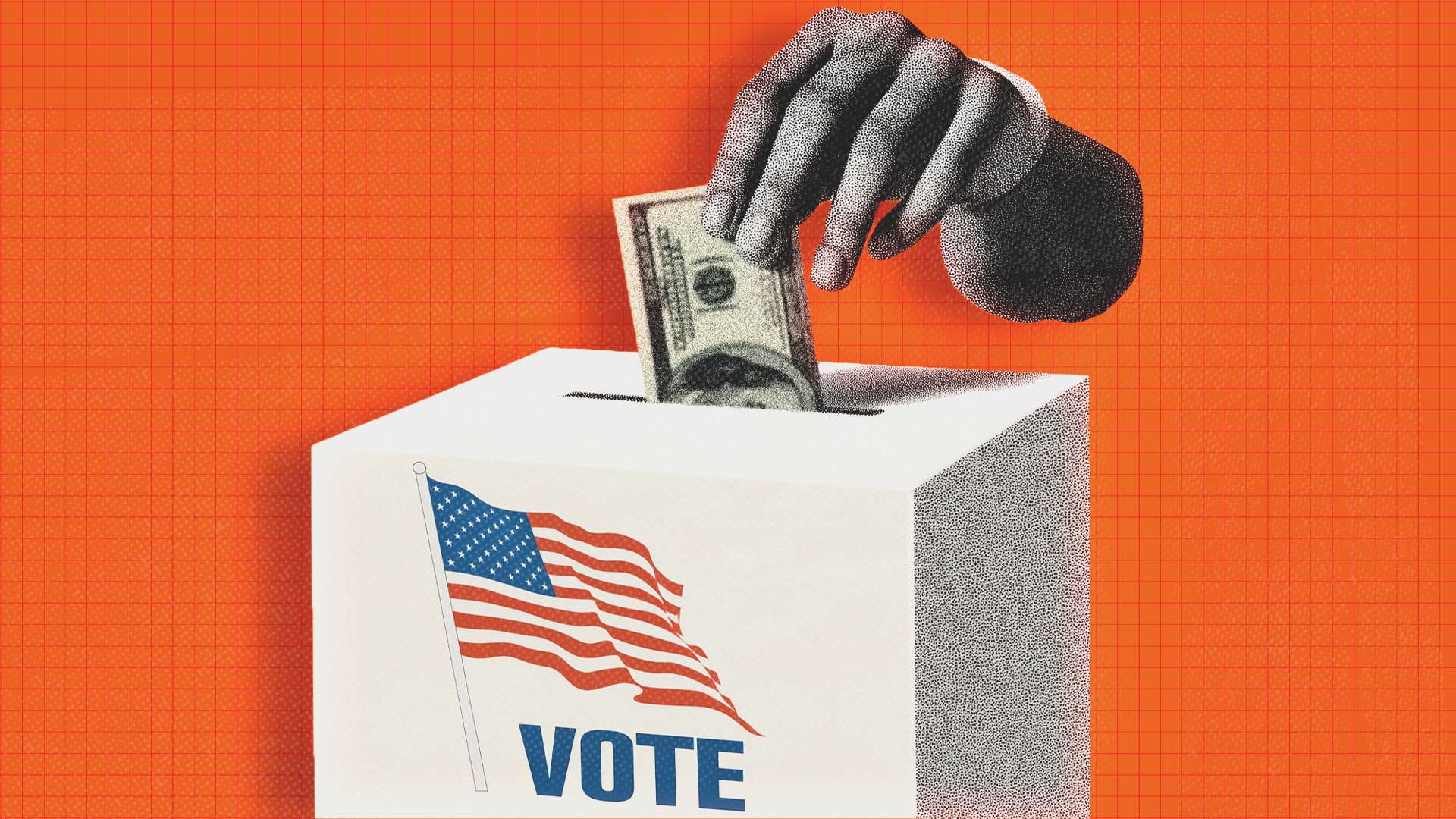
The U.S. Senate race in Texas was by far the most expensive contest in this year’s midterm elections. In fact, according to AdImpact, it was the “most expensive non-presidential race on record,” prompting ad spending that totaled $573 million as of October 30. But although Republican nominee Ken Paxton had a sizable financial advantage over his Democratic opponent, James Talarico, he nevertheless lost the election by 12 points.
That conspicuous example is one of several reminders from Tuesday’s election results that money can’t buy politicians love, contrary to the assumptions of campaign finance reformers who see speech in the form of ad spending as a grave threat to democracy. In one race after another, candidates prevailed over better-financed opponents, sometimes dramatically.
Pro-Paxton spending in the general election totaled more than $333 million, including $212 million kicked in by Elon Musk, the world’s wealthiest man. That was about 35 percent more than the $246 million or so mustered by Talarico’s campaign and his outside supporters. But it was not enough to prevent Texans from electing a Democratic senator for the first time in nearly four decades.
Paxton lost largely because of his close association with President Donald Trump—the same reason he prevailed against incumbent Sen. John Cornyn in the Republican primary. Trump’s favor evidently was enough to overcome Cornyn’s vastly superior financial resources. Although Cornyn and his supporters outspent Paxton and his allies by more than 3 to 1, Paxton trounced Cornyn in their head-to-head match, winning by more than 27 points.
In addition to beating Paxton in the general election, Democrats won several other statewide contests in Texas, defeating Republicans in the elections for governor, lieutenant governor, attorney general, and railroad commissioner. They also have leads in the races for comptroller, land commissioner, and agriculture commissioner. That sweep is remarkable enough given recent Texas political history, and it is especially striking because Republicans outspent Democrats by more than 5 to 1.
In the governor’s race, The Texas Tribune reports, Greg Abbott, the three-term Republican incumbent, outspent Gina Hinojosa, his Democratic opponent, by nearly 8 to 1. Hinojosa won by seven points.
Beyond Texas, big spending likewise was no guarantee of victory. In the Ohio gubernatorial race, Republican nominee Vivek Ramaswamy and his supporters outspent Democratic nominee Amy Acton and her allies by nearly 3 to 1. Acton won by eight points.
Republican candidate Rick Jackson spent more than $200 million of his own money on his campaign for governor of Georgia. As of October 20, spending on Jackson’s behalf totaled $234.6 million, compared to $26.5 million for Democratic nominee Keisha Lance Bottoms. Despite that 9-to-1 financial advantage, Jackson lost the race by more than eight points.
These results might be dismissed as anomalous, the product of anger at the party of an unpopular president whose war, tariff, and deportation policies, combined with his constant self-aggrandizement and presidential profiteering, alienated Americans who otherwise might have voted for Republicans. But there are plenty of similar examples from prior elections, including all the money squandered on failed political campaigns by billionaires such as Michael Bloomberg, Tom Steyer, Meg Whitman, Linda McMahon, and Carly Fiorina.
I am not saying that money does not matter at all. The ability to fund campaign ads is vital for the same reasons political speech in general is vital, and money may be crucial to gain name recognition, communicate with voters, and motivate potential supporters, especially for candidates challenging incumbents who have all the advantages that come with holding public office. But as Reason‘s J.D. Tuccille notes, “there’s little evidence that political advertising works” if it aims to change people’s minds. He cites a 2020 study that found advertising’s “effect on whom individuals intended to vote for” was “a statistically insignificant 0.007 of a percentage point.”
That experimental result, the authors noted, was consistent with prior research indicating that “average effects of persuasive messages are small.” And that conclusion jibes with real-world experience, which has repeatedly shown that ad spending cannot make up for the manifest defects of candidates like Ken Paxton.






Leave a comment