
Trump’s new DOJ nominee wants to ban online porn and prosecute Big Tech
 adminUpdated 2 hours Ago10 Mins read
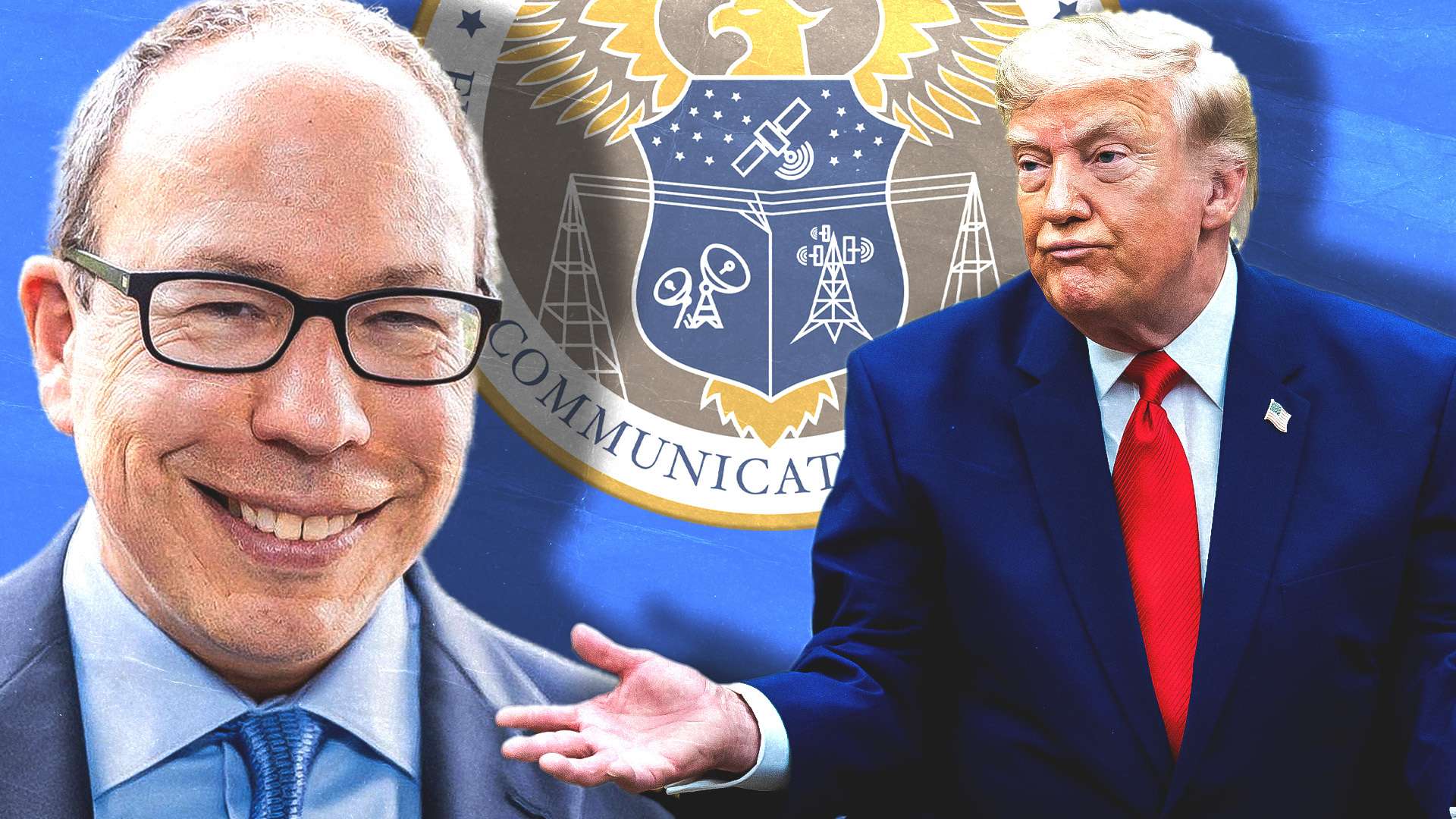
Just when I thought that Biden-era antitrust antagonism against tech companies was starting to fade, President Donald Trump has nominated Adam Candeub to lead antitrust enforcement at the Department of Justice (DOJ).
Currently serving as general counsel for the Federal Communications Commission, Candeub recently penned a report about how we need to criminalize pornography in order to protect marriage and promote human flourishing. Earlier generations, which he calls on us to emulate, took “measures to curb access to [sexual material] so that sexual desire could be channeled more easily into marriage,” he wrote.
You are reading Sex & Tech, from Elizabeth Nolan Brown. Get more of Elizabeth’s sex, tech, bodily autonomy, law, and online culture coverage.
Lest there’s any doubt that Candeub doesn’t simply want to target hardcore porn, he scoffs at 20th century judges who “imagined they had a moral duty to protect James Joyce’s Ulysses.”
That escalated quickly, no?
Candeub also appears to take an expansive view of antitrust enforcement, at least when it comes to Big Tech companies. In a chapter of the Heritage Foundation’s infamous Project 2025, Candeub suggests taking social media’s effect on our happiness into account when considering whether these platforms are violating antitrust laws.
In “Restoring Obscenity Regulation in an Internet Age,” put out by the Heritage Foundation, Candeub applauds the Supreme Court’s 2025 decision in Free Speech Coalition v. Paxton, which allowed for mandatory ID checks on websites with content that lawmakers deem “harmful to minors.”
He also wants to take things further: “This decision opens the door both to a reconsideration of the current legal structure governing obscenity and, perhaps, to a return to the regulatory approach of the past,” he wrote.
In the past, “speech restrictions that [furthered] public morality” were cool and “common law courts could sanction as libel ‘any writings, pictures, or the like, of an immoral or illegal tendency,” noted Candeub. In New York, the 1866 Obscene Literature Act “made it a crime for any person to sell or give away any ‘obscene and indecent’ book, pamphlet, drawing, painting, or photograph.” Courts honored what was known as the Hicklin standard, under which determining whether material counted as criminal obscenity turned on whether it would “deprave and corrupt those whose minds are open to such immoral influences” and “states brought legal actions against Theodore Dreiser’s An American Tragedy, D.H. Lawrence’s Lady Chatterley’s Lover, Arthur Schnitzler’s Reigen, James Joyce’s Ulysses—and even books like Cupid’s Yoke, a polemical critique of marriage that recommended sex outside of conjugal bonds.”
Are these the regulatory approaches of the past that Candeub wants to emulate? He doesn’t explicitly endorse prosecuting people for literature. But he does go on to call our current approach to enforcing anti-obscenity laws “a social suicide pact.”
Candeub might not want to start arresting sellers of Ulysses again today, but he does propose increasing online surveillance to enforce blocks on minors viewing sexual content (“age estimations can be made simply by analyzing publicly available online information such as your email address or even pictures of your hand movements”). And he advocates for using state and federal laws to prosecute porn websites and other online entities through which people might find porn.
“The most optimistic result under current law would be…obscenity actions for internet-distributed pornography in state courts; the existing federal laws, specifically the modern version of the Comstock Act, prohibit obscene material from interstate transmission,” he wrote. “Motivated state and local prosecutors could still get convictions in conservative communities, and national prosecutors could go against the big platforms like Google, which do not enjoy immunity from federal laws, for distributing obscenity.”
Lest anyone think that Candeub’s animosity toward internet entities only involves the sexual, Michael McGrady notes that “he also was a key player in the first Trump administration’s effort to get rid of Section 230.”
“Candeub’s arguments are about far more than pornography,” suggests McGrady. “He is contributing, from his position as a top government legal official, to a much broader effort to revive long-discredited obscenity and vice legal doctrines and expand government authority over lawful expression and activity.”
As we’ve seen all too often over the past couple of decades, efforts to regulate the internet on the grounds of stopping porn, sex work, or sexual exploitation are all too often test cases for going after online speech and privacy more broadly.
But, you might ask, what does antitrust enforcement have to do with free speech?
Perhaps plenty, if Candeub-style antitrust maximalism starts taking off.
In his Project 2025 chapter on the Federal Trade Commission (FTC), Candeub signaled that he’s open to the kind of perversion of longstanding antitrust theory that we saw from Biden-administration appointees like former FTC head Lina Khan and White House policy adviser Tim Wu.
“Despite their enormous size, [large internet platforms] have avoided significant antitrust liability or prosecution,” Candeub wrote in Project 2025. “The reasons for this are not entirely clear.”
He admitted that Big Tech companies “have been incredibly innovative and have generated tremendous efficiencies for our society, with little to no evidence of traditional consumer harm in the form of higher prices, reduced output, or a lack of innovation.” He further pointed out that “Americans report a high level of satisfaction in and trust regarding these companies.”
But in deciding whether to go after Big Tech platforms with antitrust law, perhaps “traditional economic thinking” is inadequate, Candeau suggested.
After all, “social media makes Americans less happy,” he wrote. “The FTC should be open to behavioral explanations, such as habit and small hedonic differences, as keys to
how platforms create and keep market power.”
That sure sounds like a suggestion that the U.S. use antitrust law to investigate and possibly prosecute Big Tech companies for making their platforms too likable. And whatever you think about Big Tech companies, that would be an absurd expansion of government antitrust enforcement power—and set a precedent that could be used to go after all sorts of industries.
Candeub’s chapter isn’t all bad. He decries “regulatory capture” and the “‘de-banking’ of industries and individuals.” He says that the FTC “must consider…the role of government itself in maintaining market concentration.”
But he also derides concentrated economic power for “undermining small businesses and reducing their salubrious moral effect on American civil society”—again, shades of Kahn and Wu, who both argued that large size alone could be reason to regard a company as suspect.
That’s not a great sign for Google or Apple. As DOJ antitrust head, Candeub would “take over DoJ’s ongoing antitrust matters involving Big Tech, including Google’s appeal of the landmark ruling deeming it an online search monopoly and the department’s 2024 lawsuit accusing Apple of illegally monopolising smartphone markets,” notes the Financial Times.
The Times points out that “in Trump’s first administration, Candeub helped execute the president’s executive order cracking down on Big Tech over allegations that it muzzles conservative speech.” And, in his Project 2025 chapter, he alludes to “collusion” between the Biden administration and Big Tech companies to suppress the Hunter Biden laptop story.
The pressure put on large internet platforms by that administration—around the laptop story and other things—was certainly not good. But neither was the Trump administration’s response. And saying sites lose Section 230 protection if they’re not politically neutral would only lead to more government meddling in online content.
In Project 2025, Candeub suggested the FTC should investigate whether businesses are using “fashionable moral beliefs” like diversity, equity, and inclusion (DEI) or environment, social, and governance (ESG) for nefarious purposes. Additionally, “Congress should investigate ESG practices as a cover for anticompetitive activity and possible unfair trade practices,” he wrote.
One need not like or support every harebrained corporate social responsibility scheme to understand how the federal government attacking companies over those policies is worse.
Ditto for government going after companies that refuse “to service a lawful activity, i.e., fossil fuel extraction or gun manufacturing.” It’s one thing to suggest that such policies are bad for business, unethical to shareholders, needlessly political, or so on. It’s quite another to say we need the federal government investigating whether companies are engaging in a “political or social agenda that is unrelated to any conceivable branding” and punishing them if so.
Overall, Candeub appears comfortable wielding antitrust enforcement to accomplish government social goals, just as Kahn and other Biden-era officials did. Their goals may differ, but it’s the same expansive enforcement vision.
Online “duty of care” bill to move forward again. A new version of the Kids Online Safety Act (KOSA), from Tennessee Republican Sen. Marsha Blackburn, will get a markup in the Senate soon, and possibly this month. Blackburn has been opposing the heavy-handed House web-safety bill—but only because, in her opinion, it doesn’t go far enough.
Blackburn wants to impose a “duty of care” on tech platforms that would effectively be an unprecedented online censorship machine, legally requiring tech platforms to shield minors—and, by extension, the rest of us—from exposure to all sorts of content.
It’s at least heartening to hear Sen. Ted Cruz (R–Texas) dismiss the new KOSA’s chances of passing. “It’s not clear to me at all that there are 60 votes for it,” Cruz said Tuesday, “but I am happy to have a markup and see where the votes are.”
“Blackburn’s package also could include the NO FAKES Act—which would create new restrictions on AI deepfakes—and the Apps Store Accountability Act—which would require minors to obtain parental consent before downloading apps—according to a person granted anonymity to share private negotiations,” reports Politico.
Let’s clear something up: the Long Island serial killer case is not evidence that the Nordic Model works. And yet it was presented like a smoking gun – as if a man capable of stalking, torturing, and killing multiple women was one solicitation charge away from a moral awakening.
— SWOP Behind Bars (@swopbehindbars.bsky.social) 2026-07-21T22:15:06.400Z
More data that challenges “the end of reading” narrative. New York Times opinion writer David Wallace-Wells writes that he finds himself “growing more skeptical of the simplistic story that reading is going extinct,” along with other simplistic tech stories:
We tell ourselves that the smartphone has brought about fertility decline, for instance, though those declines have been going on for three-quarters of a century. We tell ourselves phones have produced a teen mental health crisis, though in global surveys there is no obvious pattern to observe. We tell ourselves social media is the reason we have such intensely polarized politics, while failing to look at the historical patterns around the arrival of cable TV. That’s not to say that smartphones aren’t affecting any of these things. It’s to say that no matter how ubiquitous, phones are just one piece of a very messy social landscape, which rarely shifts uniformly in one direction thanks to one discrete variable, let alone inevitably toward disarray and decline.
Wallace-Wells points out three key problems with the end-of-reading narrative recently promulgated by The Atlantic (which I also covered last week under the main section of this newsletter):
- Average time spent reading daily was brief even before smartphones.
- It hasn’t declined that much (16.2 minutes per day in 2025, down from 21.9 minutes in 2003).
- Older Americans are the ones driving the decline, while the amount of time spent reading has actually increased for Americans ages 15 to 24 and those aged 25 to 34.
So while reading comprehension may indeed be falling, “when you zoom out to take in decades of data, some recent declines are almost invisibly modest and others are higher than they were 50 years ago,” notes Wallace-Wells:
Periodically, you’ll hear lamentations that Americans don’t spend enough time reading to their children, though the amount of time spent doing so hasn’t declined over decades but actually crept up in recent years instead. And if you are imagining an idyllic earlier period in which parents devoted hours reading books to their children each day, you might want to know that in 1968 Nielsen reported that children under 6 were watching, on average, 54 hours of television each week.
Fifty-four hours?! I’m with Wallace-Wells that that seems “improbably high.” But, as he points out, time with television on doesn’t necessarily mean it was being watched exclusively or closely. In any event, that and other historical data on TV watching—U.S households had the TV on for an average of seven hours per day in the 1980s, for instance—suggest that some imagined utopia wherein we were eschewing screen time for more cerebral pursuits is, at the very least, long passed.
Intelligence isn’t everything. Ruxandra Teslo argues that AI-enabled medical breakthroughs are not enough—we need to get rid of “regulatory bottlenecks to medical progress,” too. “No matter how ‘intelligent’ AI becomes, intelligence is often not the main bottleneck to things changing in the real world,” Teslo points out:
One of the promises most often invoked to justify AI’s risks is that it will “cure disease.” Every major AI lab CEO says it, and investors seems to agree: any biotech startup with an AI story attached commands an impressive valuation, even as more conventional biotechs struggle for funding and die. But this whole enterprise, as I have long argued, is bottlenecked by many things that have little to do with “intelligence” as such, and the degree to which that often goes unacknowledged is strange to watch.
The evidence is everywhere, if you treat scientific advancement as a rough proxy for intelligence and ask whether it alone unblocks progress. Take Eroom’s Law: the number of new drugs approved per dollar of R&D has fallen for decades, even as our scientific tools have grown vastly more powerful, the exact opposite of what the existence of more raw capability would predict. Or take a company like Adaptimmune, which has brought two transformative therapies to market in rare cancers and is nonetheless fighting to stay alive, due to the cost of developing them. Or one can listen to the scientists behind “baby KJ,” the infant saved by a bespoke gene-editing therapy: they have everything they need scientifically and still cannot easily repeat it for the next child, because manufacturing costs, driven in part by regulatory requirements, stand in the way.
Clinical trials are a huge bottleneck, and “even here the binding constraint is not entirely intelligence,” writes Teslo:
Quite often, it is governance. I keep talking to companies trying to build exactly these biomarkers, and what they run into, again and again, is how hard it is to access the underlying data. Some have been waiting for a year for the NIH to release imaging datasets they can use to produce better biomarkers. If one needs to interact with the FDA to get their endpoint validated, it is even worse: I have previously written about how the validation of Bone Mineral Density (BMD) for use as a surrogate endpoint in osteoporosis trials took 12 years (!), despite the fact that the data to support it already existed in full and the analyses done were basically regressions.
More here.
Americans of all ages are having less sex than they used (per @ryanburge). What are the main reasons? Watch this great @OpentoDebateOrg discussion I (a Boomer) led with a Gen Xer, Millennial, and Zoomer: https://t.co/WAVdLcUje8 pic.twitter.com/kx0nGnLxpH
— Nick Gillespie (@nickgillespie) July 20, 2026
• “France has become the first country in the European Union to ban children under 15 from using social media after lawmakers overwhelmingly approved the measure on Tuesday,” Daily Beast reports. French President Emmanuel Macron “hailed the vote on X, declaring that ‘social media will be banned for children under 15 starting this school year.'”
• Sen. Josh Hawley (R–Mo.) is calling on the Department of Justice to criminally investigate an abortion pill manufacturer and Plan C, a group that informs people about how to get abortion pills in the mail. He suggests they may be guilty of criminal conspiracy, despite the fact that abortion pills are legal at the federal level and so is shipping them.
• Government-owned AI is a terrible idea, suggests Michael Bloomberg. “When the government becomes a shareholder in a private-sector entity, the positive effects of market competition can break down. Politics trump profits, favoritism and cronyism take root, innovation suffers, competitiveness erodes, and regulation is corrupted.”








Leave a comment