
Trump’s tariff war is becoming a Republican campaign problem
 adminUpdated 2 hours Ago4 Mins read
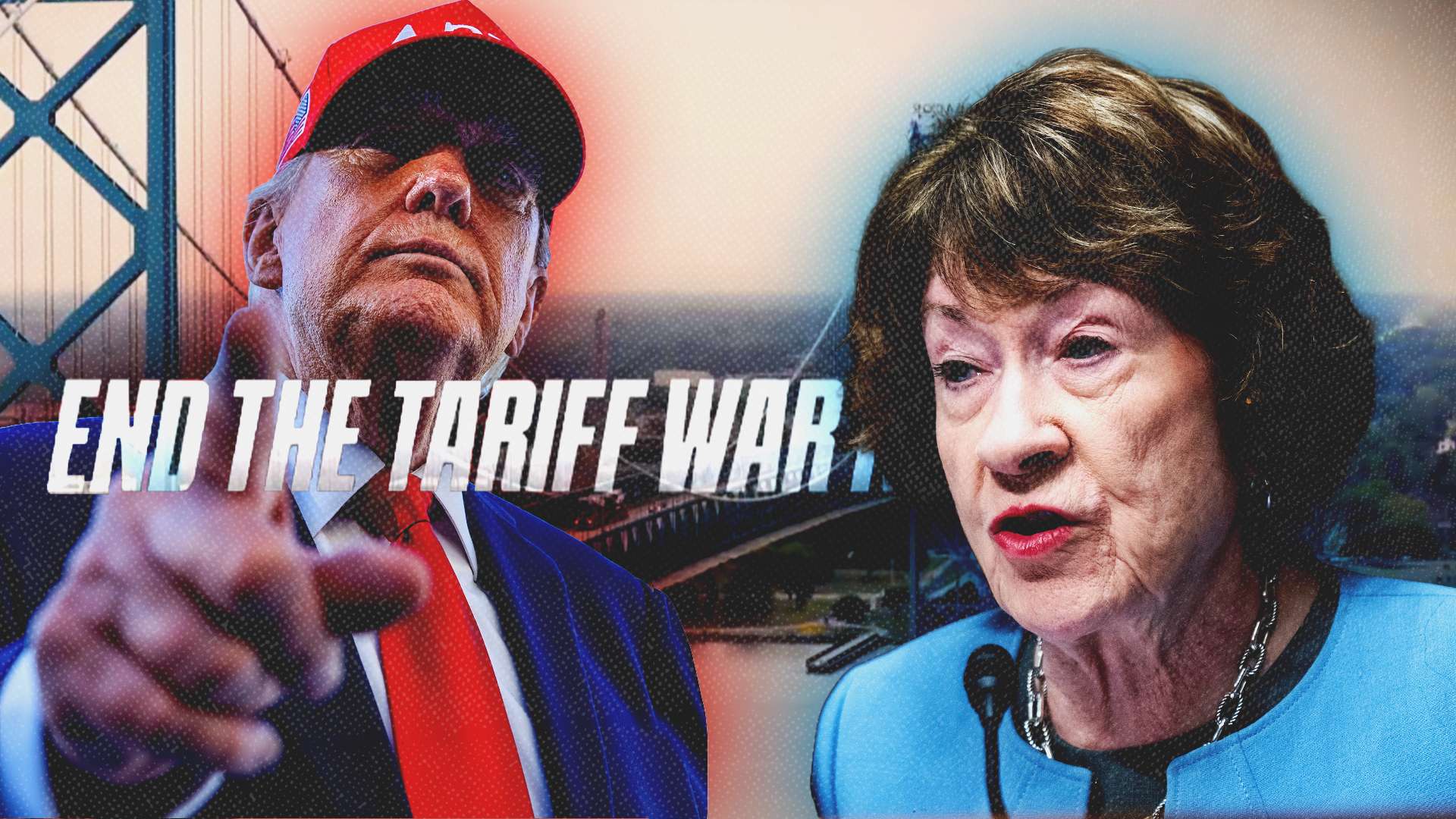
With the midterm elections now less than a month away, Republicans are finding it more difficult to hide from the obvious consequences of the Trump administration’s trade policies—and some are publicly challenging the tariffs.
That’s especially true in states along America’s northern border, where trade with Canada has long been a key part of the local economy. President Donald Trump’s trade war with Canada—which includes a 50 percent tariff on a wide range of Canadian goods, as well as an outright import ban on Canadian alcohol and dairy products—is putting GOP candidates in the awkward position of trying to highlight their limited attempts at curbing the administration’s tariff-hiking policies.
Take Sen. Susan Collins (R–Maine). During a televised debate on Tuesday, Collins clashed with her Democratic opponent—logger and former state lawmaker Troy Jackson—over the tariffs. Collins pointed out that she successfully pushed the administration to exempt road salt and cement from its tariffs on Canadian imports.
Jackson pounced. “What about everything else?” he asked. “I mean, we, we can’t eat road salt.”
Collins: I was successful at getting road salt removed from the tariff list.
Jackson: What about everything else? We can’t eat road salt. With everything she’s doing with the Iran war, there will be so many less people that can afford to drive that I’m not even sure the road… pic.twitter.com/67ZBrn0CV3
— Acyn (@Acyn) October 7, 2026
It’s the sort of moment that campaign consultants dream about—or that gives them nightmares. A one-liner that pinned Collins to the rising prices caused by Trump’s tariffs, and to the Republican Party’s flaccid response. No wonder it has been making the rounds in the media this week.
In reality, Collins has been one of the least acquiescent members of the Senate on the tariff issue. She has repeatedly informed the administration about how the tariffs are hurting businesses and communities in Maine. She cheered the Supreme Court’s ruling that blocked some of Trump’s tariffs. She has voted for resolutions to cancel tariffs, and she has introduced legislation to create more tariff exemptions.
If there were more Republican senators like Collins, then Republican senators like Collins probably wouldn’t be getting grilled over the tariffs. In that reality, Congress might have done its job and stood up to the administration’s reckless and costly trade wars.
Unfortunately for Collins, she lives in this reality, where she has to campaign for reelection among voters are fed up with Trump’s trade policies. A recent Morning Consult poll commissioned by the Cato Institute found that 74 percent of registered voters understand that tariffs have raised prices; majorities say the tariffs have been a tax on Americans and have weakened the U.S. economy.
The biggest red flag for Republicans heading into the midterms: 75 percent of registered voters in that poll said the tariffs “will be important to their vote.” Yikes.
Think that survey is an outlier? The nti-tariff advocacy group We Pay The Tariffs has compiled a list of 45 polls showing that voters “hate tariffs.” That’s the environment Republicans face in the midterms.
The Trump administration is still refusing to face reality. Asked this week about the role tariffs are playing in this election cycle, Transportation Secretary Sean Duffy said, “I don’t think that’s going to come into play.” Why? Because this election is focused on “cost of living issues.”
Q: What’s the political risk of tariffs ahead of the midterms?
Sean Duffy: I don’t think that will come into play in this election cycle. This is an election around the cost of living. Trump has been incredibly focused on that. pic.twitter.com/XCpaHYtZhj
— FactPost (@factpostnews) October 5, 2026
Note to Duffy: It’s because this election is focused on cost-of-living issues that the tariffs are a factor. The tariffs are one of the reasons why prices keep rising.
On the campaign trail, Republicans are getting battered as Democratic candidates highlight the consequences of their party’s tariffs. In Texas, Senate hopeful James Talarico has highlighted how tariffs make it more difficult for restaurants to hand out free chips and salsa. That might sound a bit frivolous, but it’s actually a great point. Higher taxes on trade don’t just raise prices; they also erode prosperity at the margins and reduce our standard of living.
All of this could have been different. Speaker of the House Mike Johnson (R–La.) could have allowed votes on tariff-blocking bills in the House rather than relying on procedural shenanigans to protect Trump’s trade agenda from congressional checks and balances.
Republicans could have listened to Sen. Rand Paul (R–Ky.), who stood on the Senate floor in October 2025, a full year ago, to remind his fellow lawmakers that “taxation without representation is tyranny” as he backed a resolution to block some of Trump’s tariffs. (It passed, but it never got a vote in the House, thanks to Johnson.)
“The unwillingness of Republicans to serve as a check on Mr. Trump’s use of executive authority under almost any circumstance has strengthened the argument that a Democratic majority in Congress is needed to check Mr. Trump’s power,” wrote Phil Gramm and Don Boudreaux in The Wall Street Journal last month. They predicted “a Republican backlash against Mr. Trump’s tariff policies” after the midterms.
The backlash might be arriving even sooner. In Michigan, GOP Senate candidate Mike Rogers released a new ad this week calling for an end to the “tariff war” with Canada and promising to lower prices.
Prices are too high and Canada is not our enemy. We need to end the tariff war — now.
In the Senate, I’ll bring both parties together to lower costs and put Michigan families first. pic.twitter.com/D5DLkBBdpn
— Mike Rogers (@MikeRogersForMI) October 7, 2026
The commercial is somewhat disingenuous, since Rogers has a long track record of cheering for Trump’s tariffs and has previously called the trade war with Canada “necessary.” He’s also supported legislation that would give presidents even more power to unilaterally impose tariffs.
Rogers is the inverse of Collins. The senator from Maine has tried to push back against the tariffs, though her efforts have been hampered by her fellow Republicans. Rogers is trying to reinvent himself as a tariff critic in the final stages of a campaign that he seems to be losing.
If that doesn’t work, Michigan Republicans will have only themselves to blame. After all, they could have nominated a principled opponent of tariffs and advocate for free markets—former Rep. Justin Amash—for that Senate seat.
This is the bed the GOP has made for itself by supporting Trump in three straight presidential races, by standing by as his administration raised taxes on American businesses and consumers without congressional approval, and by ignoring the economic and polling data for the past two years.
Trump is asking midterm voters to “pretend, please, that I am on the ballot.” For many Republicans campaigning this fall, that might be exactly the problem.












Leave a comment