
Washington professor who mocked ‘land acknowledgment’ gets $600,000 settlement
 adminUpdated 22 minutes Ago4 Mins read
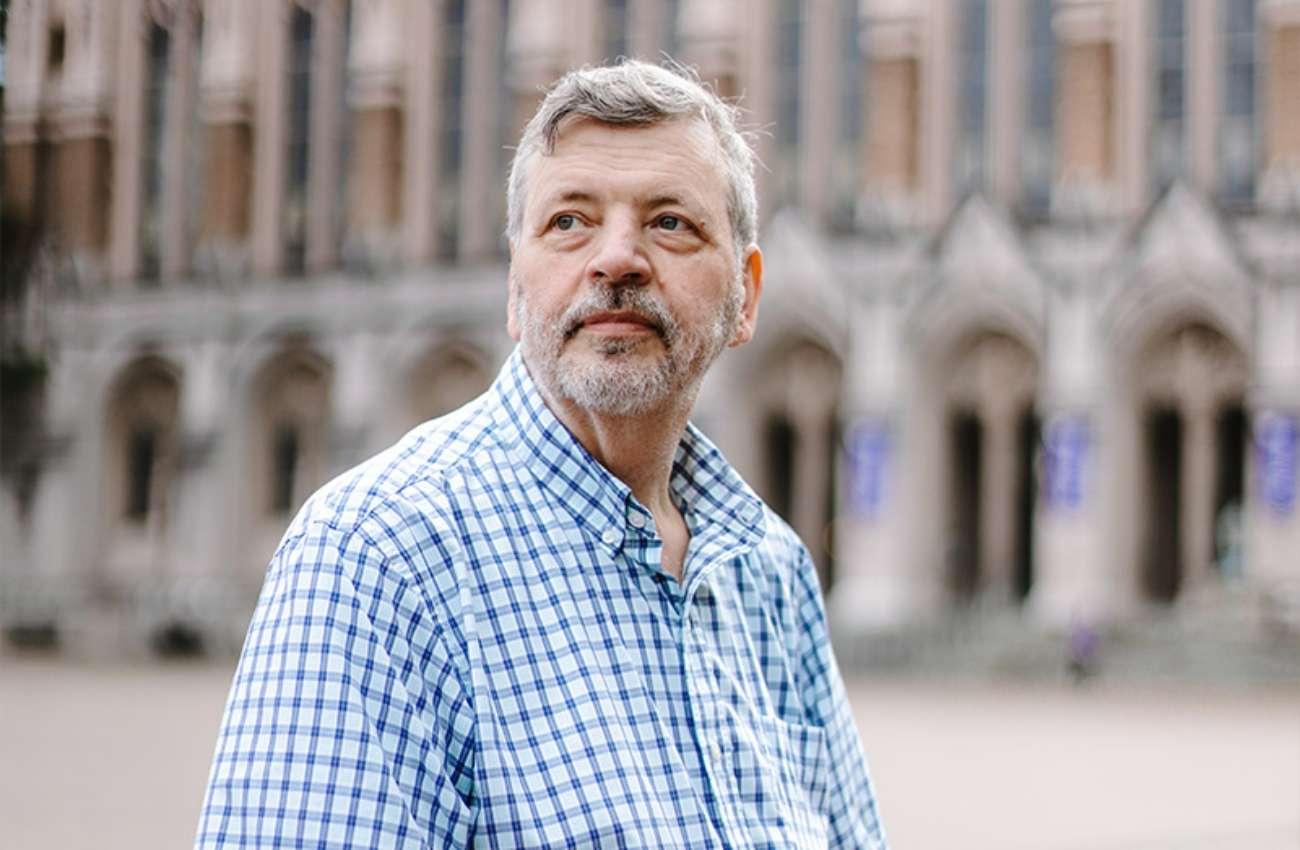
Stuart Reges, a University of Washingston (UW) professor who in 2022 was reprimanded and investigated for mocking a “land acknowledgment,” last week received $600,000 as part of an agreement that settles the ensuing First Amendment lawsuit. But Reges did not get an apology or an admission of wrongdoing from the Seattle university, whose spokesman still insists that “we acted appropriately.”
The U.S. Court of Appeals for the 9th Circuit disagreed last December, when a divided three-judge panel ruled that UW administrators violated Reges’ First Amendment rights by subjecting him to an inquisition that lasted nearly a year, during which he was denied a merit pay increase, based on his alleged violation of the university’s vague “antiharassment” policy. According to the 9th Circuit’s decision in Reges v. Cauce, the state university retaliated against Reges for protected speech and engaged in viewpoint discrimination, which is presumptively unconstitutional.
“They broke the law, but refuse to admit it,” Reges writes in the New York Post. “I am astonished that the university still insists that it behaved appropriately.”
The UW investigation was prompted by a statement that Reges included in the syllabus for the introductory computer science course he has taught for more than two decades: “I acknowledge that by the labor theory of property the Coast Salish people can claim historical ownership of almost none of the land currently occupied by the University of Washington.” Reges, a critic of “diversity, equity, and inclusion” (DEI) policies, was alluding to John Locke while making fun of a university-recommended syllabus statement that “acknowledges the Coast Salish peoples of this land, the land which touches the shared waters of all tribes and bands within the Suquamish, Tulalip and Muckleshoot nations.”
Reges saw the land acknowledgment as part of a DEI agenda that “treats some groups of students as more deserving of recognition and welcome than others on account of their race or other immutable characteristic.” He thought it was inappropriate to include such a “political statement” in his syllabus and questioned its factual premise, noting that “most of the land currently occupied by UW was densely forested before the land was cleared to make way for the campus.” He objected to the implication that “UW’s presence is somehow illegitimate, shameful, morally wrong, or unlawful,” and deemed the recommended statement “an empty, performative act of moralism.”
UW administrators viewed Reges’ dissent as intolerable, saying it had caused unacceptable “disruption” at the university. The 9th Circuit did not buy it. “Student discomfort with a professor’s views can prompt discussion and disapproval,” Judge Daniel A. Bress, a Donald Trump appointee, wrote in an opinion joined by Judge Milan D. Smith Jr., who was nominated by George W. Bush. “But this discomfort is not grounds for the university retaliating against the professor. We hold that the university’s actions toward the professor violated his First Amendment rights.”
Notwithstanding the university’s continued defense of its actions, the settlement agreement repudiates its treatment of Reges by leaving him free to express his views about land acknowledgments. It specifically allows him to include his parody in future syllabi and promises that the university will not offer “competing or ‘shadow’ sections of his courses” for students offended by it. It forswears “further adverse employment action” against Reges, “including but not limited to pursuing any investigation” or “withholding future salary increases.”
The university also undermined its take on Reges’ First Amendment claims by revising its “Nondiscrimination and Affirmative Action” policy, which administrators cited as the main justification for investigating him, while the case was pending. The official goal of that policy, embodied in UW’s Executive Order 31 (EO-31), was “promoting an environment that is free of discrimination, harassment, and retaliation.”
EO-31 authorized the university to discipline faculty members for “any conduct that is deemed unacceptable or inappropriate, regardless of whether the conduct rises to the level of unlawful discrimination, harassment, or retaliation.” On July 23, 2025, three years after Reges filed his lawsuit, UW rescinded EO-31 and replaced it with EO-81, which says discriminatory harassment must have “the purpose or effect of unreasonably interfering with an individual’s work or academic performance” or be “sufficiently severe, persistent, or pervasive” that it “could reasonably be expected to create an intimidating, hostile, or offensive work or learning environment.”
It is hard to reconcile that revision with the university’s claim that “we acted appropriately.” If that were true, there would have been no need to narrow the policy that Reges supposedly violated. And although the university argued that the “disruption” he caused was enough to justify its investigation, it is now willing to tolerate his dissent, which administrators previously claimed had created a “toxic environment” that had a “significant impact” on the “morale of Native American students” and “their learning,” describing “the level of disruption” as “extraordinary.”
The settlement “will remind public universities that they are obligated to respect the First Amendment rights of their students, faculty, and staff,” Reges said in a press release last Thursday. “I hope that my protest can help reverse a decade-long trend towards ideological conformity in academia and help to convince them that instead of ‘protecting’ students from controversial ideas, they should be helping them to learn how to cope with disagreement. Only then can we heal the deep divisions that confront us today.”
The Foundation for Individual Rights and Expression (FIRE), which represented Reges, says the settlement should not be viewed as a victory for any particular opinion about DEI or land acknowledgments. “Reasonable people can disagree about the value of land acknowledgments,” FIRE attorney Gabe Walters said. “What’s not up for debate is academic freedom. Today’s settlement vindicates Reges’s right to express his own opinion rather than toeing the university’s line. UW learned the hard way: Ignoring the First Amendment can be costly. The livelihoods of professors shouldn’t be at the mercy of student or administrator outrage, and this ruling will help protect other professors across the country.”







Leave a comment