
We need new reservoirs – and it’s a job for the state, not private companies | Water
 adminUpdated 43 minutes Ago1 Mins read
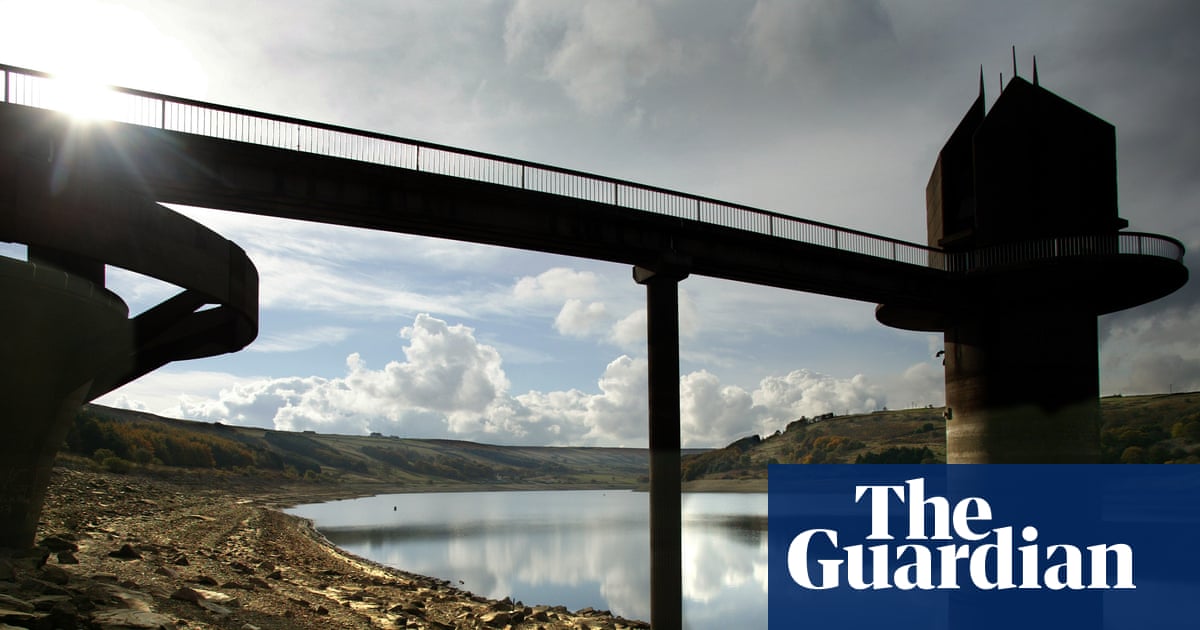
Pete Ford (Letters, 20 August) rightly reminds us that “The Victorians … built reservoirs, aqueducts and local water-storage infrastructure.” But who were these “Victorians”? Generally speaking, they were local councillors and their professional engineers.
Taking my own town as an example, within 40 years of its incorporation as a borough in 1868 it had built five new reservoirs, as well as taking over others previously provided by ad hoc groups of commissioners, with water delivered through 240 miles of mains. By 1897 it was one of 610 urban councils with their own water undertakings.
As recently as 1971, Queen Elizabeth opened Scammonden dam (a joint project of Huddersfield Corporation Waterworks and the Ministry of Transport, which also carries the trans-Pennine M62 motorway). With new reservoirs now urgently needed, perhaps the Burnham government will see this once again as an appropriate role for mayors and combined authorities, rather than failing private companies.
David Griffiths
Huddersfield, West Yorkshire
I so agree with Sheila Carey-Thomas’s suggestion that communal underground water storage could be incorporated into new housing estates to take advantage of our wet springs (Letters, 20 August).
Similarly, heat-exchange shafts could be sunk and shared to tap heat from underground. Surely, too, by locating any planned datacentres near new housing estates, the cooling water could be piped to centrally heat the houses, rather than wasted. All of the above could be incorporated into estates during the construction phase without adding hugely to the cost of each individual house.
Kevin Whately
Aspley Heath, Bedfordshire













Leave a comment