
Congress has a chance to fix the Endangered Species Act
 adminUpdated 38 minutes Ago3 Mins read
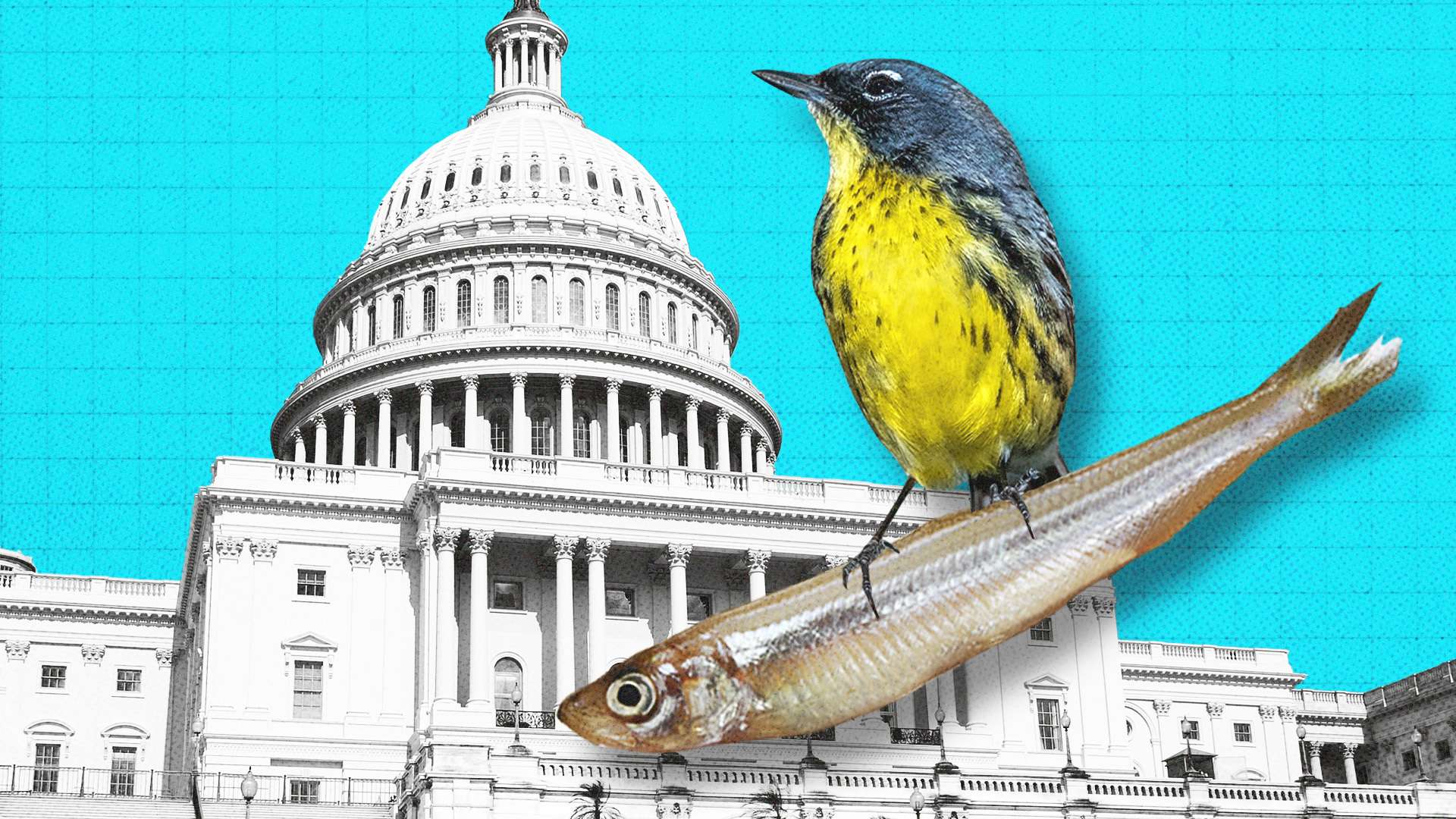
Next week, the Senate will consider a new permitting deal that promises to make it easier to build in America. From mines and pipelines to transmission lines and renewable energy projects, the Bipartisan American Affordability and Jobs Act (BAAJA) would prune our regulatory thicket that delays development and increases costs for commonsense projects.
While the bill’s proposed reforms to the National Environmental Policy Act have attracted much of the attention, its changes to the Endangered Species Act (ESA) are especially promising in helping the law achieve its goals while reducing unnecessary obstacles to infrastructure, energy production, and economic growth.
More than five decades after its enactment, the ESA has struggled to achieve its ultimate objective: recovering endangered species so they no longer need federal protection. Meanwhile, its regulatory requirements can discourage conservation and create costly uncertainty for landowners and businesses.
According to a 2023 analysis by the Property and Environment Research Center, just 3 percent of species listed under the ESA were delisted due to recovery. That’s 57 of 1,732 species over the law’s first 50 years. Meanwhile, the ESA’s costs are huge. Federal agencies spend hundreds of millions of dollars annually administering the law, but those expenditures capture only a fraction of its potential economic burden. The costs of delayed projects, restrictions on private property, and regulatory compliance remain largely unmeasured.
One major problem with the ESA is the uncertainty surrounding its application. The law requires federal agencies to rely on the “best scientific and commercial data available” when deciding on species protections. But Congress never clearly defined that standard, leaving agencies substantial discretion in determining what evidence is sufficient, and courts often defer to those judgments.
Consider the Delta Smelt, a fish, typically no longer than three inches, native to California’s Sacramento–San Joaquin River Delta. This small fish created big problems for California farmers. In a 2008 biological opinion, the U.S. Fish and Wildlife Service (FWS) concluded that two major water projects that deliver water from the Delta to California’s agriculture-rich Central Valley needed to reduce operations substantially to protect the endangered fish.
In practical terms, federal protections for the Delta Smelt meant restricting water deliveries to farmers in one of the nation’s most productive agricultural regions.
However, the scientific basis for that decision raised serious questions. The FWS’ biological opinion imposed onerous water-pumping restrictions when smelt caught in the pumps reached a certain threshold, without accounting for the overall smelt population. This departed from standard industry practice, as raw numbers provide little context for assessing threats to a species without population data. When challenged in court, the 9th Circuit Court of Appeals found that FWS had departed from standard scientific methodology. Nevertheless, it upheld the agency’s approach, deferring to its determination of the “best scientific data available.”
The Delta Smelt controversy illustrates a major flaw in the ESA: When Congress leaves a key scientific standard undefined, agencies can, and often will, exercise broad discretion over decisions that affect water supplies, private property, and economic livelihoods.
BAAJA would address this problem by establishing clearer scientific standards for such decisions. The bill defines best available science as “all relevant and objective scientific and commercial information available at the time of the agency action.”
It would also establish criteria for evaluating scientific evidence, including whether models account for potential errors and use accepted professional methods. These requirements would make ESA-related decisions more transparent and easier to evaluate, and would prevent agencies from putting a thumb on the scale when evaluating scientific evidence.
The bill would also give states a stronger role. State wildlife agencies frequently possess extensive population data and local expertise, yet federal decision making does not always adequately incorporate their findings. BAAJA would require federal agencies to consider specified scientific information submitted by states and create pathways for qualified states to conduct certain ESA consultations.
Perhaps most importantly for project developers, BAAJA would shorten the standard timeline for formal ESA consultations from 90 days to 60 days.
These consultations are required when federal projects may adversely affect protected species or their critical habitat. They can affect everything from mining operations to roads and energy infrastructure.
A 2015 study published in the Proceedings of the National Academy of Sciences found that approximately 20 percent of formal ESA consultations exceeded the applicable 135-day regulatory timeline. Some dragged on for years.
Shorter deadlines won’t eliminate every permitting delay. But they could help prevent prolonged reviews from creating unnecessary uncertainty and expense for businesses seeking to invest in American infrastructure.
Taken together, the proposed reforms would make ESA administration more transparent, predictable, and efficient while preserving its conservation responsibilities.
After more than 50 years, Congress has an opportunity to reform the ESA to ensure it is serving both wildlife and the people whose cooperation is essential to conservation. Protecting endangered species and allowing Americans to build, invest, and develop natural resources should not be mutually exclusive goals. BAAJA offers Congress an opportunity to move toward a system that better achieves both.









Leave a comment