
Prediction markets accurately called large majority of 2026 midterm races
 adminUpdated 37 minutes Ago4 Mins read
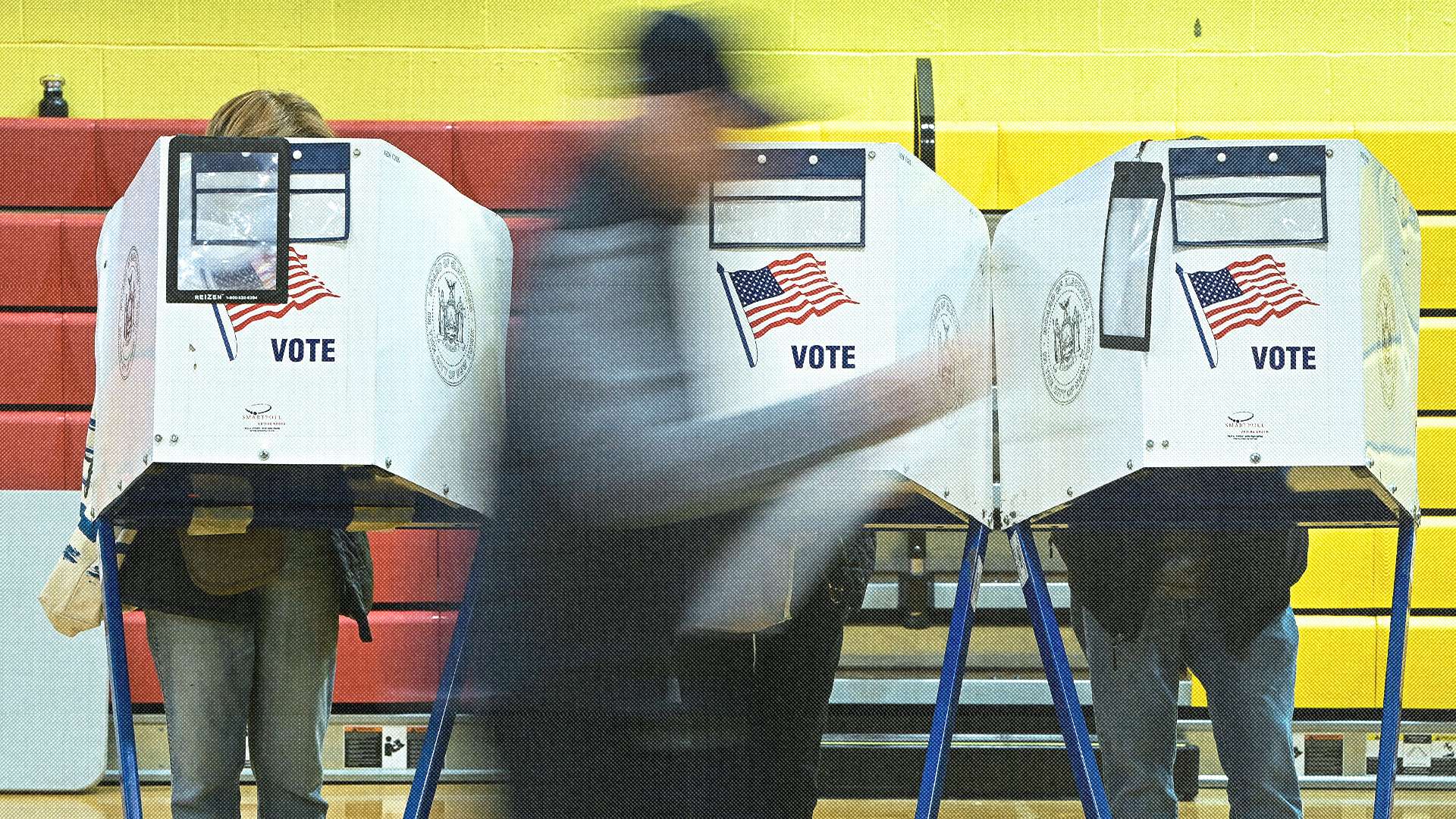
Democrats clearly had a good week, taking both the House and the Senate overwhelmingly. However, one overlooked winner of the “bluenami” is prediction markets, which are fast becoming a fixture in American elections.
As of late Monday, “Americans had wagered nearly $1.9 billion on the midterm elections…risking money on over 7,000 different outcomes,” according to The Washington Post. As early as April, traders at Polymarket and Kalshi priced a blue wave (Democrats winning more than 235 House seats and at least 51 Senate seats) at over 50 percent. On PredictIt, a similar blue tsunami market was priced at 66 cents the morning of the election, while traders at Kalshi and Polymarket both had the probability at over 70 percent.
An hour before the first votes were tallied on election night, leading prediction markets such as Polymarket and PredictIt correctly forecast that Democrats would gain control of both chambers of Congress, with over 90 percent likelihood that the party would take the House. As of Wednesday morning, the favorite on Kalshi won 479 of 487 midterm races. “That’s 98%, forecasted before a single vote was counted,” the company wrote on X.
For prediction markets, accurately pricing election outcomes doesn’t just provide legitimacy; it also gives the platforms a chance to be seen as more than a sports gambling product (a classification lawmakers have used to target the platforms). Ironically, even though the massive trading volume on election markets—$2.5 billion on Kalshi alone, compared with $1.3 billion traded on the platform for the 2024 elections—might make Americans more familiar with the platforms, it will likely draw attention from more lawmakers in both parties, who appear worried about their impact on the democratic process.
Rep. Blake Moore (R–Utah) shared his fears about insider trading with the Post. “People are clearly going to take advantage of this,” he told the Post. “People with an ability to influence elections, consulting firms, polling agencies, candidates’ staff—all of this—they are going to know what to do.” Moore and others, such as Rep. Jamie Raskin (D–Md.) and Sen. Jeff Merkley (D–Ore.), have introduced legislation to ban election contracts and election-related trades.
Despite the panic among these lawmakers, some experts don’t believe election contracts pose an inherent threat of manipulation that would jeopardize election integrity. “I see traditional polling and prediction markets as being complementary,” says Thomas Kingsley, director of financial services policy at the American Action Forum.
However, Kingsley says any analysis of the platforms’ performance that devolves into “who’s beating who or who’s winning” is “slightly facetious,” because “prediction markets and polling do two different things in slightly different ways.” Traditional polling models such as The New York Times/Siena poll, AtlasIntel, Emerson College—and forecasts like Nate Silver’s FLIPR—offer a static glimpse into voters’ intentions. In contrast, prediction markets offer insight into the public’s expectations.
“What [prediction markets] provide is probabilistic estimates,” says Kingsley. That means an outcome priced at 55 percent should happen about 55 percent of the time. In that respect, the platforms performed well. Prediction markets didn’t have Democrats winning the Senate race in South Carolina, and traders didn’t see Democrat Gina Hinojosa winning Texas’ gubernatorial race. But traders did have races in Iowa and Kansas as toss-ups leading into Election Day. In a state like Kansas, which hadn’t elected a Democratic senator in 94 years, those odds are pretty good.
Prediction markets’ election performance is unlikely to sway Democrats, who will soon have the power to subpoena private-company executives; they have already threatened to do so. Sen. Elizabeth Warren (D–Mass.), who is widely expected to be chosen as chairwoman of the Senate Banking, Housing, and Urban Affairs Committee, is openly antagonistic toward the industry.
In a letter to the CEOs of Polymarket and Kalshi, sent days before the election, Warren and Sen. John Curtis (R–Utah) wrote that despite the companies’ self-policing of insider trading, both senators remained “skeptical” that they could “sufficiently police these even contracts with effective scrutiny and meaningful accountability.” The senators said the cases the prediction markets did catch raised “serious questions about how much similar activity may be going undetected,” and demanded the CEOs respond by election day.
(Kalshi is a supporter of Reason Foundation, the nonprofit that publishes Reason.)
“It’s important to note that oversight of these products already exists,” Kingsley says. The U.S. Commodity Futures Trading Commission (CFTC) has regulatory authority over futures exchanges, including designated contract markets such as prediction markets. Of course, Congress granted that authority.
Beyond Curtis and Warren, a host of state regulators—including officials in Utah, New York, Minnesota, and Arizona—are pursuing legal challenges against prediction markets for violating state gambling laws. These legal challenges could soon worsen if federal lawmakers have their way.
In June, 17 Senate Democrats, including Warren, Merkley, and other members of the Senate Financial Services and General Government Appropriations Subcommittee that oversees the CFTC, signaled what’s to come. In a letter to the subcommittee chair, the senators asked that the CFTC be prohibited from using federal funds to finance its lawsuits against states and tribal governments that have sought to regulate prediction markets.
They described prediction markets as “no different than gambling.” The senators wrote that by suing state regulators for usurping its jurisdiction, the CFTC “risks becoming an instrument and enabler of online prediction markets’ efforts to bypass states’ consumer protections and oversight, creating a race-to-the-bottom in gambling.”
The platforms’ midterm performance has bolstered their legitimacy. But Kingsley says whether prediction markets are gambling is a “philosophical question.” Unfortunately, in the new congressional majority’s view, it’s not even a question.






Leave a comment