
Pesto Trapanese, pasta pomodoro and torta caprese: Dara Klein’s favourite Italian recipes | Food
 adminUpdated 1 day Ago6 Mins read
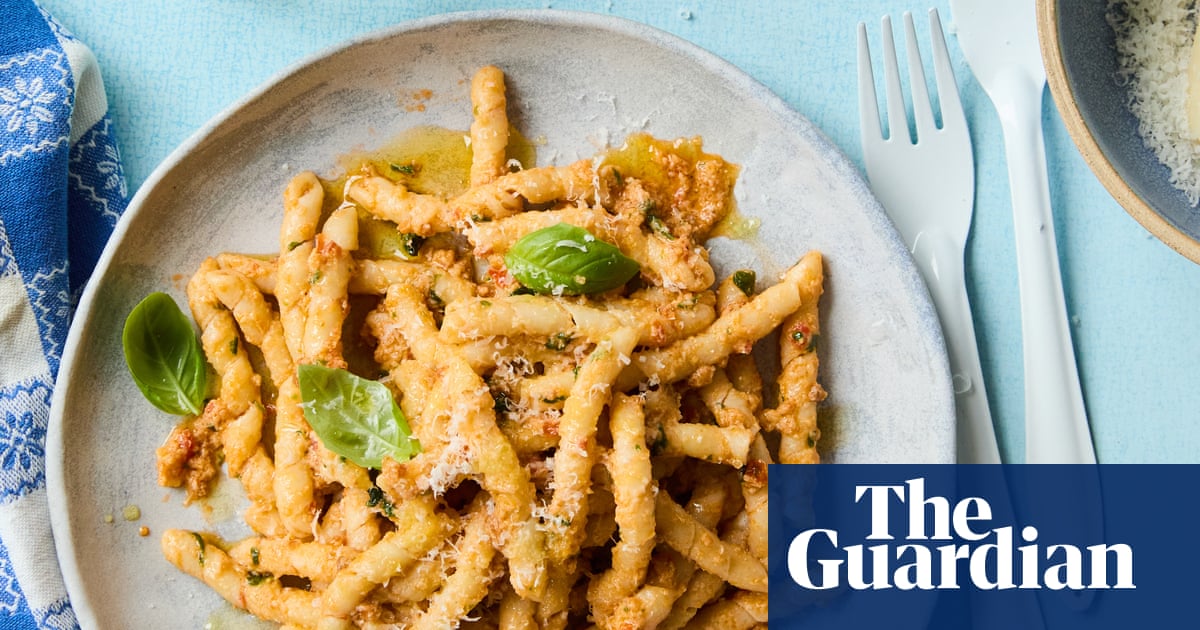
Pesto trapanese combines almonds, tomatoes, pecorino and a hint of garlic and basil to create a fresher version than the typical Genovese variety, and I especially love the way the richness of the almonds is lifted by the fresh tomatoes – when they’re pureed together, it creates a wonderful mouthfeel. For me, though, pasta pomodoro symbolises home. My mum’s was a cornerstone of our trattoria, as it is at Italian restaurants around the world, and every family has their own fiercely guarded recipe. I developed this particular method when I started Pasta Princess, which delivered hand-rolled pasta and pomodoro sauce all over London during lockdown. It kept me grounded when I was in between kitchens, and resurfaced at Tiella, where it features regularly on the menu. Finally, torta caprese is a wonderfully rich flourless chocolate cake made with ground almonds. Mum often made a similar cake called torta gianduia, which uses hazelnuts instead of almonds, a recipe that hails from Piedmont, the heart of Italy’s hazelnut production (the Tonda Gentile delle Langhe variety is particularly prized for its incredible quality and flavour, carrying the IGP label to denote regionality and strict production standards). I remember her once buying these special hazelnuts on a trip to Italy, and taking them back home to New Zealand so she could make gianduia. When the cake came out of the oven, the aroma was so incredible that she decided to bring it home rather than putting it on the menu, and shared it with us instead.
Pesto trapanese (pictured top)
I prefer to make this in a mortar to achieve a rustic paste. You can use a blender, but operate it gently so you don’t end up with a smooth paste. Once the pesto is tossed with the pasta, finish with a touch of lemon juice and black pepper just before plating to add some brightness. You can omit the cheese for a dairy-free pesto: it still blends beautifully, and has a greater concentration of almonds, tomatoes and basil.
Prep 10 min
Cook 30 min
Serves 4
85g blanched almonds
Sea salt and freshly ground black pepper
250g tomatoes, finely diced
75ml extra-virgin olive oil, plus extra to serve
1 garlic clove, peeled, halved and germ removed
10g basil, leaves picked, plus extra to serve
45g pecorino, grated, plus extra to serve
320-400g pasta – busiate, penne, spaghetti, bucatini or fusilli
Lemon juice, to serve
Heat the oven to 180C (160C fan)/350F/gas 4. Spread the almonds on a lined baking tray, sprinkle lightly with sea salt, and roast for 13 minutes. Remove and leave to cool completely.
Using a pestle and mortar, stand blender or hand-held blender, blitz the almonds, tomatoes, oil, garlic and a big pinch of salt until almost smooth, but with a few chunks for texture. Add the basil and pecorino, pulse until the leaves have broken down, then taste and add more salt, if need be. If you’re not using the pesto straight away, transfer to a jar, pour a little olive oil on top to stop it oxidising, seal and keep in the fridge for up to three days.
Cook your chosen pasta as per the packet instructions, lifting it out of the water one minute before it’s ready. While the pasta is cooking, loosen the pesto with a small ladleful of the starchy pasta water and warm over a low heat; do not blast it with heat, because this will ruin the flavour. Turn up the heat to medium, add the pasta and toss back and forth vigorously, adding a little more pasta water as needed.
Continue tossing the pasta until the sauce thickens and turns glossy. Season to taste. I like to add a few drops of lemon juice – just enough to balance the dish, but not so much that it’s detectable. Plate immediately, garnish with the extra basil, a drop of good olive oil and an extra grating of pecorino, and serve.
Sugo di pomodoro
You can cook pomodoro a hundred different ways. With this method, you get the deep umami effect of a long, slow cook in just one hour; though you can cook it for an hour longer if you want to slowly coax out the sweetness of the tomato even further. Use this recipe as a launchpad for your own variations, perhaps trying it with cherry tomatoes and fresh basil. I like to make this a day ahead and let it sit overnight. Tomato sauces are always better the next day.
Prep 5 min
Cook 1 hr+
Serves 4
120ml extra-virgin olive oil, plus extra for drizzling
3 fresh bay leaves
2 onions, peeled and thinly sliced
Sea salt
80ml white wine
700g passata
400g pasta – orecchiette, penne, spaghetti, rigatoni
Parmigiano, or pecorino or ricotta, to serve (optional)
Pangrattato, to serve (optional)
Put a medium-sized, high-sided saucepan on a medium-low heat – you want a pan large enough to avoid excessive spitting while the sauce cooks. Once hot, add the oil, bay leaves, onions and a couple of pinches of salt, and cook, stirring frequently so they don’t colour, until the onions are translucent and soft. Turn up the heat to high, add the wine and cook for a few minutes, until most of the liquid has evaporated.
Turn down the heat to medium, add the passata and a couple of pinches of salt, and stir to combine. Leave to simmer for 10 minutes without stirring, so the bottom of the pan almost catches, then take off the heat. There should be deep red-brown crust at the bottom of the pan. If it hasn’t formed, return to the heat for a few minutes more. Scrape the caramelised tomato off the bottom of the pan and stir it into the sauce; this will greatly deepen the flavour. During this process, there will be a fair bit of splashing from the pan.
Return the pan to the stove and simmer slowly for 30-45 minutes, stirring every five minutes, during which time the sauce will thicken and deepen in colour. If you’re not using the sauce immediately, leave it to cool, transfer to a sealed container and put in the fridge for up to four days.
Cook your chosen pasta as per the packet instructions, lifting it out of the water one minute before it’s ready and reserving a ladleful of the starchy water. Bring the sauce back up to heat, add the pasta and toss so it’s evenly distributed. Add the pasta water little by little to emulsify and thicken the sauce, then check for seasoning. To serve, drizzle over a small amount of good olive oil and sprinkle with your favourite cheese or pangrattato.
Torta caprese
This recipe was developed at Tiella with my first pastry chef, Maximiliane Krauss-Waller. I love this cake because it’s so easy to make and hits that sweet spot between decadence and lightness. Use good-quality chocolate – it makes all the difference – and get creative with the garnish: I like whipped cream and Amarena cherries preserved in syrup, but it also works nicely with mascarpone laced with espresso, or even fresh berries.
Prep 10 min
Cook 1 hr 10 min, plus chilling
Serves 8
170g hazelnuts (preferably skinless)
170g unsalted butter, plus extra for greasing
170g 70% cocoa dark chocolate
170g light brown sugar
Sea salt
4 eggs, separated
1½ tbsp marsala, or amaretto or rum (optional)
To serve
Icing sugar, or cocoa powder
Amarena cherries in syrup, or fresh raspberries or strawberries
Whipped cream, or mascarpone or creme fraiche
Heat the oven to 180C (160C fan)/350F/gas 4 and grease and line a 20cm round springform cake tin with baking paper.
Toast the hazelnuts in the oven for about 11 minutes, until golden, then remove and leave to cool. If the hazelnuts still have skins on, wrap them in a clean tea towel and rub vigorously to knock off the skins. Blitz the hazelnuts to a fine, sandy texture; stop if they start to clump, or you’ll end up with nut butter. Conversely, make sure the hazelnuts aren’t too coarse or this will result in a very crumbly cake.
Melt the butter and chocolate in a heatproof bowl set over a pan of simmering water, stirring occasionally to incorporate – make sure the heat isn’t too high and the water isn’t touching the bowl, or the chocolate might burn.
Off the heat, stir in the ground hazelnuts, sugar and two pinches of salt. Leave the batter to cool slightly, then whisk in the egg yolks and booze, if using.
In a second bowl, whip the egg whites to soft peaks, then fold them through the chocolate batter in three instalments. Pour into the lined cake tin and smooth the top with a spatula or palette knife. Bake for 40 minutes, then remove and leave to cool at room temperature. This cake benefits from an overnight rest; I like to chill it overnight before turning it out and slicing.
To serve, flash bake individual slices of the cake in a 180C (160C fan)/350F/gas 4 oven for a few minutes, so they warm through and become gooey. Traditionally, icing sugar is sifted on top, but I prefer to use good-quality cocoa powder. Serve with Amarena cherries and whipped cream or creme fraiche on the side.
-
These recipes are edited extracts from La Trattoria, by Dara Klein, published by Ebury Press at £30. To order a copy for £27, go to guardianbookshop.com











Leave a comment